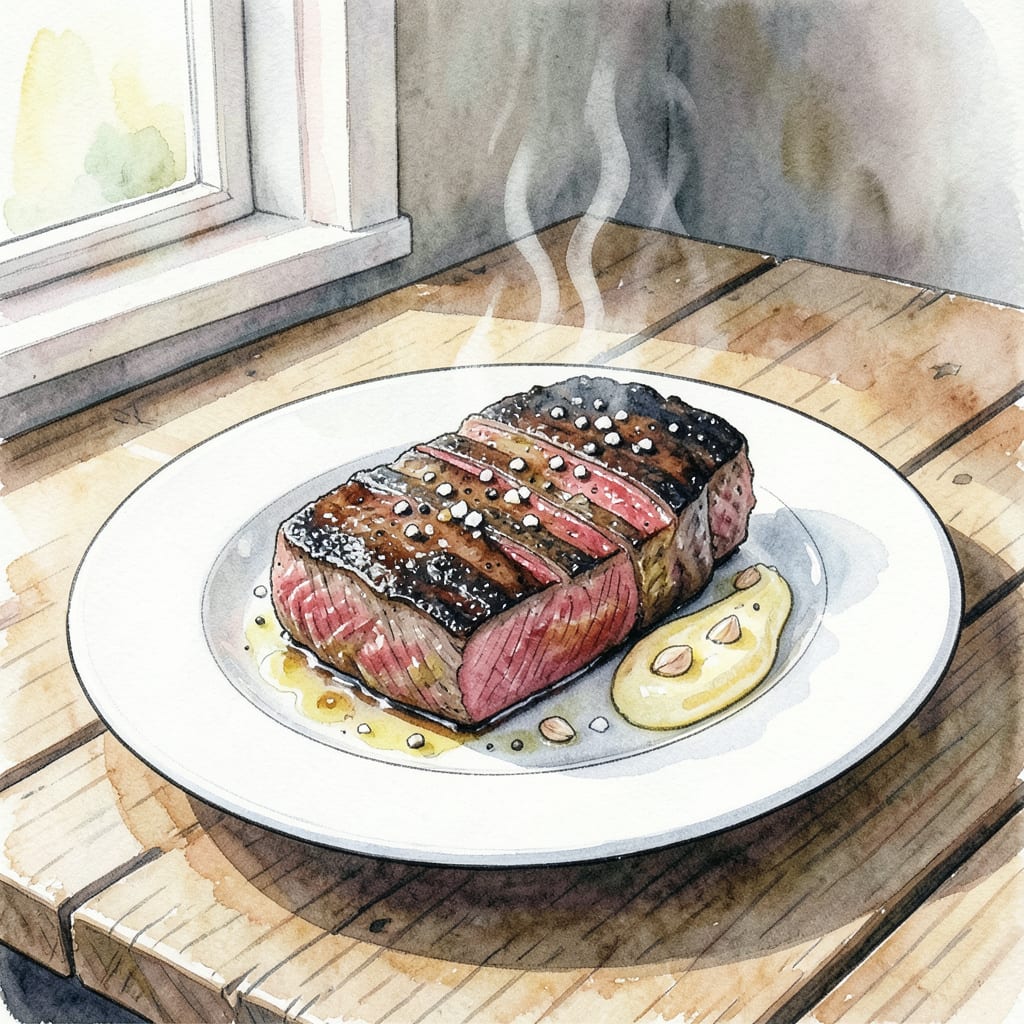
As a pitmaster with a passion for blending smoke-cooking tradition with classic French technique, I’ve perfected the art of creating a restaurant-quality black and blue steak. My secret? A precise balance of searing heat and careful temperature control to achieve that perfect crust.
This black and blue steak recipe delivers a charred exterior giving way to a tender, blue center. With a few simple ingredients and precise cooking times, you’ll be enjoying steakhouse-quality results at home. Let’s get cooking!
Ingredients for Black and Blue Steak
Quality steak and precise seasoning make all the difference in this restaurant-quality dish.
| Ingredient | Amount | Notes |
|---|---|---|
| Ribeye Steak 🥩 | 1 ½ lb | Dry-aged or prime preferred |
| Kosher Salt 🧂 | 2 tbsp | Diamond Crystal or similar flake salt |
| Black Pepper 🌶️ | 1 tbsp | Freshly ground black peppercorns |
| Olive Oil 🫒 | 2 tbsp | High-heat neutral oil like canola works too |
| Butter 🧈 | 4 tbsp | Unsalted, softened for finishing |
| Garlic Cloves 🧄 | 4 cloves | Minced, for flavor enhancement |
| Fresh Thyme 🌿 | 2 sprigs | Optional, for aromatic flavor |
[recipe_ingredient_scaler]
The ribeye matters here. Prime or dry-aged gives that perfect crust. Most butchers have it—if not, Costco usually does. Look for 1.5-2 inches thick for best results. I prefer dry-aged for that concentrated beef flavor.
No ribeye? Strip loin works as a substitute, though it’s slightly leaner. Fresh thyme is nice but dried works at one-third the amount. For the garlic, 4 cloves minced gives great depth. If you’re feeling fancy, add a sprinkle of flaky Maldon sea salt just before serving.
Steaks keep for 3-4 days in the fridge. Wrap tightly. The compound butter? Freeze for up to 3 months. Thaw in fridge overnight. Leftovers reheat beautifully at 250°F until just warmed through—don’t overdo it.
Step-by-Step Instructions for Black and Blue Steak
Here’s the method for achieving that perfect restaurant-quality crust every time.
Step 1: Prepare the Ribeye Steak
Start by taking the 1.5 lb ribeye steak out of the refrigerator and letting it sit at room temperature for at least 30 minutes before cooking. This step is crucial as it allows the steak to cook more evenly. Pat the steak dry with paper towels on both sides to remove excess moisture, which helps in achieving a better crust. Season both sides generously with the 2 tbsp kosher salt and 1 tbsp black pepper, making sure to coat the steak evenly.
The dry-aging or prime quality of the ribeye enhances its natural flavor, so handle it gently to preserve its integrity. If you have any excess moisture on the surface, pat it dry again. This preparation ensures that the steak develops a beautiful crust when seared.
Step 2: Sear the Steak to Perfection
Heat a skillet or cast-iron pan over high heat until it’s almost smoking. Add the 2 tbsp olive oil and let it heat until it starts to shimmer. Carefully place the ribeye steak in the hot pan, away from you to avoid splashing oil. Sear the steak for 3-4 minutes on the first side, or until a deep crust forms. You might see a slight smoke – that’s okay, as it adds to the flavor.
Flip the steak and sear the other side for another 3-4 minutes. The goal is to get a nice black crust on both sides. If you’re using a thermometer, you can check for the desired doneness. For medium-rare, the internal temperature should be around 130-135°F. Adjust the cooking time based on your preferred level of doneness.
Step 3: Finish with Butter and Aromatics
Once the steak is seared to your liking, reduce the heat to medium. Add the 4 tbsp butter to the pan, letting it melt and foam slightly. Tilt the pan and spoon the melted butter over the steak continuously for about 1-2 minutes. This step, known as basting, adds richness and helps to cook the steak evenly.
Add the 4 cloves minced garlic cloves and 2 sprigs fresh thyme to the pan, if using. The aroma from the garlic and thyme infuses into the steak, enhancing its flavor. Continue to baste the steak with the garlicky butter for another minute. The butter should start to take on a slightly nutty aroma, indicating it’s perfectly toasted.
Step 4: Rest and Serve
Remove the steak from the pan and place it on a wire rack or a plate. Let it rest for 5-10 minutes before slicing. This resting period allows the juices to redistribute throughout the meat, making it more tender and flavorful. Slice the steak against the grain into 1-inch thick slices.
Serve the black and blue steak immediately, with the crusty side facing up. The steak should have a beautiful blue or rare interior, depending on your preference, and a black crust on the outside. Enjoy it with your favorite sides, such as roasted vegetables or a fresh salad.
Perfect Pairings for This Dish
Wine Pairing Essentials
A dry red wine pairs beautifully with black and blue steak. I recommend a Cabernet Sauvignon or Malbec as they complement the bold flavors. For a more budget-friendly option, Merlot works well too. The tannins in these wines help balance the richness of the steak. 🍷
Side Dish Suggestions
Roasted vegetables make an excellent side dish. Consider roasted asparagus or Brussels sprouts tossed with olive oil and a pinch of sea salt. For a heartier side, garlic mashed potatoes or creamy spinach are great choices. These sides complement the steak without overpowering it.
Salad Pairing Ideas
A fresh salad can provide a nice contrast to the rich steak. Try a simple mixed greens salad with a light vinaigrette, or something more substantial like a Caprese salad with fresh mozzarella, tomatoes, and basil. The acidity and freshness help cut through the richness of the meal.
Additional Touches
Consider adding some grilled or roasted root vegetables like carrots or parsnips for added depth. You can also serve with a side of crusty bread or grilled bread for a more filling meal. These additions enhance the overall dining experience.
Final Presentation
When serving, slice the steak against the grain and arrange it on a plate with your chosen sides. Garnish with fresh herbs like parsley or thyme for a pop of color and added aroma. This presentation makes the dish visually appealing and inviting.

Trained in classic French technique but raised on slow-cooked ribs and spicy rubs, she blends culinary skill with smoke and soul.
- Recipe for Boneless Pork Chops in Cast Iron Skillet: Sear and Baste to Juicy Perfection - October 3, 2026
- Recipe for Boneless Cross Rib Roast: Slow-Roasted Beef with Herb Crust - October 3, 2026
- Hamburgers in Sauce Recipe Crock Pot: Slow-Cooked Savory Delight - October 3, 2026