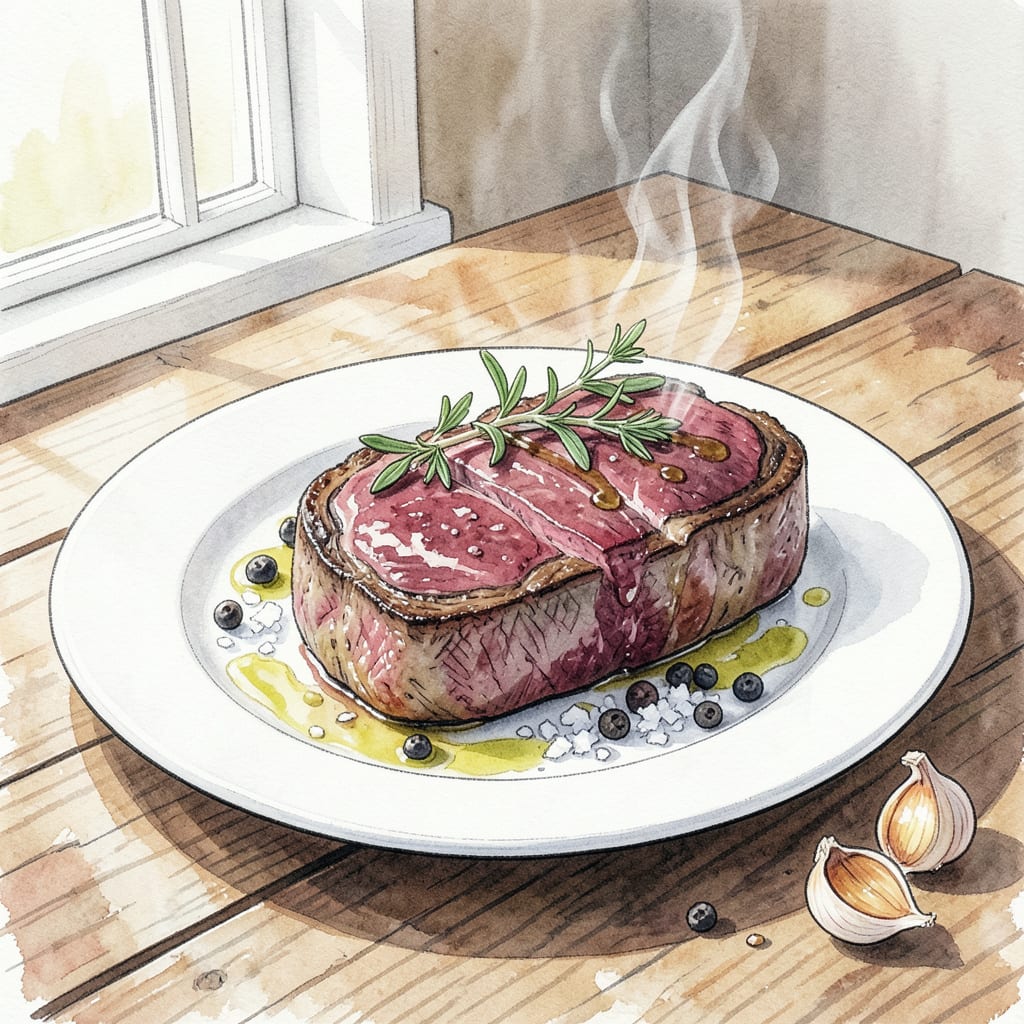
I’ve perfected my dry aged ribeye recipe through years of experimenting with different aging times and techniques. The result is a rich, intense flavor that’s hard to achieve at home. 🔥 With precise temperature control and patience, you can create steakhouse-quality results.
This recipe guides you through dry aging a ribeye at home, including specific temperatures and times to achieve that perfect balance of tenderness and flavor. Pair it with your favorite sides, like roasted vegetables or garlic mashed potatoes, for a truly special meal.
Ingredients for Dry Aged Ribeye
Quality steak starts with quality ingredients. Simple, yet precise.
| Ingredient | Amount | Notes |
|---|---|---|
| Ribeye Steak 🥩 | 1 ½ lb | Dry aged, preferably prime or dry aged |
| Kosher Salt 🧂 | 2 tbsp | Diamond Crystal or similar flake salt |
| Black Peppercorns 🌶️ | 1 tbsp | Freshly ground preferred |
| Garlic Cloves 🧄 | 4 cloves | Peeled, slightly crushed |
| Fresh Thyme 🌿 | 2 sprigs | Fresh, not dried |
| Olive Oil 🫒 | 2 tbsp | High-quality, extra-virgin |
| Unsalted Butter 🧈 | 2 tbsp | For finishing, cold |
| Red Wine 🍷 | ½ cup | Dry red, optional for deglazing |
| Fresh Rosemary 🌿 | 1 sprig | Optional, for serving |
[recipe_ingredient_scaler]
The ribeye is the star here. Look for dry-aged at your local butcher or high-end grocery store. Costco often has great dry-aged options. If you’re feeling adventurous, you can dry-age at home with proper equipment. Fresh thyme and rosemary make a big difference—grab them from the produce section, not the spice aisle.
No dry-aged at the store? You can still achieve great flavor. Use prime ribeye and let it sit at room temp for an hour before cooking. The garlic can be adjusted to taste—some like it strong, some like it subtle. If you skip the red wine deglazing, just add a splash of beef broth instead.
Steak keeps best in the fridge, loosely wrapped. Use within 3-4 days. If you have leftovers, slice thin and store in an airtight container—it’ll be great in sandwiches. The herb stems? Freeze them for future stocks or soups. Worth the extra minute, trust me.
Step-by-Step Instructions for Dry Aged Ribeye
Here’s the method that’ll get you steakhouse-quality results every time at home.
🔥 Step 1: Prepare the Ribeye for Cooking
Start by removing the 1.5 lb Ribeye Steak from the refrigerator and letting it sit at room temperature for at least 30 minutes to 1 hour. This step is crucial as it allows the steak to cook more evenly. While waiting, grind 1 tbsp Black Peppercorns using a pepper mill or spice grinder until coarsely ground—freshly ground pepper makes a huge difference in flavor.
Pat the ribeye dry with paper towels on all sides, paying extra attention to the fat cap. I like to use a few sheets of paper towels to absorb excess moisture. Season the steak generously with 2 tbsp Kosher Salt, making sure to coat all surfaces evenly. The salt will help create a beautiful crust during cooking.
🔥 Step 2: Sear the Ribeye on High Heat
Heat a cast-iron or stainless steel skillet over high heat until it’s almost smoking, about 4-5 minutes. Add 2 tbsp Olive Oil and let it heat until it just starts to shimmer—be careful not to let it smoke. Place the ribeye in the hot skillet, fat side down if it has a significant fat cap. Sear for 2-3 minutes without moving it until you get a nice crust.
Flip the steak and sear the other side for another 2 minutes. You’ll notice the steak starting to develop a nice brown color. After flipping, add 2 tbsp Unsalted Butter, 4 cloves Garlic Cloves, and 2 sprigs Fresh Thyme to the pan. As the butter melts, tilt the pan and spoon it over the steak continuously for 1 minute—this is called basting, and it adds incredible flavor.
⏰ Step 3: Finish Cooking to Desired Doneness
After searing and basting, reduce the heat to medium (around 300°F if you have an infrared thermometer). Continue cooking the ribeye to your desired level of doneness. For medium-rare, this typically takes another 5-7 minutes total cooking time after searing, depending on thickness. Use a meat thermometer to check for doneness: 130-135°F for medium-rare.
Once the steak reaches your desired temperature, remove it from the pan and transfer it to a wire rack set on a plate or tray. Let it rest for 5-10 minutes before slicing. During this time, if using 0.5 cup Red Wine for deglazing, pour it into the hot pan and scrape up all the browned bits. Let it reduce by half, then strain the sauce into a small bowl for serving.
🔪 Step 4: Slice and Serve
After resting, slice the ribeye against the grain using a sharp knife. I like to slice it into 1-inch thick slices for maximum tenderness. Serve immediately, garnished with 1 sprig Fresh Rosemary if desired. Spoon some of the pan sauce (if made) over the top of each slice. The combination of the dry-aged ribeye with the garlic-thyme butter is absolutely incredible.
For the best experience, serve with your favorite sides, such as roasted vegetables or mashed potatoes. The rich flavor of the ribeye pairs beautifully with earthy sides. Enjoy your steakhouse-quality meal at home!
Wine and Beer Pairings for This Dish
Wine Pairing Recommendations
A dry-aged ribeye deserves an equally impressive wine. I recommend a full-bodied red like Cabernet Sauvignon or Syrah/Shiraz. The tannins in these wines complement the rich, beefy flavor of the ribeye. For a more specific pairing, try a Napa Valley Cabernet or a Rhone Valley Syrah. 🍷
Beer Pairing Options
If you prefer beer, a robust stout or porter pairs beautifully with the dry-aged ribeye. The roasted flavors in these beers enhance the steak’s complexity. For a lighter option, a Belgian-style Tripel can cleanse your palate between bites. Look for beers with high hop bitterness to balance the richness. 🍺
Why These Pairings Work
The key to pairing with dry-aged ribeye is finding beverages that can stand up to its intense flavor. Both the recommended wines and beers have enough structure to complement the steak without overpowering it. The tannins in red wine or the bitterness in beer cut through the fat, creating a balanced experience. I love experimenting with different pairings, and these are my go-to choices.
Serving Suggestions
When serving, consider adding a few drops of truffle oil or a sprinkle of flaky sea salt to enhance the flavors. The dry-aged ribeye is already packed with umami, but a little extra can elevate the dish. Pair it with roasted root vegetables or a simple arugula salad for a complete meal. The earthy sweetness of roasted vegetables works particularly well.
Personal Touch
One of my favorite memories is enjoying a dry-aged ribeye on a coastal ride, surrounded by the fresh sea air. The combination of the rich steak with a glass of Napa Valley Cabernet was unforgettable. Whether you’re enjoying it at home or outdoors, this pairing is sure to impress.
Nutrition Facts

Trained in classic French technique but raised on slow-cooked ribs and spicy rubs, she blends culinary skill with smoke and soul.
- Recipe for Boneless Pork Chops in Cast Iron Skillet: Sear and Baste to Juicy Perfection - October 3, 2026
- Recipe for Boneless Cross Rib Roast: Slow-Roasted Beef with Herb Crust - October 3, 2026
- Hamburgers in Sauce Recipe Crock Pot: Slow-Cooked Savory Delight - October 3, 2026