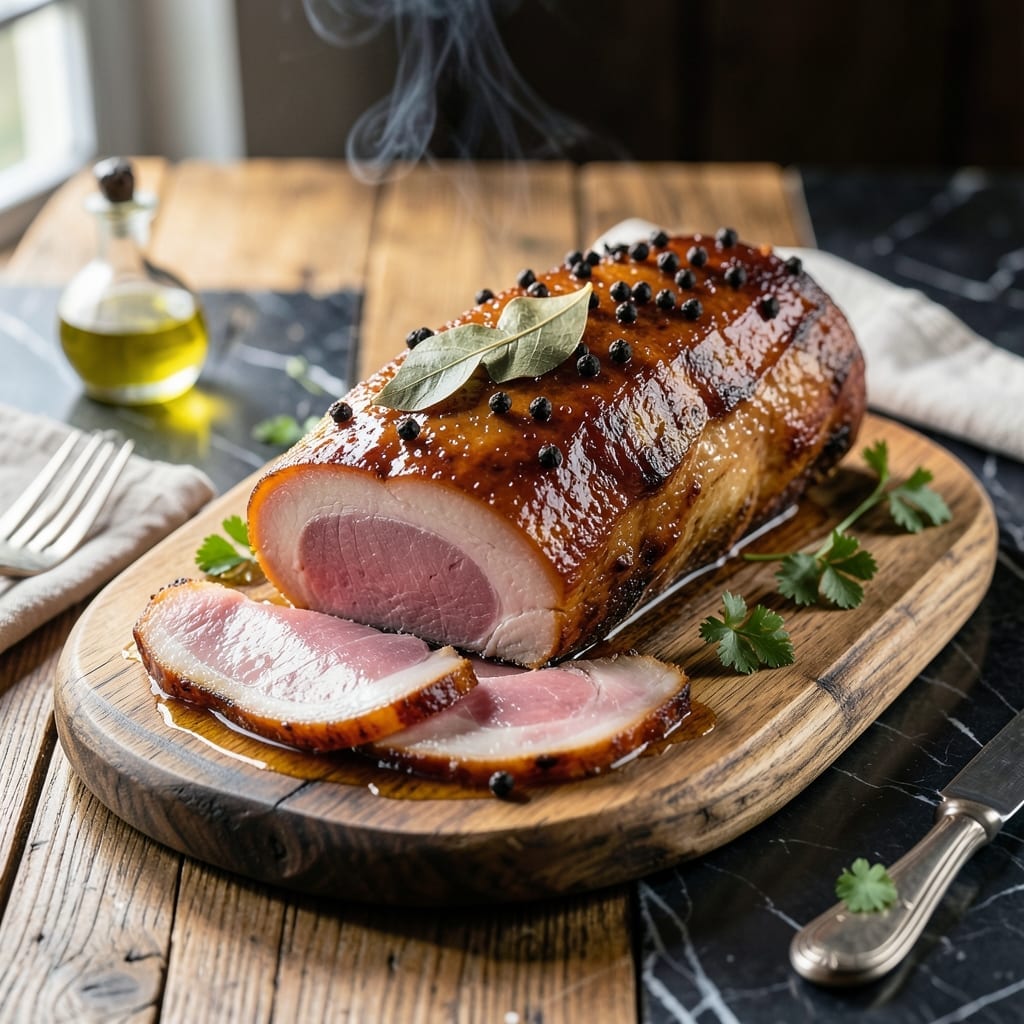
This recipe brings authentic German Black Forest ham to your kitchen with a perfect balance of sweet and smoky flavors. The traditional curing process creates a depth of taste that commercial versions simply can’t match.
I developed this method after years of experimenting with different smoking techniques and spice blends. The key is patience—allowing the cure to penetrate deeply before the slow smoking process begins.
What emerges is tender, flavorful ham with a rich mahogany exterior and the characteristic sweetness that defines this German classic. The aroma alone will transport you to the Black Forest region.
Serve thinly sliced for sandwiches, charcuterie boards, or as the centerpiece of a festive meal. This creation rewards the time investment with restaurant-quality results.
Ingredients for Black Forest Ham
Authentic German flavors start with quality pork and a carefully balanced cure mix.
| Ingredient | Amount | Notes |
|---|---|---|
| Pork Shoulder 🥩 | 8 lb | Bone-in, skin-on for authenticity |
| Kosher Salt 🧂 | 1 cup | Diamond Crystal brand recommended |
| Brown Sugar 🍚 | 2 cups | Light or dark variety |
| Black Peppercorns 🌶️ | 2 tbsp | Freshly cracked preferred |
| Juniper Berries 🌿 | 2 tbsp | Crushed lightly for cure |
| Bay Leaves 🍃 | 6 whole | Dried, for curing brine |
| Fresh Garlic Cloves 🧄 | 10 cloves | Smashed, peeled |
| Yellow Onions 🧅 | 2 whole | Thinly sliced for brine |
| Caraway Seeds 🌿 | 1 tbsp | Lightly toasted for depth |
| Water 💧 | 2 cups | For curing brine solution |
| Apple Cider Vinegar 🍏 | ½ cup | Balances sweetness in cure |
| Maple Syrup 🍁 | ½ cup | Grade B for robust flavor |
| Hickory Wood Chips 🪵 | 4 cups | Soaked for smoking |
| Beer 🍺 | 12 oz | Dark lager for brine |
[recipe_ingredient_scaler]
The pork shoulder is non-negotiable here—bone-in, skin-on gives you that authentic texture and fat cap for smoking. I source mine from local butchers or Whole Foods when I want organic. The juniper berries are the signature flavor—don’t skip them. Specialty spice shops or Penzeys will have them if your regular store doesn’t. Look for plump, aromatic berries (dull, dusty ones have lost their punch).
No juniper berries? Double the black peppercorns and add 1 tsp ground allspice to get close. Out of maple syrup? Honey works in a pinch (just don’t tell a German). The beer can be any dark lager—Guinness or a local craft stout adds great depth. If you’re avoiding alcohol, use additional apple cider vinegar mixed with water (3:1 ratio).
The cured ham keeps wrapped in the fridge for 1 week before smoking, or freeze for up to 3 months. Once smoked, it’s best within 5 days—though good luck making it last that long. Slice thinly against the grain for sandwiches, or leave in chunks for charcuterie boards.
Why You’ll Love This Recipe
- Set It and Forget: I just rub the pork shoulder with salt, sugar, and those aromatic juniper berries, then let the oven do the work.
- Sweet and Smoky: The brown sugar caramelizes while the peppercorns add a subtle kick that’s honestly addictive.
- Holiday or Tuesday: It’s my go-to for Christmas dinner but also hits the spot on a random weeknight with zero extra effort.
- Leftovers for Days: One pork shoulder makes enough for sandwiches, omelets, and pasta all week—my wallet thanks me.
Step-by-Step Instructions for Black Forest Ham
This traditional method delivers authentic German flavor with a perfect balance of smoke and sweetness.
Step 1: Prepare the Curing Brine
In a large stockpot, combine the 2 cups water, 1 cup kosher salt, 2 cups brown sugar, 0.5 cup apple cider vinegar, and 0.5 cup maple syrup. Heat over medium heat until the salt and sugar fully dissolve, stirring occasionally to prevent scorching.
Remove from heat and add the 2 tbsp black peppercorns, 2 tbsp juniper berries, 6 whole bay leaves, 1 tbsp caraway seeds, 10 cloves fresh garlic cloves, and 2 whole yellow onions. Let this mixture cool to room temperature before using—hot brine would cook the pork unevenly rather than curing it.
Step 2: Cure the Pork Shoulder
Submerge the 8 lb pork shoulder completely in the cooled brine in a large food-safe container. I use a brining bag inside a stockpot to ensure the pork stays fully immersed. Add the 12 oz beer to the brine for depth of flavor.
Refrigerate for 3-4 days, turning the pork once daily to ensure even curing. The pork will firm up slightly and develop a deep reddish hue as it absorbs the brine. This curing step is non-negotiable—it preserves the meat and infuses it with that signature Black Forest flavor profile.
Step 3: Rinse and Dry the Pork
After curing, remove the pork from the brine and rinse it under cold water for 2-3 minutes to remove excess salt and spices. Pat it thoroughly dry with paper towels—this step is crucial for achieving a proper smoke adhesion during the smoking process.
Place the pork on a wire rack set over a baking sheet and let it air-dry in the refrigerator uncovered for 12-24 hours. This forms a tacky surface called the pellicle, which helps the smoke cling to the meat and creates that beautiful mahogany exterior.
Step 4: Smoke to Perfection
Soak the 4 cups hickory wood chips in water for 1 hour before smoking. Preheat your smoker to 225°F and add the drained wood chips to the smoker box. Place the pork shoulder fat-side up on the smoker grate.
Smoke for 8-10 hours or until the internal temperature reaches 160°F. Maintain a consistent temperature throughout—fluctuations can lead to uneven cooking. The pork should develop a deep, rich color and a firm texture when pressed.
Step 5: Rest and Glaze
Transfer the smoked pork to a baking dish and let it rest at room temperature for 30 minutes. This allows the juices to redistribute throughout the meat.
For the final touch, brush the pork with a glaze made from reserved brine reduced by half. Return it to the smoker or a 350°F oven for 15-20 minutes to set the glaze and achieve a sticky, caramelized exterior. Let it rest for another 30 minutes before slicing thinly against the grain.
Pro Tips For Making Black Forest Ham
- Dry the Shoulder: Pat the pork shoulder completely dry with paper towels before applying the cure—moisture prevents the salt and sugar from penetrating evenly.
- Crush the Berries: Lightly crush the juniper berries with the flat side of a knife or a mortar and pestle to release their oils, otherwise their flavor stays locked inside.
- Don’t Rush the Cure: I learned this the hard way—give the pork at least 5 days in the fridge with the cure, flipping it daily, or the flavor won’t develop properly.
- Use a Probe Thermometer: Smoke or roast until the internal temp hits 160°F, then pull it—waiting for higher temps makes the ham dry, and that’s a shame with good pork.
Creative Variations of black forest ham
Cherry-Glazed Version
Add 1 cup pitted cherries and ¼ cup cherry juice to the glaze mixture for a fruit-forward twist. I love using Montmorency cherries from my local farmers market. The tartness cuts through the richness beautifully. 🌟
Spiced Rum Infusion
Replace ½ cup water in the brine with dark spiced rum—I recommend Captain Morgan. This adds a warm, molasses-like depth that pairs perfectly with the juniper and caraway in the cure.
Honey-Mustard Crust
Before the final glaze, coat the ham with a mix of 3 tbsp Dijon mustard and 2 tbsp honey. This creates a tangy, caramelized crust that complements the sweetness. I discovered this trick at a BBQ competition in coastal Georgia.
Beer-Braised Variation
Instead of just adding beer to the brine, simmer the pork in 24 oz dark beer and 1 cup apple cider after smoking for 2 hours at 300°F. This keeps it incredibly moist and adds complexity. 🍺
Herb-Crusted Exterior
Press a mixture of chopped fresh rosemary, thyme, and crushed coriander seeds onto the pork before smoking. I forage wild rosemary along my coastal rides for an extra aromatic punch.
Maple-Bourbon Glaze
Swap the maple syrup in the glaze for ½ cup bourbon and ¼ cup pure maple syrup. Reduce by half before brushing on. This adds a smoky-sweet complexity that reminds me of my French training days.
Nutrition Facts
Frequently Asked Questions
How long should I cure the pork for best results?
For an 8 lb pork shoulder, cure for 3-4 days in the refrigerator. This ensures deep flavor penetration and proper preservation. Turn the pork daily for even curing.
Can I use a different type of wood for smoking?
Hickory is traditional, but apple or cherry wood work well too. Avoid mesquite—it can overpower the delicate cure flavors. Soak wood chips for 1 hour before use.
What if my ham turns out too salty?
Soak the cured pork in cold water for 2-3 hours before smoking, changing water hourly. This removes excess salt while keeping flavor intact.
Is it safe to eat the skin after smoking?
The skin becomes edible and crispy after smoking. For best texture, score it lightly before the final glaze. Many enjoy it as a flavorful, crunchy addition.

Trained in classic French technique but raised on slow-cooked ribs and spicy rubs, she blends culinary skill with smoke and soul.
- Recipe for Boneless Pork Chops in Cast Iron Skillet: Sear and Baste to Juicy Perfection - October 3, 2026
- Recipe for Boneless Cross Rib Roast: Slow-Roasted Beef with Herb Crust - October 3, 2026
- Hamburgers in Sauce Recipe Crock Pot: Slow-Cooked Savory Delight - October 3, 2026