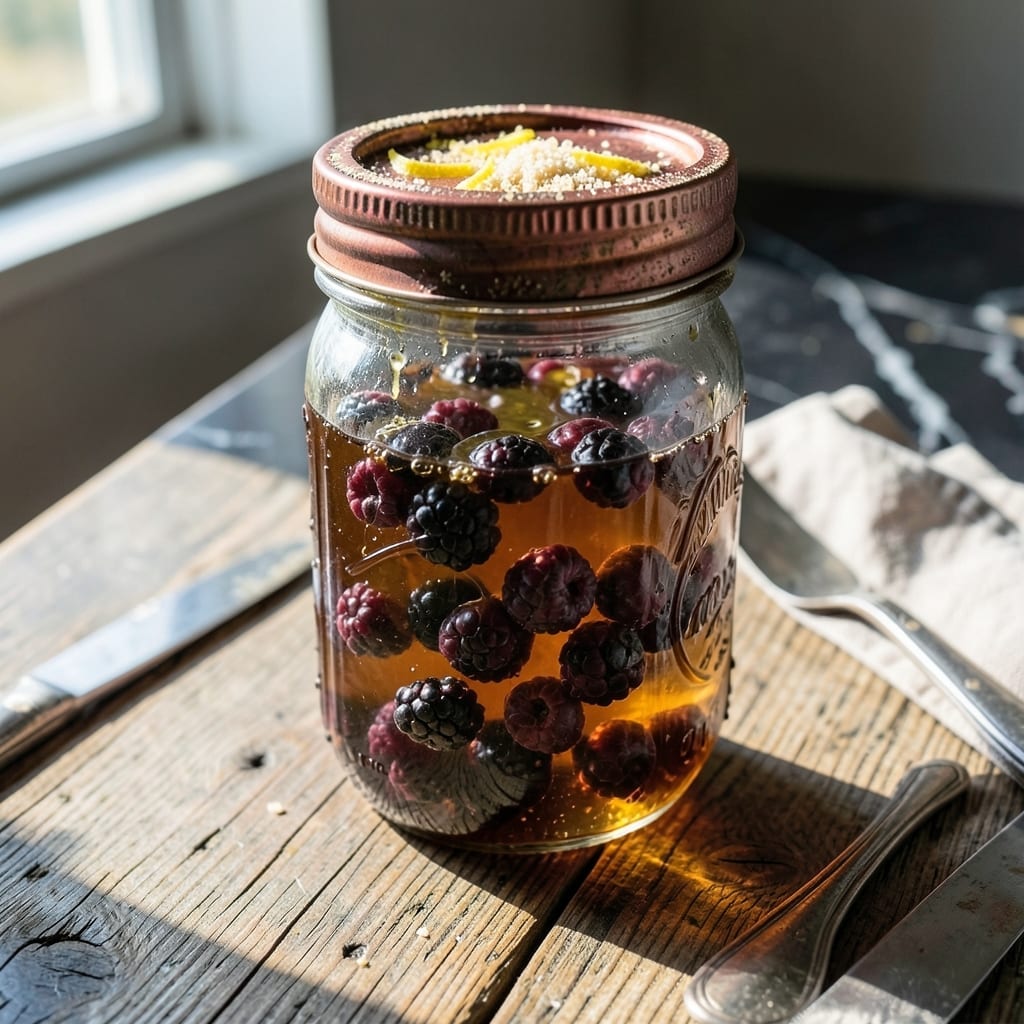
Crafting homemade blackberry moonshine brings the rich tradition of Southern distilling to your kitchen. This method combines fresh blackberries with simple ingredients to create a smooth, fruit-forward spirit with genuine character.
The process is straightforward yet precise, requiring patience as the flavors meld during fermentation. I’ve refined this technique to ensure a clean, balanced result every time, with the natural sweetness of blackberries shining through.
What you’ll achieve is a homemade spirit that captures the essence of ripe blackberries, with a bold, authentic taste that commercial versions can’t match. The deep berry notes are complemented by a smooth, satisfying finish.
Follow the steps carefully, and you’ll have a batch ready to enjoy or share with friends. The key is in the details.
Ingredients for Blackberry Moonshine
Fresh blackberries and a few pantry staples create this bold homemade spirit.
| Ingredient | Amount | Notes |
|---|---|---|
| Fresh Blackberries 🫐 | 4 cups | Ripe, thoroughly washed |
| Granulated Sugar 🍚 | 2 cups | White sugar preferred |
| Water 💧 | 4 cups | Filtered for best results |
| Cornmeal 🌾 | ½ cup | Fine or medium grind |
| Yeast 🍞 | 1 tsp | Distillers or bread yeast |
| Lemon Juice 🍋 | ¼ cup | Freshly squeezed preferred |
| Vodka 🥃 | 1 cup | High-proof for distillation |
| Vanilla Extract 🌿 | 1 tsp | Pure extract for depth |
| Cinnamon Stick 🌰 | 1 whole | Optional for spice |
| Cloves 🌿 | 2 whole | Optional for complexity |
[recipe_ingredient_scaler]
The blackberries are everything here. Farmers markets or local farms have the best in late summer—look for deep purple, plump berries (the ones that stain your fingers). Organic isn’t mandatory, but avoid berries with molds or mushy spots. Sugar should be plain white granulated—no substitutes. For the vodka, Everclear or any high-proof option works best for clean distillation.
No fresh blackberries? Frozen works perfectly—thaw first and drain excess liquid. Swap white sugar for raw or turbinado if that’s what you’ve got (flavor will be slightly different). Want to skip the cornmeal? Rice or wheat flour at the same amount does the trick. The spices are optional but add warmth—half the amount of ground cinnamon if you’re out of sticks.
Store the finished moonshine in a cool, dark place—glass jars work best. It’ll keep for years if sealed properly, but most folks won’t wait that long to enjoy it. Always label with the date (trust me, you’ll forget).
Why You’ll Love This Recipe
- Minimal Effort: I just toss fresh blackberries, sugar, and water together—no fancy steps, and the yeast does the rest.
- Sweet & Tangy: The blackberries give it this bright, jammy flavor that’s balanced by the sugar—honestly, it’s dangerously smooth.
- Party Starter: I bring this to gatherings, and it’s always the hit of the night—works just as well for a quiet porch evening.
- Budget Friendly: Blackberries are cheap in season, and a single batch makes enough to share or stash for later.
Step-by-Step Instructions for Blackberry Moonshine
Here’s the method I use—it’s straightforward, tested, and delivers consistent results every time.
Step 1: Mash the Blackberries and Start the Mash
In a large fermentation vessel, I combine the 4 cups Fresh Blackberries with the 2 cups Granulated Sugar. Using a clean wooden spoon or potato masher, I crush the fruit thoroughly to release all those juices. This step is crucial—you want to break down the berries completely to maximize flavor extraction.
Next, I pour in the 4 cups Water and stir until the sugar dissolves. The mixture should look like a thick, purple-blackberry syrup. At this point, I add the 0.5 cup Cornmeal, which acts as a nutrient for the yeast and helps create a smoother final product.
Step 2: Add Flavorings and Pitch the Yeast
Now, I stir in the 0.25 cup Lemon Juice, 1 tsp Vanilla Extract, 1 whole Cinnamon Stick, and 2 whole Cloves. These ingredients add complexity and balance to the sweetness of the blackberries. The cinnamon and cloves are optional, but I love the warmth they bring to the finished moonshine.
Once the mixture cools to room temperature (about 70-75°F), I sprinkle the 1 tsp Yeast over the top. I let it sit for 5-10 minutes to hydrate before gently stirring it in. Cover the vessel with a clean cloth or fermentation lock—this keeps out debris while allowing gases to escape.
Step 3: Ferment the Mash
I place the vessel in a dark, warm spot (ideally 70-80°F) and let it ferment for 5-7 days. You’ll know it’s working when you see bubbles forming on the surface and hear a faint fizzing sound—this means the yeast is actively converting sugars into alcohol.
I stir the mash daily to ensure even fermentation and prevent mold growth. By day 5, the bubbling should slow significantly, and the mixture will smell strongly of alcohol with a fruity aroma. This is your signal that primary fermentation is complete.
Step 4: Strain and Add Vodka
After fermentation, I strain the mash through a fine-mesh sieve lined with cheesecloth to remove all solids. I squeeze the cloth gently to extract as much liquid as possible—this is your blackberry “wash.” Discard the solids or compost them.
I pour the strained liquid into a clean glass jar and add the 1 cup Vodka. The vodka boosts the alcohol content, ensuring a stronger final product. Seal the jar and give it a gentle shake to combine everything evenly.
Step 5: Age and Bottle
I let the mixture age in the jar for at least 2-3 weeks in a cool, dark place. This aging period allows the flavors to meld and mellow, resulting in a smoother, more refined moonshine. I taste it occasionally—when the harsh alcohol burn softens and the blackberry flavor shines through, it’s ready.
Finally, I strain the aged moonshine once more through cheesecloth to remove any remaining sediment, then bottle it in clean, sterilized glass bottles. Store in a cool, dark place, and enjoy responsibly—this homemade spirit is best served chilled or over ice.
Pro Tips For Making Blackberry Moonshine
- Crush the Berries: Mash the blackberries thoroughly before adding sugar—this releases more juice and flavor, and I learned this the hard way after a batch tasted weak because I skipped it.
- Use Warm Water: Activate the yeast in water that’s around 110°F, not hotter, or you’ll kill it and waste a batch like I did my first try.
- Skip the Metal: Always use glass or food-grade plastic for fermentation; metal can react with the acid in blackberries and ruin the flavor.
- Add Cornmeal Last: Stir in the cornmeal only after the initial fermentation slows, about 3-4 days in—this keeps it from settling too soon and making the mash hard to strain.
Make-Ahead Tips for blackberry moonshine
Pre-Fermentation Prep
You can mash the blackberries and mix them with sugar and water 1 day ahead. Store the mixture covered in the fridge—this gives the fruit time to release more juice, creating a richer base for fermentation. 💡
Yeast Activation Shortcut
Activate the yeast in ½ cup warm water with a pinch of sugar 2 hours before fermentation. Keep it at room temperature until foamy, then mix it into your mash. This jumpstarts the process and reduces total fermentation time.
Spice Infusion
Add the cinnamon stick and cloves to the vodka 1 week before combining with the wash. Let it infuse in a sealed jar, shaking daily. This creates a more pronounced spice profile without overpowering the blackberry notes.
Bulk Aging
Combine the wash and vodka in a large glass container up to 1 month early. Store in a cool, dark place and taste weekly—the longer it sits, the smoother it becomes. I’ve found 3 weeks is the sweet spot for balanced flavor.
Bottling Efficiency
Sterilize bottles and lids 1 day before bottling by boiling them for 10 minutes. Let them air-dry completely to prevent contamination. This ensures your moonshine stays fresh for years if properly sealed.
Storage Setup
Prepare your storage area ahead—choose a cool, dark spot like a pantry or cellar. Keep bottles upright to minimize sediment disturbance. Label each with the date so you can track aging progress. 🍇
Nutrition Facts
Frequently Asked Questions
How long does fermentation take?
Fermentation typically takes 5-7 days in a dark, warm spot at 70-80°F. You’ll see bubbles forming and smell a fruity alcohol aroma when it’s ready. Stir daily for best results.
Can I use frozen blackberries?
Yes, frozen blackberries work perfectly. Thaw them first and drain excess liquid to avoid diluting the mash. The flavor will be just as rich as fresh berries.
Why add vodka to the wash?
The 1 cup Vodka boosts the alcohol content for a stronger final product. It also helps preserve the moonshine and smooths out the flavor during aging.
How do I know when it’s ready to bottle?
Taste it after 2-3 weeks of aging. When the harsh alcohol burn mellows and the blackberry flavor dominates, it’s ready. Strain once more before bottling.

Trained in classic French technique but raised on slow-cooked ribs and spicy rubs, she blends culinary skill with smoke and soul.
- Recipe for Boneless Pork Chops in Cast Iron Skillet: Sear and Baste to Juicy Perfection - October 3, 2026
- Recipe for Boneless Cross Rib Roast: Slow-Roasted Beef with Herb Crust - October 3, 2026
- Hamburgers in Sauce Recipe Crock Pot: Slow-Cooked Savory Delight - October 3, 2026