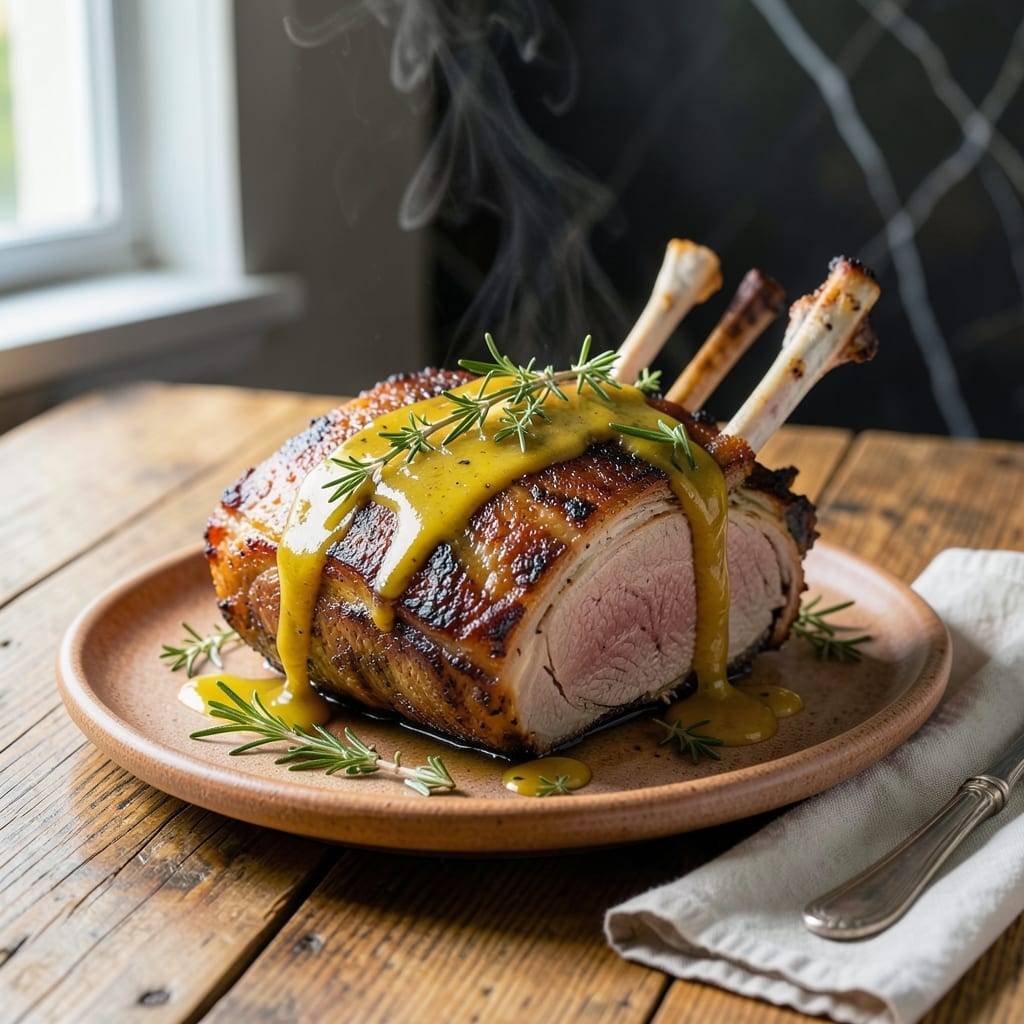
This bone-in pork rib roast delivers tender, juicy results with a crisp herb crust.
Using classic French technique, I’ve perfected a method that ensures every bite is packed with flavor and perfect texture.
Ingredients for Bone-in Pork Rib Roast
Classic French technique meets simple pantry staples for this impressive centerpiece.
| Ingredient | Amount | Notes |
|---|---|---|
| Bone-In Pork Rib Roast 🥩 | 4 lb | Frenched bones preferred |
| Kosher Salt 🧂 | 1 ½ tbsp | Diamond Crystal preferred for texture |
| Freshly Ground Black Pepper 🌶️ | 1 tbsp | Coarse grind for crust |
| Dijon Mustard 🟡 | 2 tbsp | Whole-grain for rustic texture |
| Fresh Rosemary 🌿 | 2 tbsp | Finely chopped, stems discarded |
| Fresh Thyme Leaves 🍃 | 1 tbsp | Stripped from stems |
| Garlic Cloves 🧄 | 4 cloves | Minced to paste consistency |
| Extra-Virgin Olive Oil 🫒 | 2 tbsp | High-quality for searing |
| Unsalted Butter 🧈 | 2 tbsp | Softened for herb crust |
| Shallots 🧅 | 2 whole | Finely minced for depth |
| Dry White Wine 🍷 | ½ cup | For deglazing pan |
| Low-Sodium Chicken Stock 🥣 | 1 cup | Homemade preferred for richness |
| All-Purpose Flour 🌾 | 1 tsp | For thickening pan juices |
[recipe_ingredient_scaler]
The roast is non-negotiable—bone-in, rib-end pork roast with Frenched bones (ask your butcher at Whole Foods or Local Butcher Shop to prepare it). Look for even marbling and a fat cap of at least 1/4 inch for self-basting. Kosher salt makes a difference here; Diamond Crystal is the gold standard for its clean flavor and texture. Fresh herbs are essential—dried won’t give you that vibrant crust.
No white wine? Substitute dry vermouth or apple cider vinegar with a splash of water. Fresh herbs can be swapped: sage or marjoram work beautifully alongside or instead of rosemary and thyme. If avoiding alcohol, use additional chicken stock with a teaspoon of lemon juice for brightness. The Dijon can be yellow mustard in a pinch, but the depth won’t be quite the same.
The roast can be dry-brined overnight for enhanced flavor and tenderness. Store uncooked pork in the fridge for up to 3 days or freeze for 6 months. Leftovers keep beautifully, wrapped tightly, for 4-5 days and make incredible sandwiches.
Why You’ll Love This Recipe
- Minimal Hands-On Time: I rub the roast with Dijon and rosemary, pop it in the oven, and that’s it—no babysitting required.
- Herb-Crusted Perfection: The rosemary and mustard form a crust so flavorful, I don’t even need a fancy sauce.
- Feeds a Crowd: One roast serves my whole family plus leftovers for sandwiches the next day.
- Budget-Friendly Elegance: Bone-in cuts cost less but taste like a restaurant-quality meal. Honestly, it’s my secret for impressing guests without the price tag.
Step-by-Step Instructions for Bone-In Pork Rib Roast
Master the technique for a perfectly herb-crusted roast with juicy, flavorful meat every time.
Step 1: Prepare the Herb Crust and Season the Roast
Pat the 4 lb bone-in pork rib roast completely dry with paper towels to ensure proper browning. This step is non-negotiable—moisture prevents the crust from forming.
In a small bowl, combine the 2 tbsp Dijon mustard, 2 tbsp finely chopped fresh rosemary, 1 tbsp fresh thyme leaves, 4 cloves minced garlic, 2 tbsp extra-virgin olive oil, 1.5 tbsp kosher salt, and 1 tbsp freshly ground black pepper. Rub this mixture all over the roast, pressing it into every crevice. The paste should coat the meat evenly, creating a flavorful barrier that locks in juices.
Step 2: Sear the Roast for a Flavorful Crust
Preheat your oven to 425°F. Place a large oven-safe skillet or roasting pan over medium-high heat. Add the 2 tbsp unsalted butter and let it melt until it begins to foam.
Sear the roast on all sides until deeply browned—about 3-4 minutes per side. Use tongs to hold the roast steady as you sear the fat cap and ends. You’ll know it’s ready when a rich, golden crust forms and the meat releases easily from the pan. This step develops the Maillard reaction, adding complex, savory depth to the final dish.
Step 3: Roast to Perfection with Aromatics
Scatter the 2 finely minced shallots in the pan around the roast. Transfer the pan to the preheated oven and roast for 1 hour. Then reduce the oven temperature to 350°F and continue roasting until the internal temperature reaches 145°F on an instant-read thermometer, about 30-45 minutes more.
The shallots will caramelize in the pan drippings, adding sweetness and depth. Baste the roast with the pan juices every 20 minutes to keep the crust moist and infuse the meat with flavor. The roast is done when the juices run clear and the internal temperature reads 145°F.
Step 4: Rest and Prepare the Pan Sauce
Transfer the roast to a cutting board and tent loosely with foil. Let it rest for 15-20 minutes—this allows the juices to redistribute, ensuring every slice is moist and tender. Do not skip this step; slicing too soon will cause the juices to escape, leaving the meat dry.
While the roast rests, place the skillet on the stovetop over medium heat. Add the 0.5 cup dry white wine and scrape up all the browned bits from the bottom of the pan with a wooden spoon. Simmer for 2-3 minutes until the wine reduces by half.
Step 5: Finish the Sauce and Serve
Stir in the 1 cup low-sodium chicken stock and bring to a simmer. In a small bowl, mix the 1 tsp all-purpose flour with a little cold water to create a slurry. Whisk the slurry into the pan and simmer for 3-4 minutes until the sauce thickens enough to coat the back of a spoon.
Strain the sauce through a fine-mesh sieve to remove the shallots, then pour it into a gravy boat. Slice the roast between the ribs into individual chops and serve with the pan sauce spooned over the top. The meat should be juicy and tender, with a fragrant, herbaceous crust that complements every bite.
Pro Tips For Making Bone-In Pork Rib Roast
- Dry the Roast: Pat the pork rib roast completely dry with paper towels before seasoning—moisture is the enemy of a good crust, and I learned this the hard way after my first few attempts came out steamed instead of seared.
- Rest Before Slicing: Let the roast rest for at least 15-20 minutes after pulling it from the oven, tented loosely with foil. Sounds tedious, but it redistributes the juices so they don’t all spill out when you carve.
- Use Room-Temp Meat: Take the roast out of the fridge about 1-2 hours before cooking—cold meat cooks unevenly, and I used to wonder why the edges were dry while the center was underdone.
- Crush the Rosemary: Lightly crush the fresh rosemary between your fingers before rubbing it on the roast to release its oils. It’s a small step, but the aroma and flavor difference is noticeable.
Common Mistakes When Making Perfect Results
Skipping the Dry
Never skip patting the 4 lb bone-in pork rib roast completely dry before seasoning. I learned this the hard way at my first BBQ competition—moisture on the surface steams the meat instead of searing it, leaving you with a pale, soggy crust instead of that beautiful golden-brown exterior. 💡
Uneven Seasoning
Don’t just rub the herb mixture on the top—get it into every nook and cranny, including between the ribs. I use my fingers to work the Dijon mustard and herb paste deep into the meat. Uneven seasoning leads to bland bites in some areas and overpowering flavors in others.
Rushing the Sear
Give the roast 3-4 minutes per side during searing. If you rush this step, you won’t develop the Maillard reaction that creates complex, savory flavors. The crust should be deeply browned before it goes into the oven—this is where the magic happens.
Ignoring Internal Temp
Don’t rely on time alone—use an instant-read thermometer to check for 145°F. I’ve seen too many cooks pull the roast too early or too late. Overcooking even by 5°F can turn your beautiful roast dry and tough. 🌡️
Skipping the Rest
The 15-20 minute rest is non-negotiable. Slicing too soon causes all those precious juices to spill out onto the cutting board. I tent mine loosely with foil to keep it warm while the juices redistribute throughout the meat.
Forgetting to Baste
Baste the roast with pan juices every 20 minutes during cooking. This keeps the herb crust moist and adds layers of flavor. I use a bulb baster for precision, but a spoon works just as well if you’re careful not to disturb the crust.
Nutrition Facts
Frequently Asked Questions
How long should I let the roast rest before slicing?
Let it rest for 15-20 minutes under loose foil. This keeps the juices inside for tender, flavorful meat. Slicing too soon makes it dry.
Can I use dried herbs instead of fresh?
Fresh herbs are ideal for vibrant flavor, but dried work in a pinch. Use 1/3 the amount since dried are more concentrated. The crust won’t be as bright.
What’s the best way to check doneness?
Use an instant-read thermometer in the thickest part. Pull it at 145°F—it’ll rise to 150°F while resting. Never guess by color alone.
Can I make this in a slow cooker?
Not recommended. The high heat of roasting creates the perfect crust. A slow cooker won’t brown the outside or develop the same depth of flavor.

Trained in classic French technique but raised on slow-cooked ribs and spicy rubs, she blends culinary skill with smoke and soul.
- Recipe for Boneless Pork Chops in Cast Iron Skillet: Sear and Baste to Juicy Perfection - October 3, 2026
- Recipe for Boneless Cross Rib Roast: Slow-Roasted Beef with Herb Crust - October 3, 2026
- Hamburgers in Sauce Recipe Crock Pot: Slow-Cooked Savory Delight - October 3, 2026