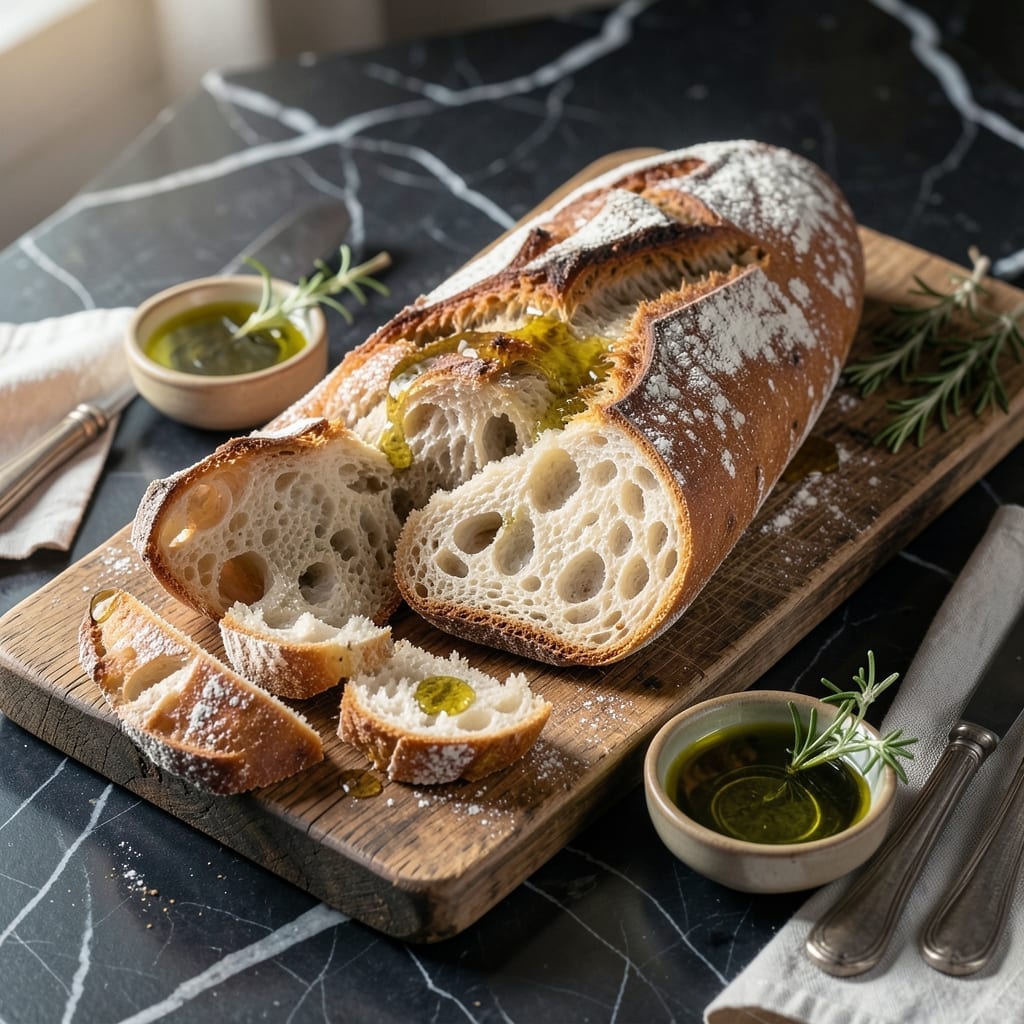
This ciabatta bread delivers that signature bakery-style crust with light, airy centers you expect from a professional kitchen. The dough comes together with simple pantry staples and a patient rise.
With careful shaping and high heat, you’ll achieve a crisp exterior and open crumb perfect for soaking up sauces or serving alongside any meal.
Ingredients for Bonefish Grill Ciabatta Bread
Simple pantry staples create that bakery-style crust and airy center you love.
| Ingredient | Amount | Notes |
|---|---|---|
| Bread Flour 🌾 | 3 ½ cups | High protein for chewy texture |
| Active Dry Yeast 🍞 | 1 tsp | Proof in warm water first |
| Water 💧 | 1 ½ cups | Warm, about 110°F |
| Olive Oil 🫒 | ¼ cup | Extra-virgin for flavor |
| Salt 🧂 | 1 ½ tsp | Kosher or sea salt |
| Sugar 🍚 | 1 tsp | Feeds the yeast |
| Cornmeal 🌽 | ½ cup | For dusting baking sheet |
| All-Purpose Flour 🌾 | ½ cup | For dusting work surface |
| Ice Cubes ❄️ | 4 pieces | For steam in oven |
| Butter 🧈 | 2 tbsp | Melted, for brushing |
[recipe_ingredient_scaler]
The flour matters here. King Arthur Bread Flour is my go-to for the chewy texture, but any high-protein bread flour works. Whole Foods or Trader Joe’s carry it if your regular store doesn’t. The yeast needs to be fresh—check the expiration date. If it’s been in your pantry for a year, grab a new packet. Warm water is key for proofing, but don’t go over 115°F or you’ll kill the yeast.
No bread flour? All-purpose in a pinch, but add an extra 1 tbsp of vital wheat gluten per cup. Out of olive oil? Any neutral oil works, but you’ll lose some flavor. The cornmeal is for texture, so semolina or extra flour can sub in. For the steam, a spray bottle of water works if you don’t have ice cubes.
Dough can rest in the fridge overnight (actually improves flavor). Baked loaves stay fresh for 2 days in a paper bag. Freeze for up to 1 month—slice first for easy toasting. Always cool completely before storing (worth the extra minute).
Why You’ll Love This Recipe
- No-Knead Simplicity: I just mix flour, yeast, water, olive oil, and salt—no fancy techniques or standing at the counter for hours.
- Crusty Outside, Airy Inside: The olive oil gives it that golden crunch, while the slow rise creates pockets so light they melt in your mouth.
- Sandwich Superstar: Honestly, it’s my go-to for paninis, dipping in soup, or just slathering with butter—never goes to waste.
- Budget Baked Good: Five ingredients I always have on hand, and one batch makes enough for the week.
Step-by-Step Instructions for Bakery-Style Ciabatta Bread
This method delivers that signature chewy interior and crisp crust you love from Bonefish Grill.
Step 1: Activate the Yeast and Mix the Dough
Start by proofing the 1 tsp Active Dry Yeast in the 1.5 cups Water heated to about 110°F. Add the 1 tsp Sugar to the warm water first—this gives the yeast a head start. You’ll see it become foamy after about 5 minutes, which means it’s active.
In a large mixing bowl, combine the proofed yeast mixture with the 3.5 cups Bread Flour, 1.5 tsp Salt, and 0.25 cup Olive Oil. Mix until a shaggy dough forms. Don’t worry if it’s sticky—that’s exactly what you want for ciabatta’s airy texture.
Step 2: Knead and First Rise
Turn the dough out onto a surface dusted with 0.5 cup All-Purpose Flour. Knead for 8-10 minutes until smooth and elastic. The dough will still be slightly tacky, but it should pull away from your hands cleanly.
Place the dough in a lightly oiled bowl, cover with a damp towel, and let it rise in a warm place for 1-2 hours or until doubled in size. I like to turn on my oven light for a gentle warmth. You’re looking for the dough to be puffy with visible air bubbles.
Step 3: Shape and Second Rise
Punch down the risen dough to release the air. Transfer it to a work surface dusted with more All-Purpose Flour and divide it into 4 equal portions. Shape each into a flat, oval loaf about ½-inch thick.
Place the loaves on a baking sheet dusted with 0.5 cup Cornmeal, which prevents sticking and adds a nice texture. Cover loosely and let rise for another 30-45 minutes until slightly puffed. They won’t rise much—ciabatta is a flat bread by nature.
Step 4: Bake with Steam
Preheat your oven to 425°F with a baking stone or inverted baking sheet inside. Just before baking, place the 4 pieces Ice Cubes in a shallow pan on the lower oven rack. This creates steam, which is crucial for that perfect crisp crust.
Bake the loaves for 20-25 minutes until they’re golden brown and sound hollow when tapped on the bottom. The steam will make the crust crisp, while the inside stays wonderfully airy. Rotate the baking sheet halfway through for even browning.
Step 5: Finish and Cool
Remove the ciabatta from the oven and immediately brush the tops with 2 tbsp Butter melted. This adds a rich flavor and gives the crust a beautiful sheen. Transfer the loaves to a wire rack to cool completely.
Let them cool for at least 30 minutes before slicing—this allows the structure to set. The crust should be crisp enough to shatter slightly when you bite into it, while the interior stays light and full of holes, perfect for soaking up sauces or olive oil.
Pro Tips For Making Bonefish Grill Ciabatta Bread
- Test the Yeast: I learned this the hard way—always proof your active dry yeast in warm water (about 110°F) with a pinch of sugar first. If it doesn’t bubble within 5-10 minutes, your ciabatta won’t rise, no matter how long you wait.
- Use High-Protein Flour: Bread flour isn’t just a suggestion here—its higher protein content (12-14%) creates the chewy, open-crumb structure Bonefish Grill’s ciabatta is known for. All-purpose just won’t cut it.
- Don’t Over-Knead: Ciabatta dough should be sticky and loose, not smooth and elastic. Overworking it kills the air pockets that give this bread its signature texture.
- Generous Olive Oil: Sounds excessive, but use 3-4 tablespoons of olive oil in the dough—it’s what gives Bonefish’s version that rich, tender crumb. I was skeptical until I tried it.
Troubleshooting Great bonefish grill ciabatta bread
Yeast Won’t Activate
If your yeast isn’t foaming after 5-10 minutes, check your water temp—it needs to be 110-115°F. Too hot kills yeast, too cold slows activation. I use a Thermoworks instant-read thermometer for precision. If your yeast is old, it may be dead—always check expiration dates. 🌡️
Dense, Flat Loaves
This usually means underproofing or over-flouring. Your dough should be slightly sticky during kneading. If it’s too dry, you’ll lose the airy texture. Ensure your first rise goes 1-2 hours until doubled. I learned this the hard way at my first BBQ competition!
Crust Too Thick
Shape your loaves to ½-inch thickness maximum. If they’re too thick, the crust won’t crisp properly. Use generous cornmeal on your baking sheet to prevent sticking and encourage even browning. Rotate your pan halfway through baking for consistent results.
No Steam in Oven
Without steam, you won’t get that signature crisp crust. If you don’t have ice cubes, pour 1 cup boiling water into a metal pan on the lower rack when you put the bread in. The steam in the first 10 minutes is crucial for crust development.
Bread Deflates When Sliced
This happens when the interior structure hasn’t set. Always let your ciabatta cool completely—at least 30 minutes—on a wire rack. Slicing too soon releases the steam that gives it structure. I know it’s hard to wait, but patience pays off! 💪
Uneven Browning
Rotate your baking sheet halfway through the 20-25 minute bake time. If one side browns faster, your oven may have hot spots. Consider investing in an oven thermometer to check accuracy—many home ovens run 25°F hotter than their settings.
Nutrition Facts
Frequently Asked Questions
What makes ciabatta bread different from other breads?
Ciabatta has a high hydration dough, giving it an open crumb structure. This creates its signature chewy interior and crisp crust, perfect for soaking up sauces.
How do I know when the dough has risen enough?
Look for the dough to double in size with visible air bubbles. This typically takes 1-2 hours in a warm place. The texture should be puffy and jiggly.
Can I make this without a baking stone?
Yes! Use an inverted baking sheet preheated in the oven. The key is creating steam with ice cubes or boiling water for that crisp crust.
How should I store leftover bread?
Keep ciabatta in a paper bag at room temperature for up to 2 days. For longer storage, freeze sliced loaves for up to 1 month.

Trained in classic French technique but raised on slow-cooked ribs and spicy rubs, she blends culinary skill with smoke and soul.
- Recipe for Boneless Pork Chops in Cast Iron Skillet: Sear and Baste to Juicy Perfection - October 3, 2026
- Recipe for Boneless Cross Rib Roast: Slow-Roasted Beef with Herb Crust - October 3, 2026
- Hamburgers in Sauce Recipe Crock Pot: Slow-Cooked Savory Delight - October 3, 2026