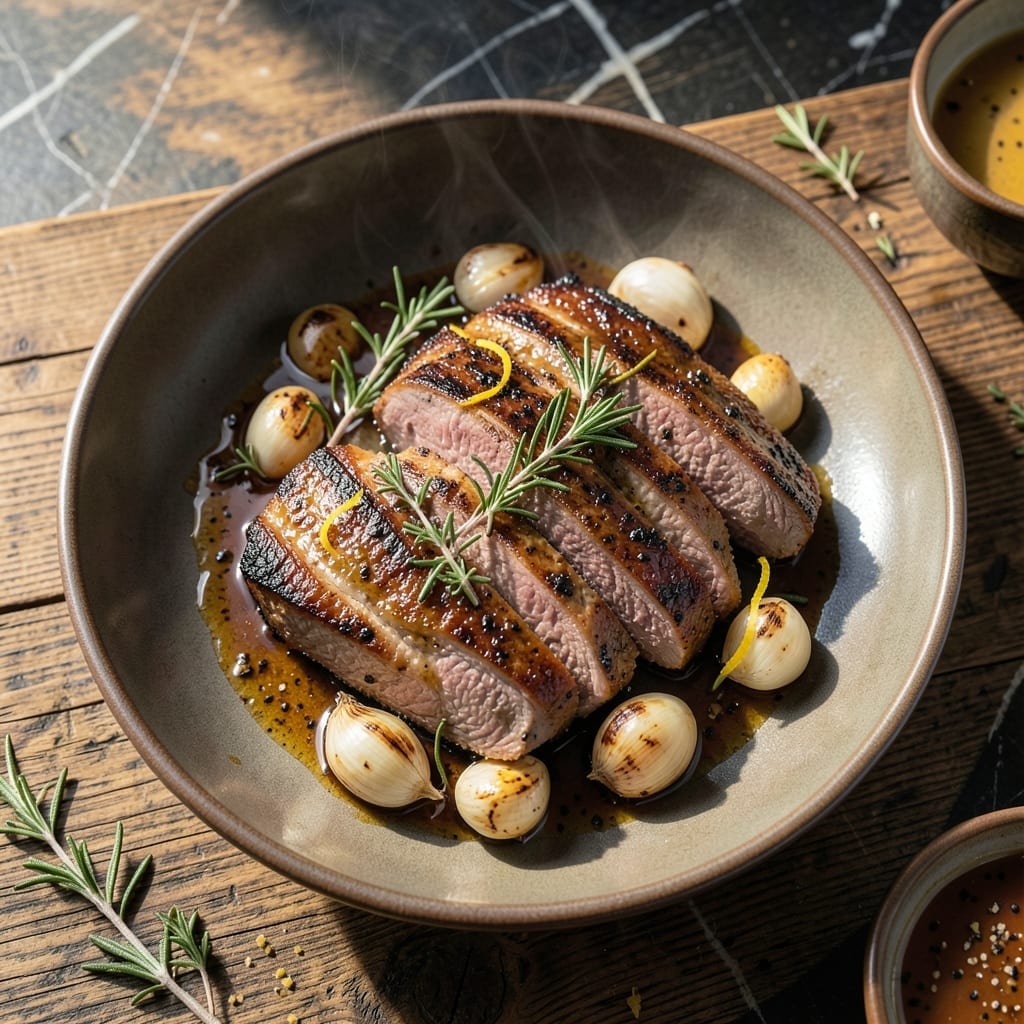
This grilling method delivers smoky char and tender pork every time. I developed it after years of competing in local BBQ events, perfecting the balance between crust and juiciness.
An herb crust adds depth while the high heat locks in moisture. The result is restaurant-quality pork sirloin with minimal effort at home.
Ingredients for Pork Sirloin Grill
Quality pork sirloin plus fresh herbs deliver restaurant-level results with minimal effort at home.
| Ingredient | Amount | Notes |
|---|---|---|
| Pork Sirloin 🥩 | 2 lb | Boneless, about 1.5 inches thick |
| Kosher Salt 🧂 | 1 ½ tsp | Diamond Crystal preferred for balance |
| Freshly Ground Black Pepper 🌶️ | 1 tsp | Coarse grind for texture |
| Garlic Cloves 🧄 | 4 cloves | Minced for herb crust |
| Fresh Rosemary 🌿 | 2 tbsp | Finely chopped, stems removed |
| Fresh Thyme Leaves 🍃 | 2 tbsp | Stripped from stems |
| Olive Oil 🫒 | ¼ cup | Extra-virgin for herb crust binding |
| Dijon Mustard 🟡 | 1 tbsp | For crust adhesion and tang |
| Smoked Paprika 🌶️ | 1 tsp | For smoky depth in crust |
| Light Brown Sugar 🏾 | 1 tbsp | Balances acidity in crust |
| Lemon Zest 🍋 | 1 tsp | Brightens herb crust flavor |
| Vegetable Oil 🛢️ | 1 tbsp | High smoke point for grilling |
[recipe_ingredient_scaler]
The pork sirloin is non-negotiable here. Look for well-marbled cuts at the butcher counter—supermarket prepackaged works but may need extra brining. Whole Foods or local meat markets often carry superior quality. The thickness matters: aim for 1.5-inch steaks for even cooking. For the herbs, organic rosemary and thyme from the produce section have better aroma than dried.
No fresh herbs? Dried at one-third the amount, but rehydrate in warm water first. Swap rosemary for sage if needed. Out of Dijon? Whole-grain mustard adds nice texture. For extra smokiness, add half teaspoon chipotle powder to the crust. The brown sugar can be replaced with maple syrup, but reduce slightly to avoid burning.
The herb crust can be prepped 8 hours ahead—store covered in the fridge. Cooked pork rests beautifully for 15 minutes before serving. Leftovers keep 3-4 days refrigerated, but this dish is best served fresh off the grill. Don’t skip the resting time; it’s crucial for juiciness.
Why You’ll Love This Recipe
- Minimal Fuss: I just rub the pork with salt, pepper, garlic, and rosemary, then let the grill do the work.
- Herb-Infused Bite: The rosemary and garlic crust gives every bite that smoky, savory depth I crave.
- Weeknight Hero: It’s my go-to for quick dinners, but fancy enough for company.
- Leftovers Win: Honestly, the sliced pork tastes even better the next day in sandwiches.
Step-by-Step Instructions for Pork Sirloin Grill
Master the technique for achieving a perfectly charred exterior with a juicy, herb-infused center.
Step 1: Prepare the Herb Crust
In a medium bowl, combine the 0.25 cup Olive Oil, 1 tbsp Dijon Mustard, 1.5 tsp Kosher Salt, 1 tsp Freshly Ground Black Pepper, 1 tsp Smoked Paprika, 1 tbsp Light Brown Sugar, and 1 tsp Lemon Zest. Whisk until the mixture emulsifies into a thick paste.
Add the 4 cloves Garlic Cloves, 2 tbsp Fresh Rosemary, and 2 tbsp Fresh Thyme Leaves, stirring to distribute the herbs evenly. This paste will form the flavorful crust that adheres to the pork during grilling. The acidity from the mustard and lemon zest helps tenderize the meat while the herbs infuse it with aromatic depth.
Step 2: Coat and Marinate the Pork
Pat the 2 lb Pork Sirloin dry with paper towels to ensure the crust adheres properly. Place the pork on a work surface and spread the herb paste evenly over all sides, pressing it into the meat to create a thick, even layer.
Let the pork sit at room temperature for 30 minutes to allow the flavors to penetrate. This step is crucial—it ensures the seasoning infuses the outer layer while the meat begins to warm, promoting even cooking. The surface should appear glossy and well-coated, with herbs visibly clinging to the meat.
Step 3: Preheat and Oil the Grill
Preheat your grill to medium-high heat (about 400-450°F). Clean the grates thoroughly with a grill brush to remove any debris, then use tongs and a folded paper towel dipped in 1 tbsp Vegetable Oil to oil the grates. This prevents sticking and promotes beautiful grill marks.
Ensure the grill is fully preheated before adding the pork—this is key to achieving a proper sear. The grates should sizzle when the oil makes contact, indicating they’re at the right temperature. Close the lid to maintain consistent heat while you prepare to cook.
Step 4: Grill to Perfection
Place the pork on the oiled grates and close the lid. Sear for 4-5 minutes per side, resisting the urge to move it. The crust should develop a deep, golden-brown char and release easily from the grates when it’s ready to flip.
After flipping, reduce the heat to medium (about 350°F) and continue grilling with the lid closed. Cook until the internal temperature reaches 145°F on an instant-read thermometer, which should take an additional 10-15 minutes depending on thickness. The pork should feel slightly firm to the touch and exhibit a rich, smoky aroma.
Step 5: Rest and Slice
Transfer the pork to a cutting board and tent loosely with foil. Let it rest for 10 minutes to allow the juices to redistribute throughout the meat. This step ensures each slice remains moist and flavorful.
Slice the pork against the grain into ½-inch thick pieces. The interior should be blush pink with a well-browned, herb-crusted exterior. Serve immediately to enjoy the full depth of the smoky, charred, and herbaceous flavors.
Pro Tips For Making Pork Sirloin Grill
- Preheat the Grill: I learned this the hard way—get those grates screaming hot, at least 450°F, before the pork hits them, or you’ll lose that perfect sear to a lukewarm surface.
- Dry the Pork: Pat the sirloin completely dry with paper towels before seasoning—moisture steams instead of sears, and no one wants a sad, gray crust.
- Skip the Overcrowding: Leave at least an inch between pieces on the grill; otherwise, the temperature drops and the pork steams in its own juices instead of charring.
- Crush the Garlic: Smash the garlic cloves with the flat of your knife before mincing—it releases more flavor and makes a real difference in the rub, especially with the rosemary.
Storing and Reheating This pork sirloin grill
Refrigerator Storage
Let your pork sirloin cool for no more than 2 hours before transferring to airtight containers. I prefer glass containers with snap-tight lids for leftovers. Store at 40°F or below for up to 3 days—the herb crust flavors actually deepen overnight. ❄️
Freezer Storage
For longer storage, wrap individual slices tightly in plastic wrap then place in a freezer bag, squeezing out all air. Sliced pork freezes well for up to 2 months without losing texture. Label with the date—I always forget when I frozen things during busy BBQ season.
Stovetop Reheating
Add sliced pork to a skillet with 2 tbsp water or broth over medium-low heat. Cover and warm for 3-4 minutes, flipping once. This method preserves the herb crust better than microwaving. I often add a pat of butter for extra richness.
Microwave Reheating
Place pork on a microwave-safe plate with a damp paper towel covering it. Heat on 50% power for 1-2 minutes, checking frequently. The damp towel prevents drying out, though I’ll admit stovetop reheating tastes better for this dish.
Reviving Leftovers
If your pork seems dry after storage, brush slices with 1 tsp olive oil before reheating. This brings back some of that original juiciness. I learned this trick after one too many sad leftover meals at BBQ competitions. 💡
Nutrition Facts
Frequently Asked Questions
What temperature should I grill it at?
Start with medium-high heat (400-450°F) for searing, then reduce to medium (350°F) to finish cooking. This creates a perfect char while keeping the inside juicy.
How do I know when it’s done?
Use an instant-read thermometer—145°F internal temperature means it’s perfectly cooked. The meat should feel slightly firm with a blush pink center.
Can I use dried herbs instead of fresh?
Yes, but use 1/3 the amount and rehydrate them in warm water first. Fresh herbs provide better flavor, but dried work in a pinch.
Why do I need to let it rest?
Resting for 10 minutes allows juices to redistribute. Skipping this step means dry meat—those juices will spill out when you slice it.

Trained in classic French technique but raised on slow-cooked ribs and spicy rubs, she blends culinary skill with smoke and soul.
- Recipe for Boneless Pork Chops in Cast Iron Skillet: Sear and Baste to Juicy Perfection - October 3, 2026
- Recipe for Boneless Cross Rib Roast: Slow-Roasted Beef with Herb Crust - October 3, 2026
- Hamburgers in Sauce Recipe Crock Pot: Slow-Cooked Savory Delight - October 3, 2026