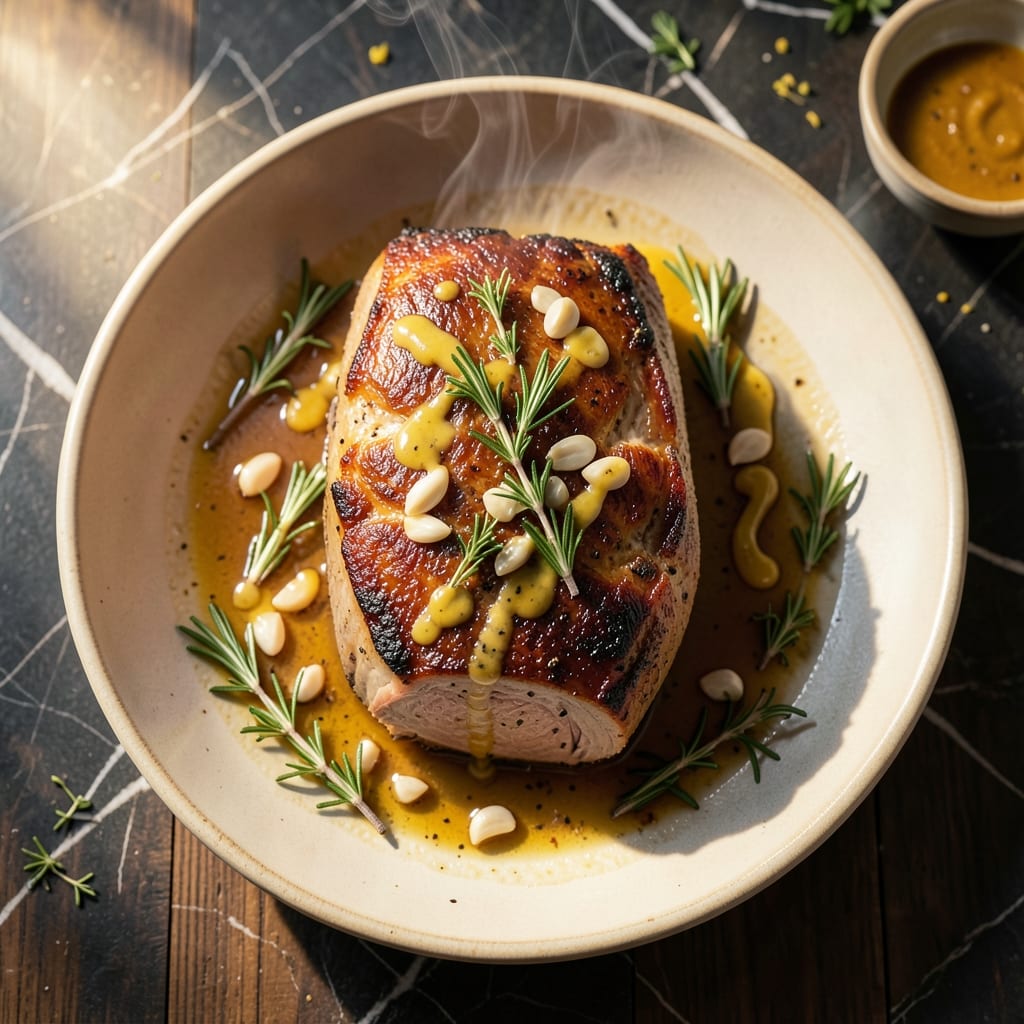
Sunday dinners deserve center-stage dishes that bring families together. This herb-crusted pork loin delivers juicy, tender results with minimal effort.
I learned the importance of proper seasoning and resting time during my apprenticeship in Charleston. The herb crust forms a flavorful seal that locks in moisture while creating a golden exterior.
What emerges is a roast with a perfect crust and fork-tender meat inside. The aroma alone will have everyone gathering around the table before it’s even sliced.
Serve with roasted vegetables or mashed potatoes for a complete meal. This is the kind of dish that makes Sunday special.
Ingredients for Boneless Pork Loin Centre Cut Roast
Eleven ingredients for a showstopping herb-crusted pork loin that feels special enough for Sunday.
| Ingredient | Amount | Notes |
|---|---|---|
| Boneless Pork Loin Centre Cut Roast 🥩 | 2 lb | Trimmed of excess fat |
| Fresh Rosemary 🌿 | 2 tbsp | Finely chopped, stems removed |
| Fresh Thyme 🍃 | 2 tbsp | Finely chopped, stems removed |
| Garlic Cloves 🧄 | 6 cloves | Minced for herb crust |
| Dijon Mustard 🟡 | 3 tbsp | For crust adhesion |
| Extra-Virgin Olive Oil 🫒 | 2 tbsp | Divided for searing and crust |
| Kosher Salt 🧂 | 1 ½ tsp | Diamond Crystal preferred |
| Freshly Ground Black Pepper 🌶️ | 1 tsp | Coarse grind for texture |
| Dried Sage 🌿 | 1 tsp | Rubbed between fingers |
| Breadcrumbs 🍞 | ¼ cup | Panko for extra crunch |
| Butter 🧈 | 2 tbsp | Unsalted, softened for basting |
| Red Wine 🍷 | ½ cup | Dry variety for deglazing |
[recipe_ingredient_scaler]
The pork loin is the star—look for center-cut at Whole Foods or your butcher. It cooks more evenly than end cuts. I learned this during my time in Charleston: proper marbling means better flavor. The herb crust needs fresh rosemary and thyme (the good stuff, not the pre-chopped kind). Trader Joe’s has great prices on fresh herbs if you’re in a pinch.
No fresh herbs? Dried at one-third the amount, but the crust won’t cling as well. Swap Dijon for whole-grain mustard if that’s what’s in the fridge. The red wine can be substituted with beef broth for deglazing. Panko gives the best crunch, but regular breadcrumbs work too. Don’t skip the resting time—it’s what makes the meat fork-tender.
Leftovers keep 4-5 days in the fridge and freeze beautifully for 3 months. Slice before storing for easier reheating. The herb crust tastes even better the next day, if you can wait that long (worth the extra minute).
Why You’ll Love This Recipe
- One Pan Wonder: Honestly, it’s just season, sear, and roast—no fancy steps, and the Dijon mustard glaze comes together while the pork rests.
- Herb-Infused Heaven: That rosemary and thyme crust with the sharp garlic kick? I catch myself sneaking bites straight from the cutting board.
- Sunday Dinner, Tuesday Leftovers: Feeds a crowd for Sunday supper, then slices up beautifully for sandwiches or salads the next day.
- Budget-Friendly Centerpiece: A centre-cut loin stays juicy without the price tag of rib roasts, and one 3-pound piece stretches to at least six generous servings.
Step-by-Step Instructions for Herb-Crusted Boneless Pork Loin Centre Cut Roast
Here’s the method I use to create a perfectly juicy roast with a fragrant herb crust every time.
Step 1: Prepare the Herb Crust Mixture
In a small bowl, combine the 2 tbsp Fresh Rosemary, 2 tbsp Fresh Thyme, 1 tsp Dried Sage, and 6 cloves Garlic Cloves minced. I rub the dried sage between my fingers first to release its aromatic oils.
Add the 0.25 cup Breadcrumbs, 3 tbsp Dijon Mustard, 1 tbsp Extra-Virgin Olive Oil, 1.5 tsp Kosher Salt, and 1 tsp Freshly Ground Black Pepper. Stir until it forms a thick paste. This will create that beautiful golden crust we’re after.
Step 2: Sear the Roast on All Sides
Pat the 2 lb Boneless Pork Loin Centre Cut Roast completely dry with paper towels. This ensures a good sear instead of steaming. Heat the remaining 1 tbsp Extra-Virgin Olive Oil in a large oven-safe skillet over medium-high heat.
Sear the roast on all sides for 2-3 minutes per side until deep golden brown. I like to hold the roast with tongs to sear the ends too. This builds a flavorful fond in the pan that we’ll use later. Transfer the roast to a plate temporarily.
Step 3: Apply the Crust and Begin Roasting
Return the seared roast to the skillet and spread the herb mixture evenly over the top and sides. Press it on firmly so it adheres well. Dot with the 2 tbsp Butter for extra richness and flavor.
Place the skillet in a preheated 375°F oven. Roast uncovered for 30 minutes. You’ll start to smell the incredible herb aroma filling your kitchen—that’s how you know it’s working.
Step 4: Deglaze and Finish Roasting
After 30 minutes, carefully remove the skillet from the oven. Transfer the roast to a cutting board. Place the skillet on the stovetop over medium heat and add the 0.5 cup Red Wine. Scrape up all those browned bits as the wine simmers.
Return the roast to the skillet, spooning the wine mixture over the top. Continue roasting for another 20-30 minutes (or until internal temperature reaches 145°F). The crust should be deep golden brown and the juices should run clear when pierced.
Step 5: Rest and Serve
Transfer the roast to a cutting board and tent loosely with foil. Let it rest for 10-15 minutes before slicing. This allows the juices to redistribute throughout the meat, ensuring every slice is moist and flavorful.
Slice against the grain into ½-inch thick pieces. Serve with the pan juices spooned over the top. The herb crust should be crispy on the outside with tender, juicy meat underneath—perfect for your Sunday dinner centerpiece.
Pro Tips For Making Boneless Pork Loin Centre Cut Roast
- Sear It Hot: I learned this the hard way—start with a smoking-hot pan to get that deep brown crust on your pork loin before roasting. About 2-3 minutes per side in oil, until it looks like it’s about to burn (it’s not).
- Score the Fat: Even though it’s boneless, make shallow cuts in the fat cap every inch or so so the rosemary, thyme, and garlic can penetrate deeper. Sounds fussy, but it actually changes the outcome.
- Don’t Overcook: Pull it at 145°F internal temp—it’ll rise to 150°F while resting. I used to wait for 160°F and wondered why my pork was dry and sad.
- Slather with Mustard: Brush the roast with Dijon mustard before the herbs—it acts like glue and adds a subtle tang. My grandmother swore by this, and she was right.
Common Mistakes When Making This Recipe
Skipping the Dry
Never skip patting the roast dry with paper towels before searing. I learned this the hard way during my first week at The Smoky Pig—moisture prevents proper browning and leads to steaming instead of that beautiful crust. 💪
Overcrowding the Pan
Use a skillet large enough to accommodate the roast with room to spare. If the pan is too small, the roast will steam in its own juices. I recommend a 12-inch cast iron for this 2 lb cut.
Rushing the Rest
Resist the urge to slice immediately after removing from the oven. The juices need 10-15 minutes to redistribute. I tent mine loosely with foil to keep it warm while it rests.
Uneven Crust Application
Press the herb mixture firmly onto all surfaces of the roast. A light touch means the crust will fall off during cooking. I use the back of a spoon to really work it into the meat.
Ignoring Internal Temp
Don’t rely on cooking time alone—pork loin is lean and can dry out quickly. Use a meat thermometer and pull it at exactly 145°F internal temperature. The ThermoWorks Instant Read is my go-to. 🌡️
Skipping the Deglaze
Those browned bits in the pan are pure flavor. Always deglaze with the 0.5 cup Red Wine to create a simple pan sauce. It takes 2 minutes but makes a world of difference.
Nutrition Facts
Frequently Asked Questions
What’s the best internal temperature for a juicy roast?
Use a meat thermometer and pull it at exactly 145°F. This ensures perfect doneness and maximum juiciness. Remember the temperature will rise 5-10°F during resting.
Can I use dried herbs instead of fresh?
Yes, but use one-third the amount and expect less cling. The crust won’t be as vibrant, but it’ll still add great flavor. Fresh herbs are preferred for the best texture and aroma.
How long should I let it rest before slicing?
Always rest for 10-15 minutes tented with foil. This lets juices redistribute, ensuring each slice stays moist and flavorful. Skipping this makes the meat dry out.
What if I don’t have red wine for deglazing?
Substitute with 0.5 cup beef broth instead. It won’t have the same depth but creates a tasty pan sauce. Avoid white wine, as it lacks the robust flavor needed.

Trained in classic French technique but raised on slow-cooked ribs and spicy rubs, she blends culinary skill with smoke and soul.
- Recipe for Boneless Pork Chops in Cast Iron Skillet: Sear and Baste to Juicy Perfection - October 3, 2026
- Recipe for Boneless Cross Rib Roast: Slow-Roasted Beef with Herb Crust - October 3, 2026
- Hamburgers in Sauce Recipe Crock Pot: Slow-Cooked Savory Delight - October 3, 2026