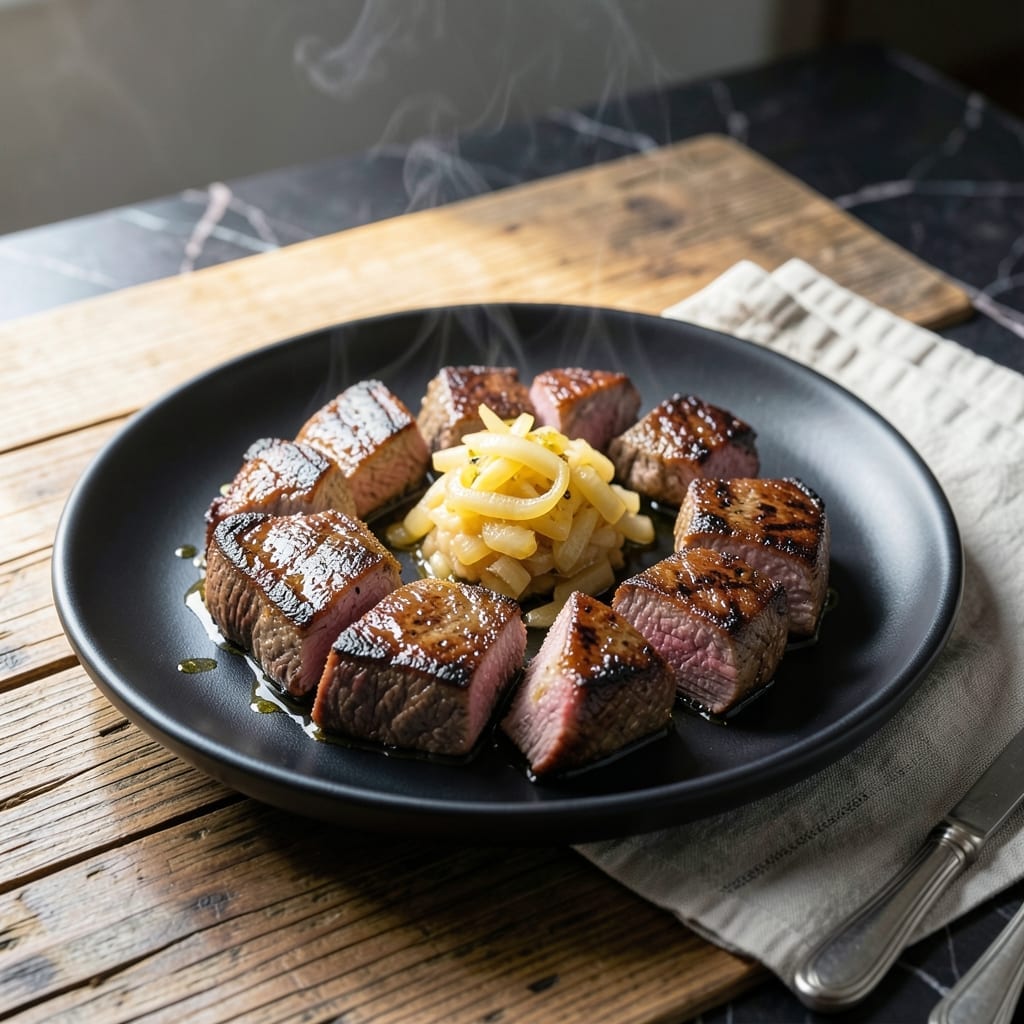
Slow-braised boneless shoulder steak transforms tough cuts into fall-apart tender beef swimming in rich, velvety gravy. This method unlocks deep flavor and perfect texture without fancy equipment or techniques.
The secret lies in low, steady heat and a flavorful braising liquid. I developed this technique in my home kitchen, testing until every bite delivered that melt-in-your-mouth quality we all crave from comfort food.
What emerges is beef so tender it nearly dissolves on your tongue, with a rich gravy that soaks into every fiber. The aroma alone will have everyone gathering around the table before dinner is even ready.
Pair with mashed potatoes or crusty bread to soak up every drop of that savory sauce. Here’s how to make this dish shine.
Ingredients for Boneless Shoulder Steak
Transform tough cuts into fall-apart beef with these rich, velvety braising ingredients.
| Ingredient | Amount | Notes |
|---|---|---|
| Boneless Shoulder Steak 🥩 | 2 lb | Cut into 2-inch chunks |
| All-Purpose Flour 🌾 | ¼ cup | For dredging beef |
| Kosher Salt 🧂 | 1 ½ tsp | Divided for seasoning |
| Freshly Ground Black Pepper 🌶️ | 1 tsp | Divided for seasoning |
| Olive Oil 🫒 | 2 tbsp | For searing beef |
| Yellow Onion 🧅 | 1 whole | Large, finely chopped |
| Garlic Cloves 🧄 | 4 cloves | Minced for braising liquid |
| Low-Sodium Beef Broth 💧 | 2 cups | For braising liquid |
| Dry Red Wine 🍷 | 1 cup | Bold variety like Cabernet |
| Tomato Paste 🍅 | 2 tbsp | For depth of flavor |
| Fresh Thyme Sprigs 🌿 | 3 pieces | Plus extra for garnish |
| Fresh Rosemary Sprigs 🍃 | 2 pieces | For aromatic depth |
| Bay Leaves 🌿 | 2 pieces | For braising liquid |
| Carrots 🥕 | 2 whole | Medium, chopped into chunks |
| Celery Stalks 🌿 | 2 pieces | Chopped into chunks |
[recipe_ingredient_scaler]
The beef is everything here. Boneless shoulder steak (sometimes labeled as chuck steak) has the perfect fat-to-meat ratio for braising. Look for pieces with good marbling—this ensures tenderness after the long cook. I grab mine from Costco for bulk savings or Whole Foods when I want grass-fed. The flour for dredging? All-purpose is ideal—it creates just the right crust without overwhelming the dish.
No red wine? Substitute additional beef broth plus a splash of balsamic vinegar. Fresh herbs are best, but dried at one-third the amount works (just add them earlier so they rehydrate). The tomato paste can come from those Trader Joe’s squeeze tubes—no waste, lasts forever in the fridge. If you’re missing carrots or celery, parsnips or mushrooms add great depth to the braise.
This tastes even better the next day once the flavors meld. Store leftovers in an airtight container for up to 4 days in the fridge or freeze for 3 months. Reheat gently on the stove with a splash of water to thin the gravy if needed.
Why You’ll Love This Recipe
- One Pan Wonder: I sear the steak in olive oil, then rest it while the pan does all the work—minimal cleanup, maximum flavor.
- Crispy Perfection: The flour crust with just salt and pepper creates this incredible crunch that gives way to tender meat every time.
- Budget Friendly: Shoulder steak is half the price of ribeye but just as satisfying when cooked right.
- Meal Prep Hero: I make a double batch on Sunday and it reheats beautifully for lunches all week.
Step-by-Step Instructions for Slow-Braised Beef With Rich Gravy
This method transforms tough cuts into fork-tender perfection with deep, complex flavors.
Step 1: Season and Sear the Beef
Pat the 2 lb Boneless Shoulder Steak dry with paper towels, then cut it into 2-inch chunks. Season generously with 1 tsp Kosher Salt and 0.5 tsp Freshly Ground Black Pepper. The dry surface ensures a proper sear rather than steaming the meat.
Dredge the beef in the 0.25 cup All-Purpose Flour, shaking off excess. Heat 2 tbsp Olive Oil in a heavy pot over medium-high heat. Working in batches, sear the beef until deeply browned on all sides—about 3-4 minutes per side. This builds the flavor foundation for the gravy. Transfer to a plate and set aside.
Step 2: Sauté the Aromatics
In the same pot, add the finely chopped Yellow Onion, chopped Carrots, and chopped Celery Stalks. Cook over medium heat for 5-6 minutes until the vegetables soften and begin to caramelize. The browned bits from the beef will meld with the vegetables for extra depth.
Stir in 4 cloves minced Garlic Cloves and 2 tbsp Tomato Paste, cooking for 1 minute until the garlic is fragrant and the tomato paste darkens slightly. This step intensifies the umami richness of the dish. Be careful not to burn the garlic—it should just turn golden.
Step 3: Deglaze and Braise
Pour in 1 cup Dry Red Wine, scraping the bottom of the pot to release all the browned bits. Let it simmer for 2-3 minutes until the liquid reduces by half. This deglazing step is crucial for layering flavor into the braising liquid.
Return the beef to the pot along with any accumulated juices. Add the 2 cups Low-Sodium Beef Broth, 3 pieces Fresh Thyme Sprigs, 2 pieces Fresh Rosemary Sprigs, and 2 pieces Bay Leaves. Bring to a simmer, then reduce heat to low. Cover and let it braise for 2 to 2.5 hours, stirring occasionally, until the beef is fork-tender.
Step 4: Finish and Adjust the Gravy
Once the beef is tender, remove it from the pot and set aside. Skim any excess fat from the surface of the braising liquid, then bring it to a gentle boil over medium heat. Cook for 5-7 minutes until the liquid thickens slightly into a rich gravy. Taste and adjust seasoning with the remaining 0.5 tsp Kosher Salt and 0.5 tsp Freshly Ground Black Pepper as needed.
Return the beef to the pot, coating it in the gravy. Let it warm through for 2-3 minutes before serving. The gravy should cling to the beef, with a deep, savory flavor that complements the tender meat perfectly.
Pro Tips For Making Boneless Shoulder Steak
- Pat It Dry: Use paper towels to thoroughly dry the steak before seasoning—this guarantees a crispy crust when searing in olive oil rather than steaming it.
- Season Generously: Don’t be shy with the kosher salt and black pepper; shoulder steak needs bold seasoning to cut through its rich flavor, and the flour coating will lock it in.
- High Heat Only: Crank the pan to medium-high before adding the steak, and resist the urge to move it for at least 2-3 minutes per side to get that deep, golden-brown sear.
- Rest Before Slicing: Let the steak rest for 5-10 minutes after cooking—it keeps the juices from running all over the cutting board, and I learned this the hard way with dry, sad slices.
Common Mistakes When Making Great boneless shoulder steak
Overcrowding the Pot
When searing the beef, resist the urge to fit all pieces in at once. Overcrowding lowers the pot’s temperature, causing the meat to steam instead of brown. I sear in batches—2-3 pieces at a time—to ensure each chunk develops that deep, flavorful crust. 🔥
Skipping the Deglaze
Those browned bits stuck to the pot after searing are pure flavor. Skipping the deglaze with red wine means losing that rich foundation for your gravy. Always scrape the bottom thoroughly while the wine simmers for 2-3 minutes.
Rushing the Braise
This cut needs time to break down. I once tried cutting the braise short at 1.5 hours—the beef was tough and chewy. For fall-apart tenderness, maintain that low simmer for the full 2 to 2.5 hours. Patience is your best tool here.
Under-Seasoning the Gravy
The braising liquid reduces significantly, so season in layers. I taste after skimming the fat and often need that full remaining 0.5 tsp Kosher Salt. The gravy should taste bold and savory, not flat.
Ignoring the Fat Cap
Shoulder steak often has visible fat. While some renders out during cooking, I trim any large, hard pieces before searing. This prevents a greasy final dish. Leave the marbled fat—it adds flavor and tenderness.
Using the Wrong Pot
A heavy-bottomed pot with a tight lid is essential. I use my enamel-coated Dutch oven—it distributes heat evenly and retains moisture. Thin pots can cause hot spots that burn the gravy. 💡
Nutrition Facts
Frequently Asked Questions
What’s the best cooking method for this cut?
Slow braising is ideal. It breaks down the tough fibers, turning the meat fork-tender while building rich flavor in the gravy over 2-2.5 hours.
Can I use a different liquid for braising?
Yes! Swap red wine for extra beef broth plus 1 tbsp balsamic vinegar for acidity. Beer or mushroom stock also work well for depth.
How do I know when it’s done?
The beef should pull apart easily with a fork. If it resists, continue braising at a low simmer and check every 20 minutes.
Why is my gravy thin?
Simmer uncovered for 5-7 minutes to reduce. For faster results, mix 1 tbsp cornstarch with water and stir in.

Trained in classic French technique but raised on slow-cooked ribs and spicy rubs, she blends culinary skill with smoke and soul.
- Recipe for Boneless Pork Chops in Cast Iron Skillet: Sear and Baste to Juicy Perfection - October 3, 2026
- Recipe for Boneless Cross Rib Roast: Slow-Roasted Beef with Herb Crust - October 3, 2026
- Hamburgers in Sauce Recipe Crock Pot: Slow-Cooked Savory Delight - October 3, 2026