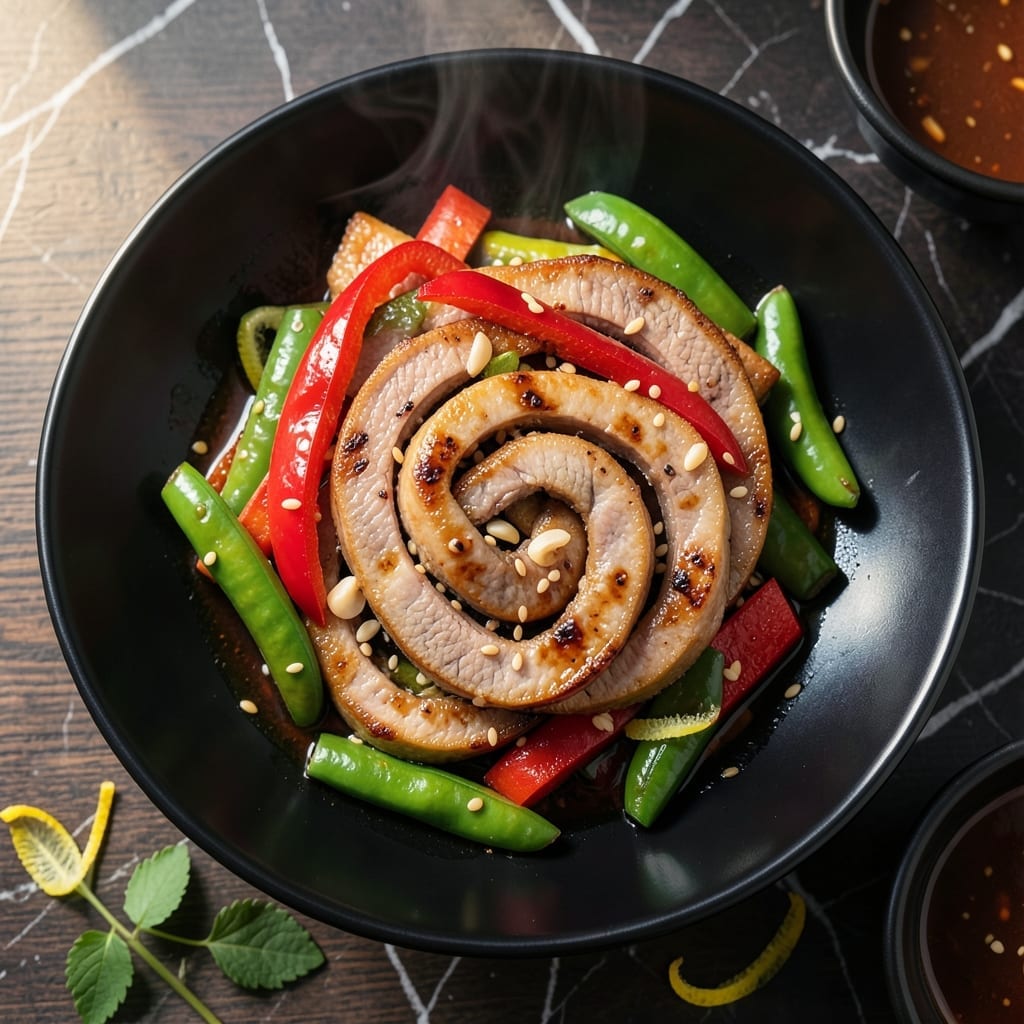
This stir fry delivers authentic Chinese flavor with a velvety texture that melts in your mouth. The ginger-soy sauce creates the perfect balance of savory and aromatic notes.
Using traditional techniques, this dish transforms simple ingredients into a restaurant-quality meal. The pork stays tender while absorbing the rich, complex flavors of the sauce.
Ingredients for Chinese Pork Stir Fry
Velvety pork and vibrant vegetables meet in this aromatic ginger-soy stir fry.
| Ingredient | Amount | Notes |
|---|---|---|
| Pork Tenderloin 🥩 | 1 ½ lb | Thinly sliced against grain |
| Soy Sauce 🫒 | ½ cup | Low-sodium preferred for balance |
| Fresh Ginger Root 🌿 | 2 tbsp | Peeled and finely minced |
| Garlic Cloves 🧄 | 4 cloves | Minced to paste consistency |
| Cornstarch 🌾 | 2 tbsp | For velveting pork texture |
| Rice Wine 🍶 | 3 tbsp | Shaoxing preferred or dry sherry |
| Brown Sugar 🏝️ | 1 tbsp | Light or dark variety |
| Sesame Oil 🫒 | 1 tsp | Toasted variety for aroma |
| Vegetable Oil 🫒 | 3 tbsp | High smoke point for stir frying |
| Green Onions 🧅 | 4 whole | Thinly sliced on diagonal |
| Red Bell Pepper 🌶️ | 1 whole | Thinly sliced into strips |
| Carrots 🥕 | 2 whole | Julienned for even cooking |
| Chicken Broth 🥣 | ¼ cup | Low-sodium for sauce control |
[recipe_ingredient_scaler]
The pork quality is non-negotiable for velvet texture. Pork tenderloin offers the ideal balance of tenderness and flavor absorption. Source from Whole Foods or local butchers who can provide consistent marbling. For the soy sauce, Kikkoman low-sodium provides reliable depth without overwhelming saltiness. Fresh ginger root should have smooth, unblemished skin—avoid pieces with excessive knobs or dry patches.
No rice wine? Dry sherry at equal amount works as a substitute. Shaoxing wine from Asian markets offers authentic depth. For the vegetable component, zucchini or snap peas can replace bell peppers. The cornstarch is essential for the velveting technique—do not substitute with flour. If avoiding alcohol entirely, additional chicken broth with a teaspoon of rice vinegar provides balance.
The ginger-soy sauce intensifies overnight. Store cooked pork and vegetables separately in airtight containers for 3-4 days. Reheat gently to preserve the velvet texture. For optimal results, prepare all ingredients before cooking—mise en place is critical for stir-fry success (worth the extra minute).
Why You’ll Love This Recipe
- One Pan Wonder: I love that everything cooks in a single skillet—pork, garlic, ginger, and that glossy soy sauce finish.
- Flavor Bomb: The ginger and garlic hit first, then the soy sauce caramelizes into this rich, savory coating on the tender pork.
- Weeknight MVP: Honestly, it’s my go-to for busy Tuesdays when I need dinner fast but still want something that tastes like I tried.
- Stretches Far: Leftovers taste even better the next day, and the pork tenderloin keeps it budget-friendly without skimping on taste.
Step-by-Step Instructions for Chinese Pork Stir Fry
Master the velveting technique for tender pork with a glossy ginger-soy glaze.
Step 1: Velvet the Pork Tenderloin
Slice the 1.5 lb pork tenderloin thinly against the grain into ¼-inch strips. In a bowl, combine the pork with 2 tbsp cornstarch, 3 tbsp rice wine, and 1 tbsp brown sugar. Mix thoroughly until each piece is evenly coated—this is the velveting process that guarantees tenderness.
Let the mixture marinate for 15 minutes at room temperature. The cornstarch will create a slightly tacky surface that locks in moisture, while the rice wine tenderizes the meat. The pork should look glossy and slightly opaque when ready.
Step 2: Prepare Aromatics and Vegetables
While the pork marinates, mince the 2 tbsp fresh ginger root and 4 cloves garlic cloves to a paste-like consistency. Thinly slice the 4 whole green onions on a diagonal, julienne the 2 whole carrots, and cut the 1 whole red bell pepper into thin strips.
Keep all prepped ingredients within arm’s reach—stir-frying happens quickly. The ginger and garlic should be finely minced to release their full aroma, while the vegetables need uniform cuts to ensure even cooking. This mise en place approach prevents burning during the high-heat process.
Step 3: Stir-Fry the Pork and Vegetables
Heat 2 tbsp vegetable oil in a wok or large skillet over high heat until shimmering. Add the velveted pork in a single layer, spreading it out to avoid overcrowding. Let it sear undisturbed for 1-2 minutes until the edges turn opaque and lightly browned.
Stir-fry the pork for another 2-3 minutes until just cooked through, then transfer it to a plate. In the same pan, add the remaining 1 tbsp vegetable oil, followed by the ginger and garlic. Stir for 30 seconds until fragrant, then add the red bell pepper and carrots. Cook for 3-4 minutes until the vegetables are crisp-tender.
Step 4: Build the Ginger-Soy Sauce
Return the pork to the pan and pour in the 0.5 cup soy sauce and 0.25 cup chicken broth. Stir everything together and let it simmer for 2 minutes until the sauce reduces slightly and coats the pork and vegetables evenly.
The sauce should thicken to a glossy consistency, clinging to each piece. Taste and adjust seasoning if needed, though the low-sodium soy sauce and chicken broth should provide a balanced base. The pork will absorb the flavors as it finishes cooking.
Step 5: Finish and Serve
Drizzle the 1 tsp sesame oil over the stir-fry and toss to combine. The sesame oil adds a nutty depth to the dish. Sprinkle the sliced green onions on top for a fresh, vibrant finish.
Transfer to a serving platter immediately. The pork should be velvety and juicy, the vegetables crisp yet tender, and the sauce glossy with a rich ginger-soy flavor. Serve hot with steamed rice to soak up every last bit of the delicious sauce.
Pro Tips For Making Chinese Pork Stir Fry
- Velvet the Pork: Toss the sliced pork tenderloin with 1 tablespoon cornstarch and 1 tablespoon soy sauce for 15 minutes before cooking. I learned this the hard way—it keeps the meat juicy and gives that restaurant-style texture.
- High Heat Only: Crank your wok or pan to smoking hot before adding the pork. After burning three batches, I finally figured out that medium heat just steams the meat instead of searing it.
- Fresh Ginger Matters: Skip the powdered stuff and use 1 tablespoon freshly grated ginger root. My grandmother swore by this, and she was right: it adds a bright, zesty kick that dried ginger can’t touch.
- Don’t Overcrowd: Cook the pork in two batches if needed—overcrowding drops the pan temperature and turns your stir fry into a sad, soggy mess. I was skeptical until I tried it, but the difference is huge.
Flavor Customization for These Flavors
Spice It Up
For heat lovers, add 1-2 tsp chili garlic sauce or ½ tsp red pepper flakes to the stir-fry. The chili garlic sauce blends seamlessly with the ginger-soy base, while red pepper flakes add texture. I often add both for layered heat. 🌶️
Sweeten the Deal
Balance the savory notes with 1 tbsp honey or 2 tsp hoisin sauce. Honey adds pure sweetness that caramelizes slightly, while hoisin brings depth with its fermented soybean base. Stir in with the sauce at the end.
Extra Umami Boost
Enhance the dish with 1 tbsp oyster sauce or 1 tsp fish sauce. Oyster sauce adds a thick, glossy richness, while fish sauce contributes a salty depth. Both pair beautifully with the pork’s natural flavors.
Herb Infusion
Add fresh herbs like ¼ cup cilantro leaves or Thai basil at the end. Cilantro brightens the dish with citrus notes, while Thai basil offers an anise-like aroma. Toss gently to preserve their delicate flavors.
Crunchy Texture
Top with ¼ cup roasted peanuts or cashews for contrast. The nuts add a satisfying crunch and nutty flavor that complements the tender pork. Lightly toast them in a dry pan before adding.
Citrus Zing
Finish with 1 tsp lime zest or 1 tbsp orange juice for brightness. The citrus lifts the dish, cutting through the richness. I love the way lime zest adds a pop of color and aroma. 💛
Nutrition Facts
Frequently Asked Questions
What’s the secret to tender pork in stir fry?
The velveting technique is key. Coat pork strips with cornstarch and rice wine, then let marinate for 15 minutes. This creates a silky texture that locks in moisture.
Can I use a different cut of pork?
Pork tenderloin is ideal for tenderness, but shoulder works too. Slice thinly against the grain and velvet properly for best results. Avoid fatty cuts like ribs.
How do I prevent the sauce from getting too salty?
Use low-sodium soy sauce and balance with chicken broth. Taste before adding extra salt—the ginger and garlic add depth without overpowering.
Can I make this ahead of time?
Prep ingredients in advance, but cook just before serving. The pork and veggies lose texture if reheated. Store leftovers in airtight containers for up to 3 days.

Trained in classic French technique but raised on slow-cooked ribs and spicy rubs, she blends culinary skill with smoke and soul.
- Recipe for Boneless Pork Chops in Cast Iron Skillet: Sear and Baste to Juicy Perfection - October 3, 2026
- Recipe for Boneless Cross Rib Roast: Slow-Roasted Beef with Herb Crust - October 3, 2026
- Hamburgers in Sauce Recipe Crock Pot: Slow-Cooked Savory Delight - October 3, 2026