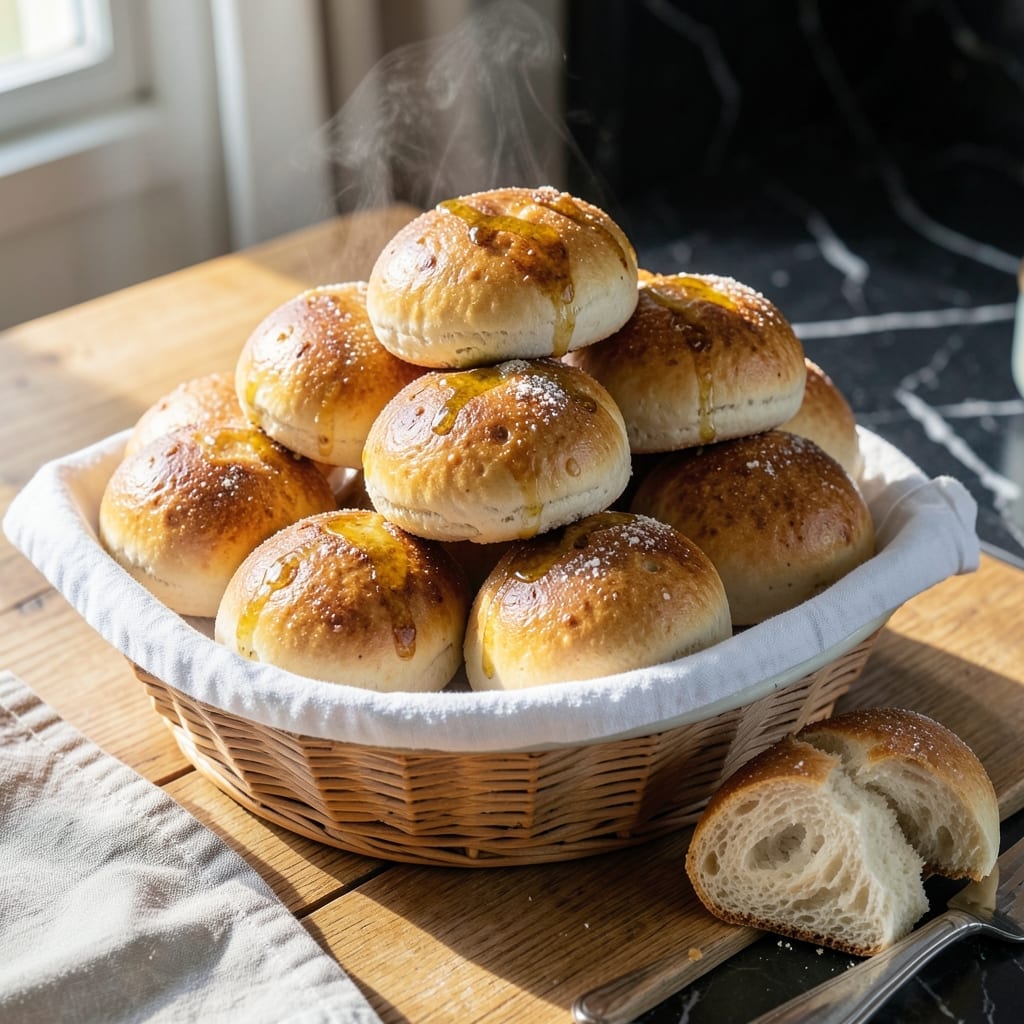
Your bread maker can do more than just loaves—this recipe unlocks its potential for soft, fluffy buns with zero hands-on effort. The machine handles mixing, kneading, and rising while you focus on other tasks.
With basic pantry staples and the right setting, you’ll get consistently perfect results every time. The buns emerge golden and pillowy, ideal for sandwiches, burgers, or dinner rolls.
Ingredients for Bread Bun Recipe for Bread Maker
Basic pantry staples plus your bread maker equals perfect buns every time.
| Ingredient | Amount | Notes |
|---|---|---|
| Warm Water 💧 | 1 ¼ cups | 110-115°F for yeast activation |
| Whole Milk 🥛 | ¼ cup | Room temperature preferred |
| Granulated Sugar 🍚 | 2 tbsp | Feeds the yeast for rise |
| Active Dry Yeast 🍞 | 2 ¼ tsp | One packet plus extra |
| Bread Flour 🌾 | 4 cups | High protein for structure |
| All-Purpose Flour 🌾 | ½ cup | For softer texture |
| Unsalted Butter 🧈 | 3 tbsp | Melted and cooled |
| Large Egg 🥚 | 1 whole | Room temperature |
| Salt 🧂 | 1 ½ tsp | Fine sea salt preferred |
| Powdered Milk 🥛 | 2 tbsp | Optional for richer dough |
| Egg Yolk 🥚 | 1 whole | For brushing on top |
| Sesame Seeds 🌰 | 2 tbsp | Optional topping |
[recipe_ingredient_scaler]
The flour combo is non-negotiable here. Bread flour gives you that chewy structure, while a touch of all-purpose keeps them tender. I snag mine from King Arthur when I’m stocking up—consistent quality, never a dud batch. Yeast freshness matters too: check the expiration date and store unopened packets in the freezer. Warm water should feel like a baby’s bath (110-115°F), not hot enough to scald.
No bread flour? All-purpose plus 1 tbsp vital wheat gluten per cup works in a pinch. Dairy-free? Swap the milk for warm water and add an extra tablespoon of sugar. Out of eggs? 1/4 cup unsweetened applesauce stands in for the whole egg (skip the yolk wash). Butter can be any neutral oil, though the flavor won’t be as rich. The sesame seeds? Totally optional—poppy seeds or everything bagel seasoning are fun swaps.
Dough keeps in the fridge for 24 hours if you want to make ahead. Baked buns stay fresh wrapped in foil for 3 days or freeze for 1 month. Reheat frozen buns at 350°F for 10 minutes—good as new (trust me on this).
Why You’ll Love This Recipe
- Hands-Off Magic: The bread maker does all the kneading and rising while I sip my coffee—just add the warm water, milk, sugar, yeast, and flour.
- Pillowy Perfection: That first bite with the soft, slightly sweet interior? Honestly worth the minimal effort.
- Meal Prep Hero: I bake a batch on Sunday and freeze them—perfect for quick burgers or sandwiches all week.
- Budget Friendly: Flour, yeast, and basic pantry staples make a dozen buns for pennies compared to store-bought.
Step-by-Step Instructions for Bread Maker Buns
Here’s your foolproof method for perfectly soft, golden buns with minimal effort.
Step 1: Activate the Yeast and Combine Wet Ingredients
Start by adding the 1.25 cups Warm Water to your bread maker pan. The temperature matters here—110-115°F is the sweet spot for yeast activation. I use a kitchen thermometer to check. Next, add the 0.25 cup Whole Milk, 2 tbsp Granulated Sugar, and 3 tbsp Unsalted Butter.
The sugar feeds the yeast, while the butter adds richness. I always ensure the butter is melted and cooled to avoid killing the yeast. Stir these wet ingredients gently to combine—the sugar should dissolve completely.
Step 2: Add Dry Ingredients and Start the Dough Cycle
In the bread maker pan, layer the dry ingredients on top of the wet mixture. Add the 4 cups Bread Flour, 0.5 cup All-Purpose Flour, 1.5 tsp Salt, 2 tbsp Powdered Milk, and 2.25 tsp Active Dry Yeast. The order is important—yeast should never touch liquid until the machine starts.
Make a small well in the center of the flour for the yeast to sit in. This prevents premature activation. Select the “dough” cycle on your bread maker and press start. The machine will handle the mixing and kneading, but I like to check after 5 minutes to ensure everything is incorporating evenly.
Step 3: Shape and Proof the Buns
Once the dough cycle completes (usually 90 minutes), turn the dough onto a lightly floured surface. Divide it into 12 equal portions—I use a kitchen scale for precision. Roll each piece into a smooth ball by pinching the bottom and tucking it under.
Place the shaped buns on a parchment-lined baking sheet, spacing them 2 inches apart. Cover with a clean kitchen towel and let rise in a warm place for 45-60 minutes until nearly doubled in size. They should spring back slowly when gently pressed.
Step 4: Bake to Golden Perfection
Preheat your oven to 375°F. Brush the risen buns with the 1 whole Egg Yolk mixed with 1 tablespoon of the Warm Water. This egg wash gives them that beautiful, shiny golden crust. Sprinkle with the 2 tbsp Sesame Seeds if using.
Bake for 15-18 minutes until the buns are deep golden brown and sound hollow when tapped on the bottom. Don’t open the oven door during the first 10 minutes—this can cause them to deflate. Transfer to a wire rack to cool completely before serving.
Pro Tips For Making Bread Bun Recipe For Bread Maker
- Check Yeast First: I learned this the hard way—always proof your yeast in the warm water with a pinch of sugar for 5-10 minutes until it foams. If it doesn’t bubble, your buns won’t rise, no matter how long you wait.
- Warm the Milk: Sounds weird, but it works: take the chill off the whole milk before adding it to the mix. Cold milk can shock the yeast and slow down the rise, leaving you with dense buns.
- Measure Flour Right: Resist the urge to scoop flour directly from the bag—it packs down and you’ll end up with too much. Spoon it into your measuring cup and level it off for light, fluffy buns every time.
- Use Bread Setting: After burning three batches, I finally figured out that the dough setting isn’t enough. Use the bread setting for the full cycle to guarantee your buns are fully baked through and golden.
Wine and Beer Pairings for These Flavors
Beer Pairings
A crisp American lager like Budweiser complements the buttery richness of these buns beautifully. The light maltiness and subtle sweetness balance the soft texture without overpowering it. I love this combo for casual backyard gatherings. 🍺
Wheat Beers
A German hefeweizen such as Paulaner adds a refreshing citrus and banana note that pairs surprisingly well. The slight effervescence cuts through the richness, making each bite feel lighter. Serve chilled in a tall glass for the full effect.
Wine Pairings
For wine lovers, a chilled Sauvignon Blanc from New Zealand offers crisp acidity and citrus notes. The bright finish cleanses your palate between bites. I prefer Cloudy Bay for its consistent quality and vibrant flavor profile.
Sparkling Options
A dry Prosecco delivers bubbles that enhance the fluffy texture of your buns. The light, fruity notes of La Marca Prosecco add a celebratory touch to any meal featuring these homemade creations.
Non-Alcoholic Choices
For a non-alcoholic pairing, try sparkling apple cider like Martinelli’s. Its natural sweetness and bubbles create a delightful contrast with the warm, buttery buns. Even kids love this combination at family meals. ✨
Frequently Asked Questions
Can I use all-purpose flour instead of bread flour?
Yes, but add 1 tbsp vital wheat gluten per cup for better structure. Bread flour’s higher protein gives buns their chewy texture, but this trick works in a pinch.
Why did my buns turn out dense?
Likely the yeast was old or the water was too hot. Always check yeast freshness and use 110-115°F water. Overproofing can also cause this—bake when buns are just doubled.
How do I make these buns vegan?
Swap milk for warm water, use 1/4 cup applesauce instead of the egg, and replace butter with oil. Skip the egg wash and brush with plant-based milk.
Nutrition Facts

Trained in classic French technique but raised on slow-cooked ribs and spicy rubs, she blends culinary skill with smoke and soul.
- Recipe for Boneless Pork Chops in Cast Iron Skillet: Sear and Baste to Juicy Perfection - October 3, 2026
- Recipe for Boneless Cross Rib Roast: Slow-Roasted Beef with Herb Crust - October 3, 2026
- Hamburgers in Sauce Recipe Crock Pot: Slow-Cooked Savory Delight - October 3, 2026