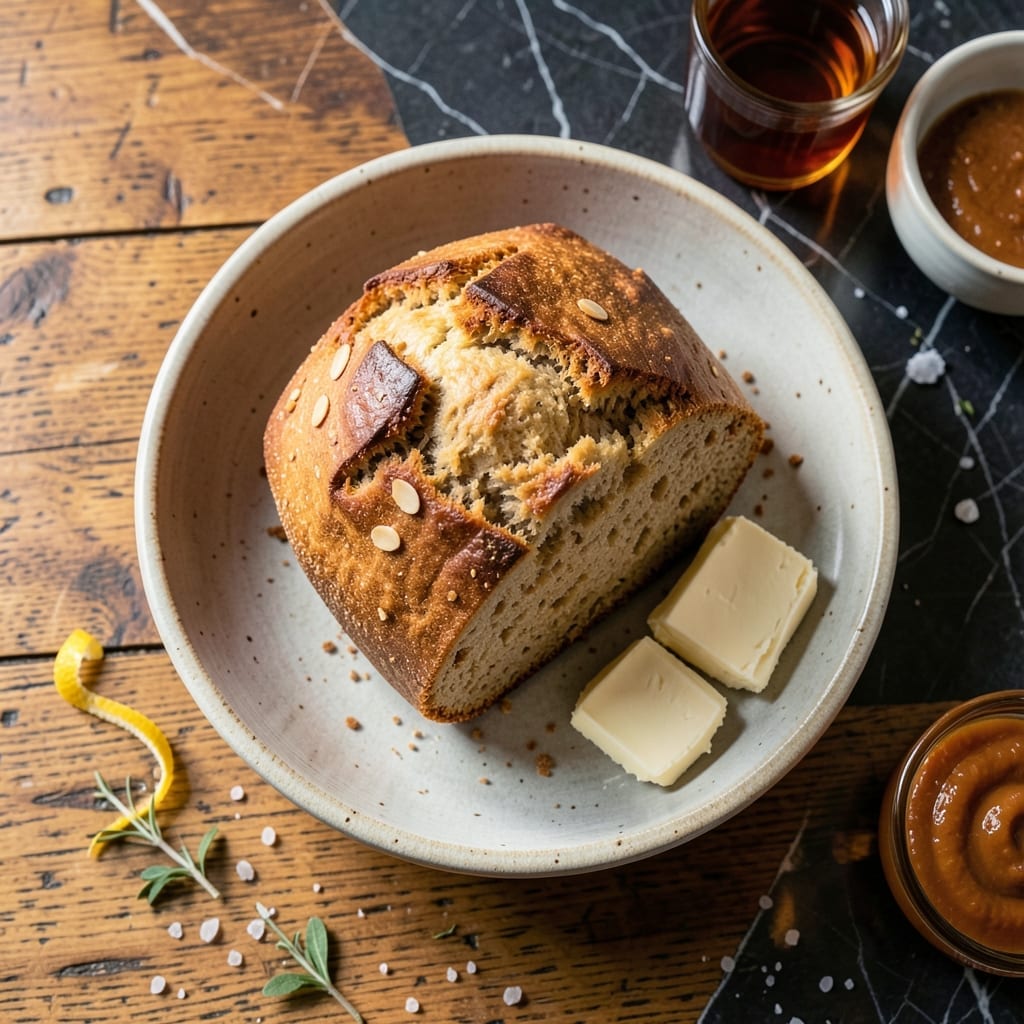
This gluten-free bread delivers the structure and flavor you miss from traditional loaves. The almond flour base creates a nutty, moist crumb that’s perfect for sandwiches or toast.
I’ve refined this recipe to ensure a proper rise and golden crust without gluten. It’s a simple, foolproof method for delicious homemade bread.
Ingredients for Bread Recipe Using Almond Flour
A few pantry staples create this gluten-free loaf with nutty almond flour richness and perfect crumb.
| Ingredient | Amount | Notes |
|---|---|---|
| Almond Flour 🌰 | 3 cups | Blanched, fine grind preferred |
| Large Eggs 🥚 | 4 whole | Room temperature for best rise |
| Unsalted Butter 🧈 | ¼ cup | Melted and cooled slightly |
| Baking Soda 🧂 | 1 tsp | Ensures proper rise in batter |
| Sea Salt 🧂 | ½ tsp | Fine grain for even distribution |
| Apple Cider Vinegar 🍏 | 1 tbsp | Balances baking soda reaction |
| Honey 🍯 | 2 tbsp | Adds moisture and subtle sweetness |
| Psyllium Husk Powder 🌾 | 2 tbsp | Binds and adds structure |
| Warm Water 💧 | ¼ cup | Activates psyllium husk |
| Vanilla Extract 🌿 | 1 tsp | Pure extract for best flavor |
[recipe_ingredient_scaler]
The almond flour is critical here—Bob’s Red Mill blanched almond flour is my go-to for consistent texture. Psyllium husk powder (not whole husks) is non-negotiable for structure; NOW Foods makes a reliable version. Room temperature eggs incorporate better into the batter, so pull them out 30 minutes before baking. The honey adds moisture but maple syrup works equally well for a vegan alternative (though this recipe allows honey).
No psyllium husk? Ground flaxseed at a 1:1 ratio can substitute, but the texture will be slightly denser. Swap apple cider vinegar for white vinegar or lemon juice in a pinch. If using salted butter, reduce the sea salt by half. The vanilla extract is subtle but worth it—Rodelle or Nielsen-Massey for top-tier flavor. Almond flour can’t be swapped for coconut flour (absorbs liquid differently).
Store cooled loaf in an airtight container at room temperature for 3 days or refrigerate for 1 week. For longer storage, slice and freeze for up to 3 months. Reheat slices in a toaster or warm oven to revive texture.
Why You’ll Love This Recipe
- One Bowl Wonder: I just dump almond flour, eggs, melted butter, and a pinch of salt in a bowl—no fancy steps, no fuss.
- Rich, Nutty Bite: The almond flour gives it this warm, buttery depth that regular bread just can’t touch.
- Keto-Friendly Staple: Honestly, it’s my go-to for sandwiches, toast, or even as a side with soup.
- Stays Fresh Longer: Between us, this bread stays moist for days—way better than my old wheat flour loaves.
Step-by-Step Instructions for Bread Using Almond Flour
This method delivers a perfectly textured gluten-free loaf with consistent results.
Step 1: Activate the Psyllium Husk Gel
In a small bowl, whisk together the 2 tbsp Psyllium Husk Powder and 0.25 cup Warm Water vigorously. The mixture will thicken almost immediately, forming a gel-like consistency within 30 seconds.
Let it sit for 2-3 minutes until fully hydrated and slightly opaque. This gel is crucial—it mimics gluten’s binding properties in traditional bread, creating structure in your gluten-free loaf. Stir once more before using to ensure no dry pockets remain.
Step 2: Combine Wet Ingredients for Optimal Rise
In a large mixing bowl, beat the 4 whole Large Eggs with the 0.25 cup Unsalted Butter until smooth. Add the 2 tbsp Honey, 1 tbsp Apple Cider Vinegar, and 1 tsp Vanilla Extract, whisking until fully incorporated.
The vinegar reacts with the baking soda to create lift, while the honey adds moisture without overpowering the nutty almond flavor. I ensure all wet ingredients are at room temperature to prevent the melted butter from solidifying when combined.
Step 3: Incorporate Dry Ingredients and Gel
In a separate bowl, whisk together the 3 cups Almond Flour, 1 tsp Baking Soda, and 0.5 tsp Sea Salt to distribute the leavening agent evenly. Add this to the wet ingredients along with the psyllium gel.
Mix with a spatula until just combined—overworking the batter can make the bread dense. The mixture will be thick but pourable, with visible air bubbles from the chemical reaction between the vinegar and baking soda. Let it rest for 5 minutes to allow the almond flour to absorb the liquids.
Step 4: Bake to Golden Perfection
Transfer the batter to a greased 8×4-inch loaf pan, smoothing the top with a wet spatula. Bake at 350°F for 45-50 minutes until the top is deep golden brown and a toothpick inserted in the center comes out clean.
The bread should pull away slightly from the edges of the pan and spring back when lightly pressed. If the top browns too quickly, tent loosely with foil during the last 15 minutes of baking. This prevents over-browning while ensuring the center cooks through.
Step 5: Cool Completely Before Slicing
Remove the pan from the oven and let the bread cool in the pan for 10 minutes. Then transfer it to a wire rack to cool completely for at least 1 hour.
This cooling period is critical—it allows the structure to set fully. Slicing too soon can result in a gummy texture. The finished loaf should have a firm crust with a tender, slightly moist crumb and a subtle nutty aroma from the almond flour.
Pro Tips For Making Bread Recipe Using Almond Flour
- Preheat the Oven: Almond flour bread needs a hot start—350°F for 10-12 minutes gives it structure before the eggs set, or you’ll end up with a sad, flat loaf. I learned this the hard way after my first three attempts spread like pancakes.
- Warm the Eggs: Sounds fussy, but room-temperature eggs blend better with melted butter and prevent the butter from seizing up. Just soak them in warm water for 5 minutes—yes, even if you’re impatient like me.
- Skip the Substitutions: Almond flour isn’t interchangeable with regular flour here. Swapping it out or using a coarse grind leaves your bread dense and crumbly. Fine, blanched almond flour is non-negotiable.
- Press, Don’t Pour: This batter is thick, almost like cookie dough. Spoon it into the pan and press it down evenly with wet hands—it bakes more uniformly and rises better than if you just dump and hope.
Perfect Pairings for These Flavors
Spread Pairings
This loaf’s nutty flavor pairs beautifully with almond butter or cream cheese for a simple snack. I love spreading 2 tbsp mascarpone mixed with 1 tsp honey for a sweet-tart contrast that complements the almond base perfectly.
Soup Companions
A warm slice alongside tomato basil soup creates a comforting meal. The bread’s sturdy texture holds up well to dipping. For heartier options, try it with butternut squash soup—the sweetness echoes the honey in the recipe. 🥗
Breakfast Ideas
Toasted slices make excellent avocado toast—the nutty crumb stands up to creamy avocado. I also enjoy it as French toast, where the egg-rich batter enhances the loaf’s natural moisture. A drizzle of maple syrup finishes it perfectly.
Salad Toppers
Cube and toast leftover slices to make croûtons for salads. They add wonderful texture to kale Caesar or spinach strawberry salad. The almond flavor pairs especially well with balsamic vinaigrette and goat cheese.
Cheese Boards
Include this bread on cheese boards with brie, sharp cheddar, or goat cheese. The neutral yet rich flavor won’t compete with the cheeses. Add dried apricots and Marcona almonds for complementary textures and flavors.
Dessert Twist
Transform slices into bread pudding by soaking cubes in a custard of 2 eggs, 1 cup milk, and ¼ cup sugar. The almond base creates a dessert with depth. Serve warm with vanilla ice cream. 💫
Nutrition Facts
Frequently Asked Questions
Why does this recipe need psyllium husk?
Psyllium husk acts as a binding agent, replacing gluten’s structure. Without it, the loaf won’t hold its shape. It absorbs liquid and creates the chewy texture you expect from bread.
Can I use a different flour?
Almond flour is essential for this recipe’s texture and flavor. Coconut flour absorbs liquid differently and won’t work as a 1:1 substitute. Stick with blanched almond flour for best results.
How do I prevent a dense loaf?
Mix the batter just until combined—overworking it develops density. Ensure your baking soda is fresh and eggs are room temperature for maximum rise. Let the batter rest for 5 minutes before baking.
What’s the best way to store leftovers?
Keep cooled bread in an airtight container at room temperature for 3 days. For longer storage, slice and freeze for up to 3 months. Reheat in a toaster to restore texture.

Trained in classic French technique but raised on slow-cooked ribs and spicy rubs, she blends culinary skill with smoke and soul.
- Recipe for Boneless Pork Chops in Cast Iron Skillet: Sear and Baste to Juicy Perfection - October 3, 2026
- Recipe for Boneless Cross Rib Roast: Slow-Roasted Beef with Herb Crust - October 3, 2026
- Hamburgers in Sauce Recipe Crock Pot: Slow-Cooked Savory Delight - October 3, 2026