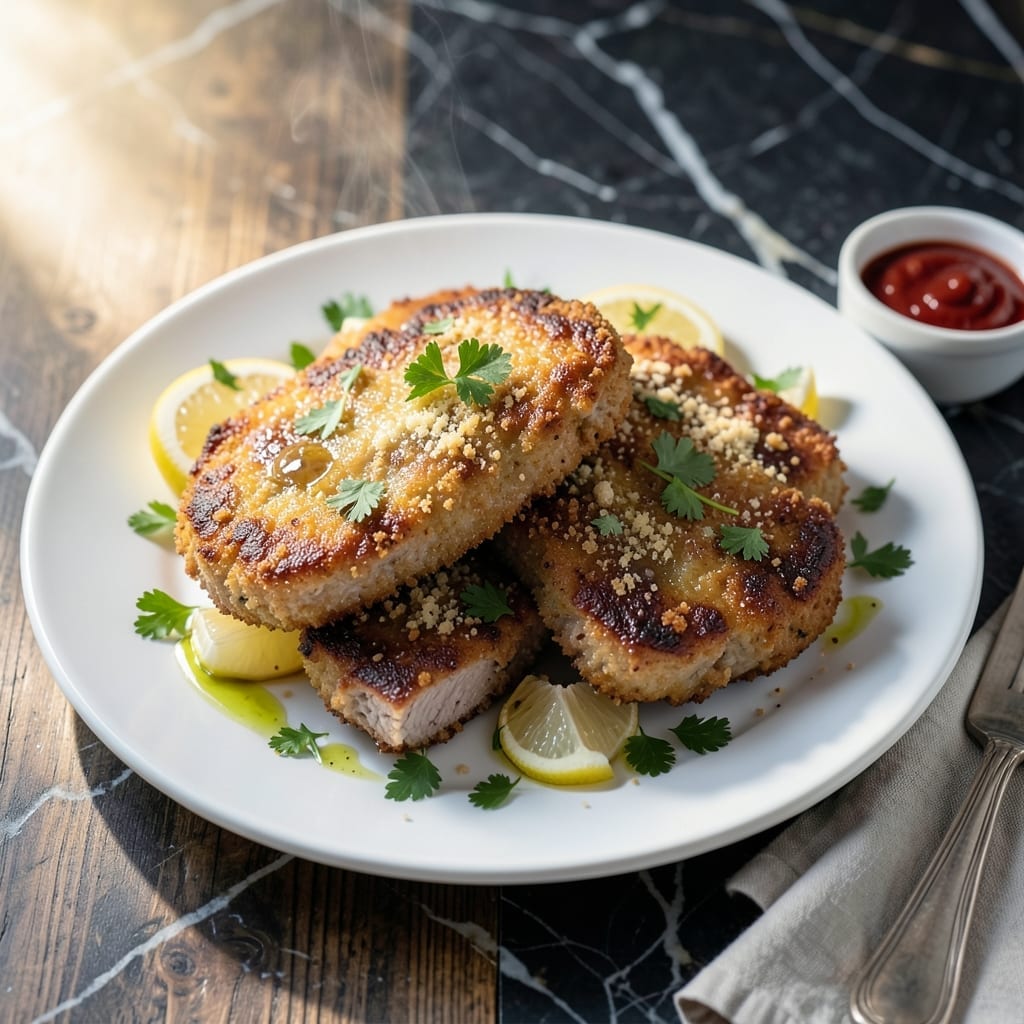
There’s a reason breaded veal cutlets remain a classic in Italian-American kitchens. This recipe delivers a crispy golden crust that shatters with each bite, revealing meat so tender it nearly melts on your tongue.
I’ve tested this method repeatedly in my Boston kitchen, perfecting the breading process to ensure it stays put during cooking. The three-step dredging creates layers that crisp evenly without absorbing excess oil.
The result is restaurant-quality cutlets with a delicate, lacy coating encasing juicy veal. The contrast between the crunchy exterior and velvety interior makes every bite satisfying.
Serve immediately with lemon wedges and a simple arugula salad to balance the richness. The technique works equally well with chicken or pork.
Ingredients for Breaded Veal Cutlets
Quality veal and precise breading create restaurant-worthy cutlets with perfect texture contrast.
| Ingredient | Amount | Notes |
|---|---|---|
| Veal Cutlets 🥩 | 1 ½ lb | Pounded to 1/4-inch thickness |
| All-Purpose Flour 🌾 | 1 cup | For initial dredging layer |
| Large Eggs 🥚 | 2 whole | Beaten for adhesive binding |
| Fine Dry Breadcrumbs 🍞 | 2 cups | Italian-style preferred |
| Grated Parmesan Cheese 🧀 | ½ cup | Freshly grated from block |
| Kosher Salt 🧂 | 1 ½ tsp | Diamond Crystal preferred |
| Freshly Ground Black Pepper 🌶️ | 1 tsp | Coarse grind for texture |
| Garlic Powder 🧄 | 1 tsp | For flavor depth in breading |
| Dried Oregano 🍃 | 1 tsp | Mediterranean variety ideal |
| Vegetable Oil 🫒 | 1 ½ cups | For frying, neutral high-smoke point |
| Unsalted Butter 🧈 | 2 tbsp | Optional, for rich flavor in oil |
| Fresh Lemon 🍋 | 1 whole | Cut into wedges for serving |
| Arugula 🥬 | 4 cups | Baby arugula preferred for salad |
[recipe_ingredient_scaler]
The veal is non-negotiable for authenticity. Source from specialty butchers like Whole Foods or Italian markets—look for pale pink, fine-grained meat with minimal fat. Pounding to even thickness (use a rolling pin between plastic wrap) ensures even cooking. Diamond Crystal kosher salt dissolves cleanly and seasons uniformly without overpowering the delicate veal flavor.
No veal? Thin-cut chicken breast or pork cutlets work identically with the same technique. For gluten-free breading, substitute fine cornmeal or gluten-free panko. The Parmesan can be omitted for a lighter crust, but Pecorino Romano offers a sharper alternative. Pre-ground breadcrumbs work, but freshly made from day-old Italian bread yields superior texture.
Breaded cutlets are best served immediately—the crust loses crispness within 10 minutes. If prepping ahead, bread and refrigerate uncooked cutlets for up to 4 hours before frying. Leftover cooked cutlets can be reheated in a 375°F oven for 8-10 minutes to restore some crispness.
Why You’ll Love This Recipe
- I’ll be real: this is my go-to for Sunday dinners when the whole family’s around and I need something reliable.
- One Bowl Magic: I just dump flour, beaten eggs, and parmesan-spiked breadcrumbs in separate shallow dishes, and the veal gets a quick dip in each.
- Crispy, Cheesy Bite: Honestly, that parmesan in the breading makes every bite taste like a fancy Italian restaurant at home.
- Feeds the Gang: I’ll be real: this is my go-to for Sunday dinners when the whole family’s around and I need something reliable.
Step-by-Step Instructions for Breaded Veal Cutlets
Here’s the method. Straightforward, tested, works every time.
Step 1: Season and Bread the Veal Cutlets
Pat the 1.5 lb veal cutlets dry with paper towels and season both sides with 1.5 tsp kosher salt, 1 tsp freshly ground black pepper, 1 tsp garlic powder, and 1 tsp dried oregano. This ensures every bite is flavorful from the start.
Set up a breading station with three shallow dishes. Place the 1 cup all-purpose flour in the first. Beat the 2 whole large eggs in the second. In the third, combine the 2 cups fine dry breadcrumbs with the 0.5 cup grated parmesan cheese for extra richness and crunch.
Dredge each cutlet in the flour, shaking off excess, then dip in the beaten eggs, letting any excess drip off. Press firmly into the breadcrumb mixture, ensuring an even, thick coating on both sides. This triple-layer method guarantees a crispy, golden crust.
Step 2: Heat the Oil for Frying
Pour the 1.5 cups vegetable oil into a large, heavy-bottomed skillet. Add the 2 tbsp unsalted butter for added richness and flavor. Heat over medium-high heat until the oil shimmers and a breadcrumb dropped in sizzles immediately—this means it’s ready.
Use a deep-fry or candy thermometer to check that the oil reaches 350-365°F. Maintaining this temperature range is crucial; too low, and the cutlets will absorb oil and become greasy, too high, and the outside will burn before the inside cooks through.
Step 3: Fry Until Golden and Crisp
Carefully place 2-3 breaded veal cutlets into the hot oil, being mindful not to overcrowd the pan. Fry for 3-4 minutes per side or until the coating turns a deep, golden brown and the edges appear crispy.
Turn the cutlets only once during frying to avoid disturbing the breading. Use tongs to transfer them to a wire rack set over a paper towel-lined plate. This setup allows excess oil to drain while keeping the crust crisp by preventing steam buildup.
Work in batches, maintaining the oil temperature between each addition. If the oil starts smoking excessively, reduce the heat slightly and allow it to stabilize before continuing.
Step 4: Serve with Fresh Lemon and Arugula
Once all the cutlets are fried, let them rest for 2-3 minutes to allow the juices to redistribute. This ensures the veal remains tender and moist inside its crispy exterior.
Arrange the cutlets on a serving platter and garnish with fresh lemon wedges for a bright, citrusy note. Serve alongside the 4 cups arugula, dressed simply with a squeeze of lemon juice and a drizzle of olive oil if desired.
The contrast of the peppery arugula and the zesty lemon enhances the rich, savory flavors of the breaded veal, completing the dish perfectly.
Pro Tips For Making Breaded Veal Cutlets
- Pound the Cutlets: Use a meat mallet to evenly flatten the veal to about ¼-inch thickness—I learned this the hard way after ending up with chewy, uneven pieces. It guarantees quick, even cooking and a perfect crispy coating.
- Rest the Breaded Cutlets: Let the breaded cutlets sit for 5-10 minutes before frying. Sounds weird, but it works: the coating adheres better and stays put during cooking.
- Skip the Cold Oil: Heat the oil in the pan until shimmering (about 350°F) before adding the cutlets. After burning three batches, I finally figured out that cold oil makes the breading absorb grease and turn soggy.
- Add Parmesan to Breadcrumbs: Mix the grated Parmesan directly into the breadcrumbs for extra flavor in every bite. My grandmother swore by this, and she was right: it’s a small step that actually changes the outcome.
Common Mistakes When Making Great breaded veal cutlets
Overcrowding the Pan
Frying too many cutlets at once drops the oil temperature, causing greasy breading. I learned this the hard way in my tiny Boston kitchen. Always cook in batches with 2-3 cutlets at a time. 🔥
Skipping the Rest
Cutting immediately after frying lets the juices escape, leaving dry meat. Rest the cutlets for 2-3 minutes on a wire rack. This keeps them juicy inside that crispy crust.
Wrong Oil Temperature
Oil that’s not hot enough creates soggy breading. Use a thermometer to maintain 350-365°F. If it smokes, lower the heat slightly—I prefer a heavy-bottomed skillet for even heat.
Uneven Breading
Press the cutlets firmly into the breadcrumb mixture. Shake off excess flour but ensure complete coverage. I use one hand for wet ingredients and one for dry to avoid clumping.
This triple-layer method guarantees a crispy, golden crust every time.
Using Cold Veal
Cold meat lowers oil temperature and cooks unevenly. Let the veal sit at room temperature for 15-20 minutes before breading. This ensures even cooking and better adhesion.
Pounding to ¼-inch thickness also helps with consistent results.
Nutrition Facts
Frequently Asked Questions
Can I use chicken instead of veal?
Yes! Thin-cut chicken breasts work perfectly with the same technique. Pound them to ¼-inch thickness for even cooking. The breading method and frying time remain identical.
How do I keep the breading from falling off?
Pat the meat dry first, then press firmly into each coating layer. Use one hand for wet ingredients and one for dry to avoid clumping. Let breaded cutlets rest 10 minutes before frying.
What oil works best for frying?
Use a neutral oil with a high smoke point like vegetable or canola. Add 2 tbsp butter for extra flavor. Maintain 350-365°F for crispy, golden results.
Can I make these ahead of time?
Bread and refrigerate uncooked cutlets for up to 4 hours. For best texture, fry just before serving. Reheat in a 375°F oven for 8-10 minutes to restore crispness.

Trained in classic French technique but raised on slow-cooked ribs and spicy rubs, she blends culinary skill with smoke and soul.
- Recipe for Boneless Pork Chops in Cast Iron Skillet: Sear and Baste to Juicy Perfection - October 3, 2026
- Recipe for Boneless Cross Rib Roast: Slow-Roasted Beef with Herb Crust - October 3, 2026
- Hamburgers in Sauce Recipe Crock Pot: Slow-Cooked Savory Delight - October 3, 2026