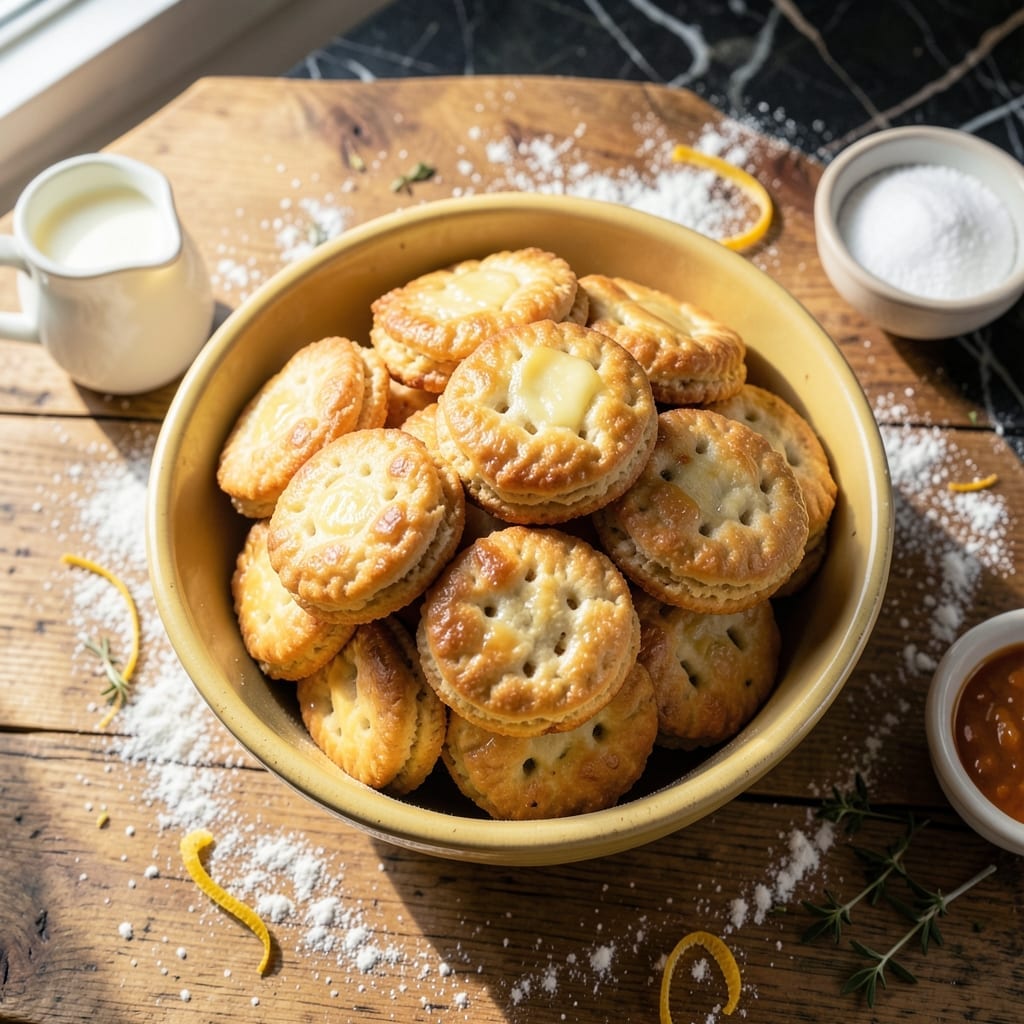
I learned the secrets of flaky biscuits in my grandmother’s Atlanta diner, where cold butter and gentle handling created those perfect layers every time.
This method delivers that same buttery richness and towering height with just a few simple ingredients and precise technique.
Ingredients for Brenda Gantt Biscuit
Cold butter and a light touch create those perfect flaky layers every time.
| Ingredient | Amount | Notes |
|---|---|---|
| All-Purpose Flour 🌾 | 2 cups | Plus extra for dusting surface |
| Baking Powder 🧂 | 1 tbsp | Aluminum-free preferred for clean taste |
| Granulated Sugar 🍚 | 1 tsp | Balances the richness |
| Salt 🧂 | 1 tsp | Fine sea salt recommended |
| Unsalted Butter 🧈 | ½ cup | Very cold, cubed into small pieces |
| Whole Milk 🥛 | ¾ cup | Plus 1 tbsp for brushing tops |
| Buttermilk 🥛 | ¼ cup | Full-fat for tender texture |
| Baking Soda 🧂 | ¼ tsp | For additional lift |
[recipe_ingredient_scaler]
The butter is everything here. Use high-quality unsalted butter—Plugrá or European-style for that rich flavor. Keep it ice-cold until the very last moment, and cube it small so it incorporates evenly without warming. The flour should be all-purpose, no need for anything fancy. For the milk, whole milk gives the best texture, but 2% works in a pinch.
No buttermilk? Whole milk with 1 tsp lemon juice or vinegar per cup does the trick (let it sit 5 minutes to sour). Short on time? Skip the sugar—it’s subtle but not essential. The baking powder must be fresh—test it by dropping a bit in hot water. If it doesn’t bubble vigorously, it’s past its prime.
These biscuits are best eaten fresh, but leftovers keep 1-2 days in an airtight container. Reheat in a 350°F oven for 5-10 minutes to restore that flaky texture. Freeze unbaked dough for up to 1 month—bake straight from the freezer.
Why You’ll Love This Recipe
- One Bowl Wonder: I just dump, stir, and roll—no fancy tools, just flour, butter, and a little sugar for that perfect balance.
- Buttery Heaven: The cold butter creates layers that flake apart, and that hint of sugar? Pure comfort in every bite.
- Breakfast to Dinner: We’ve served these with jam at sunrise, alongside stew for dinner, and yes, even as a late-night snack.
- Pocketbook Friendly: Flour, butter, and a few pantry staples feed my whole family for pennies. Honestly, it’s my go-to when the budget’s tight.
Step-by-Step Instructions for Flaky Buttermilk Biscuits
Master the technique for airy layers with rich, buttery flavor in every bite.
Step 1: Combine Dry Ingredients for Optimal Rise
In a large mixing bowl, whisk together the 2 cups All-Purpose Flour, 1 tbsp Baking Powder, 0.25 tsp Baking Soda, 1 tsp Granulated Sugar, and 1 tsp Salt. I sift these dry ingredients first to eliminate lumps and ensure even distribution, which is critical for consistent rise.
This combination of leavening agents creates the perfect lift for tall, flaky biscuits. The baking powder provides immediate rise while the baking soda adds a subtle tang that complements the richness. Make sure your baking powder is fresh—old leaveners lose potency and result in dense biscuits.
Step 2: Cut in Cold Butter for Flaky Layers
Add the 0.5 cup Unsalted Butter (cubed and very cold) to the dry ingredients. Using a pastry cutter or your fingertips, work the butter into the flour mixture until it resembles coarse crumbs with pea-sized butter pieces visible. This step is non-negotiable for flakiness.
I keep my butter in the freezer until ready to use and work quickly to maintain its cold temperature. The key is leaving visible butter pieces—when these melt during baking, they create steam that separates the dough into distinct layers. Avoid overworking, which would melt the butter and ruin the texture.
Step 3: Incorporate Liquids for Tender Dough
Make a well in the center of the flour-butter mixture. Pour in the 0.75 cup Whole Milk and 0.25 cup Buttermilk all at once. Using a fork, gently stir just until the dough begins to come together. The mixture will look shaggy and slightly sticky—that’s perfect.
The buttermilk adds a subtle tang while the whole milk provides richness. The combination ensures tender biscuits with a slightly crisp exterior. Stop mixing as soon as the flour is moistened—overmixing develops gluten, which makes biscuits tough rather than flaky.
Step 4: Fold and Cut for Maximum Layers
Turn the dough onto a lightly floured surface (using extra all-purpose flour) and gently pat it into a 1-inch thick rectangle. Fold the dough in half like a book, then gently pat it down again to 1-inch thickness. Repeat this fold-and-pat process two more times.
This lamination technique creates multiple thin layers that separate during baking, resulting in those coveted flaky strata. Handle the dough as little as possible to maintain its tenderness. Use a 2.5-inch biscuit cutter to stamp out biscuits, pressing straight down without twisting to ensure even rise.
Step 5: Bake to Golden Perfection
Preheat oven to 475°F. Place biscuits on a baking sheet so they’re just touching (this helps them rise upward rather than outward). Brush tops with 1 tbsp Whole Milk for browning. Bake for 12-15 minutes until golden brown on top.
Rotate the pan halfway through baking for even browning. The biscuits are done when the tops are deep golden and the layers are clearly visible from the side. Remove immediately and serve warm—the steam from the hot biscuits will finish the cooking process as they cool slightly.
Pro Tips For Making Brenda Gantt Biscuit
- Keep Butter Ice Cold: Grate frozen unsalted butter directly into the flour mixture—this prevents it from melting prematurely and guarantees flaky layers. I learned this the hard way after my first few batches turned out dense.
- Measure Flour Right: Spoon flour into your measuring cup and level it off, or use a scale. Scooping directly from the bag packs it down, and you’ll end up with dry, crumbly biscuits every time.
- Don’t Overmix: Stir just until the dough comes together—lumps are fine. Overworking develops the gluten, and suddenly your biscuits are tough instead of tender.
- Use a Hot Oven: Crank the oven to 450°F and preheat it fully. A screaming-hot start makes the baking powder react fast, giving you that tall, golden rise Brenda Gantt’s recipe is known for.
Wine and Beer Pairings for This Dish
Sweet Tea Pairing
In the South, nothing complements warm biscuits better than a glass of sweet tea. The slight bitterness of black tea cuts through the buttery richness, while the sweetness enhances the biscuit’s subtle sugar notes. David always requests this classic combo when I make a fresh batch. 💛
Craft Beer Options
A crisp American lager like Lone Star Beer (a Texas favorite) works beautifully, as its light body and mild hoppiness cleanse your palate between bites. For more flavor, try a wheat beer such as Shiner Hefeweizen from Central Market.
White Wine Choices
A chilled Viognier from Texas Hill Country offers floral notes and a touch of acidity that balances the biscuit’s richness. I also enjoy a dry Riesling—its bright citrus flavors provide a refreshing contrast to the buttery layers.
Coffee Complement
Serve with a strong black coffee for breakfast or brunch. The bold, bitter notes of a dark roast from Austin farmers markets pair wonderfully with the biscuit’s flaky texture. A splash of cream softens the contrast while maintaining depth.
Hot Chocolate Twist
For a cozy treat, pair with spiced hot chocolate. The warmth of cinnamon and nutmeg in the cocoa enhances the biscuit’s layers, while the creaminess mirrors its buttery richness. Emma and Jack love this combination on chilly mornings. ✨
Nutrition Facts
Frequently Asked Questions
Why is cold butter important for flaky layers?
Cold butter creates steam when baked, which separates the dough into distinct layers. If it warms up, the steam escapes before baking, resulting in dense biscuits.
Can I substitute buttermilk with regular milk?
Yes! Mix 1 cup whole milk with 1 tsp lemon juice or vinegar and let it sit for 5 minutes. This mimics buttermilk’s acidity for tender texture.
How do I prevent biscuits from spreading too much?
Place biscuits close together on the baking sheet so they rise upward, not outward. Also, avoid twisting the cutter when stamping out the dough.
What’s the best way to reheat leftovers?
Wrap in foil and warm in a 350°F oven for 5-10 minutes. This restores flakiness better than microwaving, which can make them soggy.

Trained in classic French technique but raised on slow-cooked ribs and spicy rubs, she blends culinary skill with smoke and soul.
- Recipe for Boneless Pork Chops in Cast Iron Skillet: Sear and Baste to Juicy Perfection - October 3, 2026
- Recipe for Boneless Cross Rib Roast: Slow-Roasted Beef with Herb Crust - October 3, 2026
- Hamburgers in Sauce Recipe Crock Pot: Slow-Cooked Savory Delight - October 3, 2026