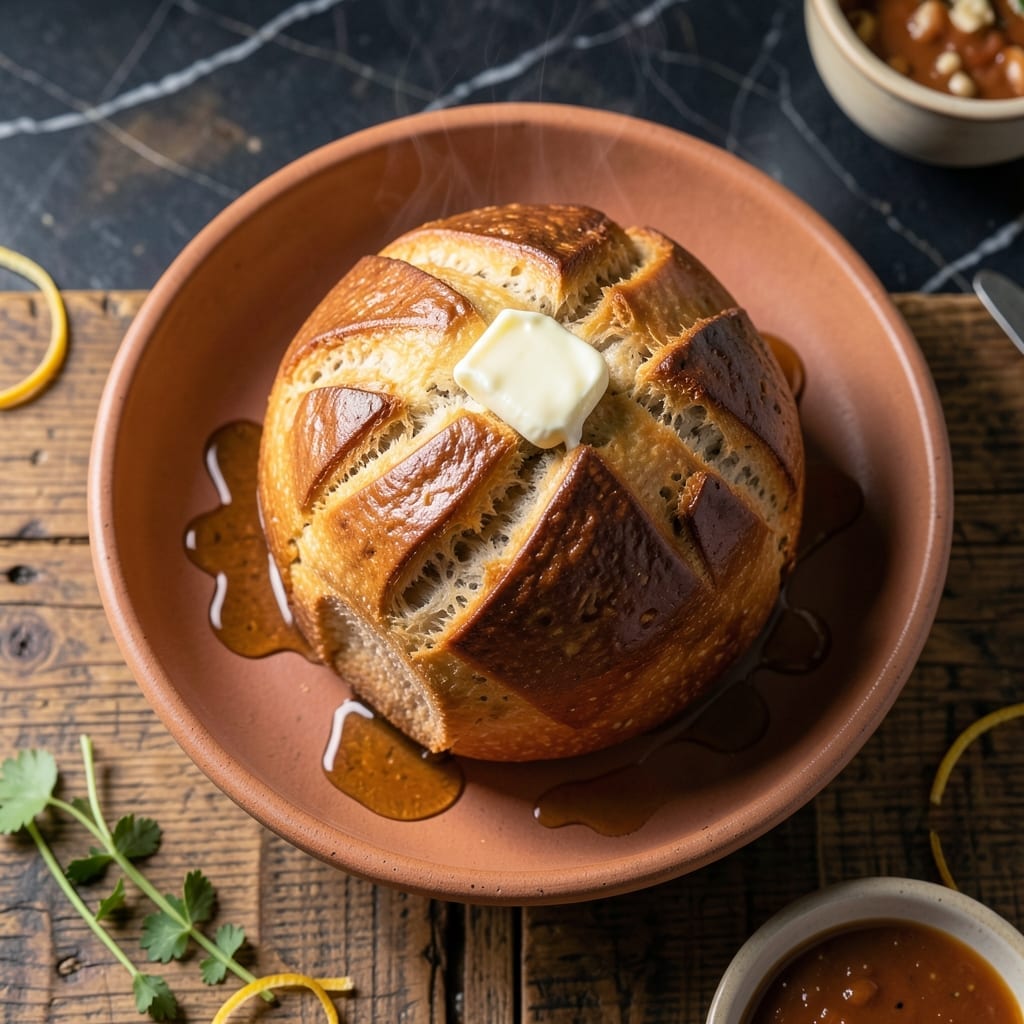
This recipe brings that famous steakhouse bread home with a soft, buttery texture that’s impossible to resist.
With a golden crust and rich flavor, it’s the perfect companion to any meal. I’ve tested this method across different ovens to ensure consistent results every time.
Ingredients for Longhorn Bread
Soft, golden, and impossibly buttery—just like the steakhouse favorite.
| Ingredient | Amount | Notes |
|---|---|---|
| Bread Flour 🌾 | 4 cups | Plus extra for dusting |
| Warm Water 💧 | 1 ¼ cups | 110°F, for activating yeast |
| Active Dry Yeast 🍞 | 2 ¼ tsp | One packet, proofed in warm water |
| Granulated Sugar 🧈 | ¼ cup | For feeding yeast and sweetness |
| Unsalted Butter 🧈 | ½ cup | Melted and cooled, plus extra for brushing |
| Large Egg 🥚 | 1 whole | Room temperature, for richness |
| Kosher Salt 🧂 | 2 tsp | Diamond Crystal preferred for consistency |
| Honey 🍯 | 2 tbsp | For subtle sweetness and browning |
| Whole Milk 🥛 | ½ cup | Warmed to 110°F for tenderness |
| Vital Wheat Gluten 🌾 | 2 tbsp | Optional, for enhanced texture |
| Dry Buttermilk Powder 🥛 | 2 tbsp | Optional, for tangy depth |
[recipe_ingredient_scaler]
The flour makes all the difference—King Arthur Bread Flour is the gold standard for its high protein content, which gives this bread its signature soft yet sturdy crumb. Yeast should be fresh (check the expiration date) for reliable rising. Whole Foods or King Arthur’s online store are solid sources for bulk flour if you bake often. Warm the milk and water to 110°F—too hot kills the yeast, too cold slows activation.
No bread flour? All-purpose at a 1:1 ratio works in a pinch, though the texture won’t be as pillowy. Swap honey for maple syrup or agave if needed. The buttermilk powder is optional but adds that signature tang—replace with 2 tbsp liquid buttermilk if you’ve got it. Vital wheat gluten boosts chewiness, but omit it if unavailable (the bread will still be delicious).
Store cooled loaves in an airtight container at room temperature for up to 3 days. For longer storage, slice and freeze in a sealed bag for 1 month. Reheat slices in a 350°F oven wrapped in foil for 10 minutes to revive that fresh-baked feel.
Why You’ll Love This Recipe
- No-Fuss Dough: I literally mix flour, yeast, sugar, and warm water, let it rise, then add butter—no fancy steps.
- Buttery Richness: That unsalted butter in the dough? It bakes into golden, pull-apart layers that melt in your mouth.
- Crowd-Pleasing Side: I bring this to potlucks and it’s always the first thing gone—great with pasta or just warm from the oven.
- Budget Friendly: A bag of bread flour and a stick of butter make two big loaves. Honestly, it’s cheaper than the bakery.
Step-by-Step Instructions for Buttery Texas Roadhouse Style Loaf
Master the technique for this restaurant-quality bread with a golden crust and tender interior.
Step 1: Activate the Yeast and Prepare Wet Ingredients
In a stand mixer bowl, combine the 1.25 cups Warm Water, 2.25 tsp Active Dry Yeast, 0.25 cup Granulated Sugar, 2 tbsp Honey, and 0.5 cup Whole Milk warmed to 110°F. Let this mixture sit for 5-7 minutes until the surface becomes foamy and bubbly.
This visual confirmation means the yeast is active and ready to work. I always check the water temperature with a thermometer—too hot will kill the yeast, too cold won’t activate it. Once foamy, add the 1 whole Large Egg and 0.5 cup Unsalted Butter melted and cooled to room temperature.
Step 2: Incorporate Dry Ingredients and Knead
Add the 4 cups Bread Flour, 2 tsp Kosher Salt, 2 tbsp Vital Wheat Gluten, and 2 tbsp Dry Buttermilk Powder to the wet mixture. Using the dough hook attachment, mix on low speed until the ingredients just come together, about 2 minutes.
Increase the speed to medium and knead for 8-10 minutes until the dough becomes smooth, elastic, and slightly tacky but not sticky. If the dough seems too wet, add 1 tablespoon of bread flour at a time, but resist adding too much—this dough should be slightly soft. The gluten development here creates the perfect chewy texture.
Step 3: First Rise Until Doubled
Transfer the dough to a lightly greased bowl, turning once to coat all sides. Cover with a clean kitchen towel or plastic wrap and place in a warm, draft-free area. Let it rise for 1 to 1.5 hours or until doubled in volume.
I check for doneness by pressing two fingers gently into the dough—if the indentation remains, it’s ready. The ideal rise temperature is 75-80°F. If your kitchen is cool, place the bowl near (not on) a warm oven or use a proofing setting if your oven has one.
Step 4: Shape, Second Rise, and Bake
Punch down the risen dough to release the air. Turn it out onto a lightly floured surface and shape into a loaf. Place the loaf in a greased 9×5-inch loaf pan. Cover and let rise again for 45-60 minutes until the dough domes about 1 inch above the pan rim.
Preheat your oven to 350°F. Bake the loaf for 30-35 minutes until the top is deep golden brown and the internal temperature reaches 190-200°F. If the top browns too quickly, tent loosely with aluminum foil for the remaining baking time.
Step 5: Finish with Butter and Cool
Immediately after removing from the oven, brush the hot loaf with 2 tablespoons of melted unsalted butter. This is the signature step that gives this bread its rich, buttery flavor and soft crust.
Let the bread cool in the pan for 5 minutes, then transfer to a wire rack to cool completely. I know it’s tempting to slice into it warm, but waiting 20-30 minutes allows the structure to set properly. The result should be a tall, tender loaf with a buttery aroma that fills your kitchen.
Pro Tips For Making Longhorn Bread
- Test Your Yeast: I learned this the hard way—always bloom your active dry yeast in the warm water with a pinch of sugar first. If it doesn’t foam within 5 minutes, your bread won’t rise.
- Use Room-Temp Butter: Sounds weird, but it works: let your unsalted butter sit out for 30 minutes before mixing. Cold butter tears the gluten, and melted butter makes the dough greasy.
- Skip Over-Kneading: After burning three batches to tough, dense loaves, I finally figured out that 5-7 minutes of kneading is plenty. Any longer and you’ll squeeze the air right out of it.
- Brush With Butter: Right when the bread comes out of the oven, brush the top with melted unsalted butter. My grandmother swore by this, and it gives that soft, golden crust everyone loves.
Health Benefits of This Recipe
Energy Boosting Carbs
This bread provides complex carbohydrates that deliver sustained energy throughout your day. The 4 cups bread flour creates a slow-digesting fuel source, perfect for keeping you going between meals. I notice David has more energy on days he enjoys this with breakfast. 💪
Essential B Vitamins
The enriched flour and egg in this recipe offer a solid dose of B vitamins, including thiamine, riboflavin, and niacin. These nutrients support metabolism and help convert food into usable energy. Just one slice contributes to your daily B vitamin needs.
Protein for Satiety
With 1 whole egg and 4 cups bread flour, this loaf packs about 8 grams of protein per slice. This protein content helps keep you feeling full and satisfied longer than typical white bread. The combination of protein and fiber makes it a balanced choice.
Bone Health Support
The 0.5 cup whole milk in this recipe provides calcium and vitamin D, essential for maintaining strong bones. These nutrients work together to support bone density and overall skeletal health. It’s a tasty way to sneak in some daily dairy.
Heart-Healthy Fats
While moderate, the 0.5 cup unsalted butter provides some beneficial fatty acids. When enjoyed as part of a balanced diet, these fats can support heart health. I always remind Emma and Jack that balance is key with richer foods. ✨
Mood-Boosting Benefits
There’s something about fresh-baked bread that lifts the spirits. The aroma alone can be mood-enhancing, and the 2 tbsp honey provides natural sugars for a gentle energy lift. This bread has been a family favorite in our Austin home since we moved here.
Nutrition Facts
Frequently Asked Questions
Can I use all-purpose flour instead of bread flour?
Yes, but the texture will be slightly less chewy. Bread flour’s higher protein creates that perfect soft yet sturdy crumb. For best results, stick with King Arthur Bread Flour if available.
Why do I need to warm the milk and water to 110°F?
This temperature activates the yeast without killing it. Too hot destroys the yeast, while too cold slows activation. A thermometer ensures accuracy for reliable rising.
How do I know when the bread is fully baked?
The loaf should be deep golden brown with an internal temperature of 190-200°F. If the top browns too fast, tent with foil. Always check with a thermometer.
Can I make this dough ahead of time?
Yes! After kneading, refrigerate the dough overnight. Let it come to room temperature and rise before shaping. This slow fermentation enhances flavor.

Trained in classic French technique but raised on slow-cooked ribs and spicy rubs, she blends culinary skill with smoke and soul.
- Recipe for Boneless Pork Chops in Cast Iron Skillet: Sear and Baste to Juicy Perfection - October 3, 2026
- Recipe for Boneless Cross Rib Roast: Slow-Roasted Beef with Herb Crust - October 3, 2026
- Hamburgers in Sauce Recipe Crock Pot: Slow-Cooked Savory Delight - October 3, 2026