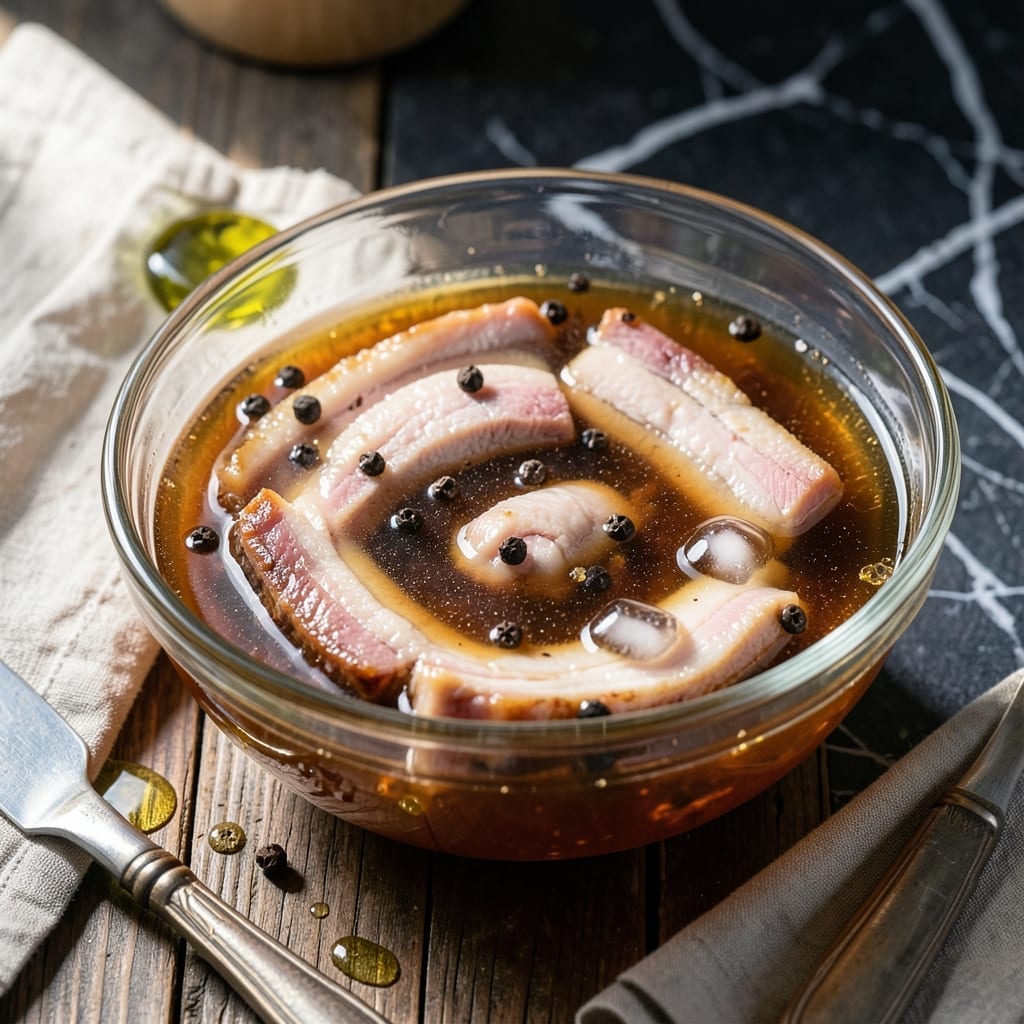
This brine transforms pork ribs from ordinary to extraordinary with minimal effort. The salt solution works deep into the meat, ensuring it stays juicy and flavorful throughout cooking.
With just a few hours of brining, you’ll achieve results that rival any professional pitmaster. The process is simple, but the difference in texture and taste is undeniable.
Ingredients for Brine Recipe for Pork Ribs
Simple brine with bold flavors. Just a few hours transforms ribs completely.
| Ingredient | Amount | Notes |
|---|---|---|
| Pork Ribs 🍖 | 4 lb | Baby back or spare ribs |
| Water 💧 | 4 cups | Cold, for brining solution |
| Kosher Salt 🧂 | ¾ cup | Diamond Crystal preferred |
| Brown Sugar 🍚 | ½ cup | Light or dark variety |
| Apple Cider Vinegar 🍏 | ½ cup | Balances sweetness and salt |
| Black Peppercorns 🌶️ | 2 tbsp | Whole, lightly crushed |
| Bay Leaves 🍃 | 4 whole | Dried, for aroma |
| Garlic Cloves 🧄 | 6 cloves | Smashed, peeled |
| Yellow Onion 🧅 | 1 whole | Quartered, skin on |
| Fresh Rosemary Sprigs 🌿 | 3 pieces | Optional, for depth |
| Juniper Berries 🫒 | 1 tbsp | Optional, crushed lightly |
| Ice Cubes ❄️ | 2 cups | To chill brine quickly |
[recipe_ingredient_scaler]
The salt is the backbone here—Diamond Crystal kosher salt dissolves cleanly and doesn’t taste metallic. Most grocery stores carry it, but if you can’t find it, Morton kosher salt works too (just reduce by about 25%). I grab mine from Costco in bulk. The pork ribs themselves should be fresh, with good marbling. Baby back ribs are leaner, spare ribs have more fat and flavor.
No apple cider vinegar? White vinegar or lemon juice in a pinch, but the cider’s fruity tang is ideal. Swap brown sugar for white sugar or honey—just adjust sweetness to taste. Fresh out of bay leaves? Dried thyme or oregano at half the amount adds complexity. The juniper berries are optional but give a subtle piney note (find them in the spice aisle at Whole Foods).
Brined ribs keep in the fridge for 2-3 days before cooking. Discard the brine—it’s done its job. Cooked ribs freeze beautifully for up to 3 months. Always brine in a non-reactive container (glass or food-grade plastic).
Why You’ll Love This Recipe
- Five Minute Mix: I just stir water, salt, sugar and vinegar in a pot—no chopping, no fuss.
- Sweet-Salty Magic: The brown sugar and apple cider vinegar give the ribs this sticky, tangy crust I can’t get enough of.
- Feeds the Weekend: I brine a big batch Friday night and we’re set for Saturday lunch, dinner, and leftovers for sandwiches.
- Pantry Staples Only: Honestly, I always have these ingredients on hand, so it’s a no-shop, no-stress kind of recipe.
Step-by-Step Instructions for Brined Pork Ribs
Here’s the method that guarantees fall-off-the-bone tenderness and maximum flavor penetration.
Step 1: Prepare the Brine Base and Aromatics
In a large saucepan, combine the 4 cups Water, 0.75 cup Kosher Salt, and 0.5 cup Brown Sugar. Heat over medium-high until the salt and sugar dissolve completely. I stir occasionally to help the process along—you want a clear brine, not a grainy one.
Once dissolved, remove from heat and add the 0.5 cup Apple Cider Vinegar, 2 tbsp Black Peppercorns, 4 whole Bay Leaves, 6 cloves Garlic Cloves, 1 whole Yellow Onion, 3 pieces Fresh Rosemary Sprigs, and 1 tbsp Juniper Berries. The vinegar cuts through the richness while the aromatics infuse depth into the liquid.
Step 2: Chill the Brine Rapidly
Add the 2 cups Ice Cubes to the hot brine and stir until the mixture cools to room temperature. This step is crucial—I never brine with warm liquid, as it can start cooking the pork and lead to dry, stringy meat. The ice cubes speed up the cooling process so you can start brining sooner.
If you’re in a hurry, nestle the saucepan in a larger bowl filled with ice water. The brine needs to be fully chilled before submerging the pork. You’ll know it’s ready when it feels cool to the touch, not just lukewarm.
Step 3: Submerge the Ribs in the Brine
Place the 4 lb Pork Ribs in a large container or resealable bag and pour the chilled brine over them. The ribs should be fully submerged—if they float, weigh them down with a plate or another heavy, food-safe object. I use a zip-top bag and lay it in a baking dish to catch any leaks.
Seal the container and refrigerate for 12 to 24 hours. This extended soak allows the brine to work its magic, breaking down proteins and infusing the meat with moisture and flavor. Don’t rush it—shorter brining times won’t deliver the same juicy results.
Step 4: Rinse and Dry Before Cooking
Remove the ribs from the brine and rinse them briefly under cold water. This step removes excess salt from the surface, preventing an overly salty crust. Pat them completely dry with paper towels—this ensures better browning and a good bark when you cook them later.
Discard the brine after use—it’s absorbed raw meat juices and isn’t safe to reuse. Now your ribs are ready for the smoker, grill, or oven. The brining process guarantees they’ll stay moist and flavorful no matter which cooking method you choose.
Pro Tips For Making Brine Recipe For Pork Ribs
- Brine Overnight: I learned this the hard way—4 hours just doesn’t cut it. Let those ribs soak in the salt, sugar, and apple cider vinegar mixture for at least 12 hours, or up to 24, for meat that stays juicy and picks up real flavor.
- Use Warm Water: Dissolve the kosher salt and brown sugar in warm water first—it blends faster and more evenly, so you’re not left with a gritty, uneven brine that clings to the ribs in clumps.
- Rinse After Brining: Skip this and your ribs might taste like a salt lick. Give them a quick rinse under cold water after brining to remove excess salt, then pat them dry before cooking.
- Add Ice to Cool: After mixing your brine with warm water, add a handful of ice cubes to bring the temperature down quickly. This way, you can brine immediately without waiting for it to cool to fridge temp.
Creative Variations of This brine recipe for pork ribs
Asian-Inspired Twist
Swap the apple cider vinegar for rice vinegar and add 2 tbsp soy sauce, 1 tbsp grated ginger, and 1 star anise pod to the brine. This creates a subtle Asian flavor profile that pairs beautifully with hoisin glaze. 🌟
Spicy Chipotle Version
Add 2 chipotle peppers in adobo and 1 tbsp adobo sauce to your brine mixture. The smoky heat infuses the pork with a Southwestern kick. I love this with spare ribs for a bold, spicy finish.
Citrus-Herb Brine
Incorporate zest of 1 orange and 1 lemon, plus 5 sprigs fresh thyme for a bright, aromatic twist. This works especially well with baby back ribs, giving them a fresh, zesty note.
Beer Brine
Replace 1 cup water with 1 cup dark beer like Guinness. The maltiness adds depth, while the carbonation helps tenderize. I use Samuel Adams Black Lager for a rich, complex flavor.
Maple-Bourbon Infusion
Substitute brown sugar with ½ cup pure maple syrup and add ¼ cup bourbon. This Southern-inspired brine gives ribs a sweet, smoky character perfect for grilling. 🔥
Herb-Garden Blend
Add 5 sprigs fresh sage, 5 sprigs fresh tarragon, and 1 tsp coriander seeds to the standard brine. The combination creates a sophisticated herb profile that shines in oven-roasted ribs.
Nutrition Facts
Frequently Asked Questions
How long should I brine pork ribs?
For best results, brine pork ribs for 12 to 24 hours in the refrigerator. This gives the salt solution enough time to penetrate the meat deeply while keeping it juicy and flavorful.
Can I reuse the brine for another batch?
No, always discard the brine after use. It absorbs raw meat juices and bacteria, making it unsafe for reuse. Each batch should start fresh with new ingredients.
Do I need to rinse the ribs after brining?
Yes, rinse briefly under cold water to remove excess salt from the surface. Pat them dry with paper towels afterward for better browning during cooking.
Can I use table salt instead of kosher salt?
Yes, but reduce the amount by about 25% since table salt is finer and more concentrated. Stick to Diamond Crystal kosher salt for the most consistent results.

Trained in classic French technique but raised on slow-cooked ribs and spicy rubs, she blends culinary skill with smoke and soul.
- Recipe for Boneless Pork Chops in Cast Iron Skillet: Sear and Baste to Juicy Perfection - October 3, 2026
- Recipe for Boneless Cross Rib Roast: Slow-Roasted Beef with Herb Crust - October 3, 2026
- Hamburgers in Sauce Recipe Crock Pot: Slow-Cooked Savory Delight - October 3, 2026