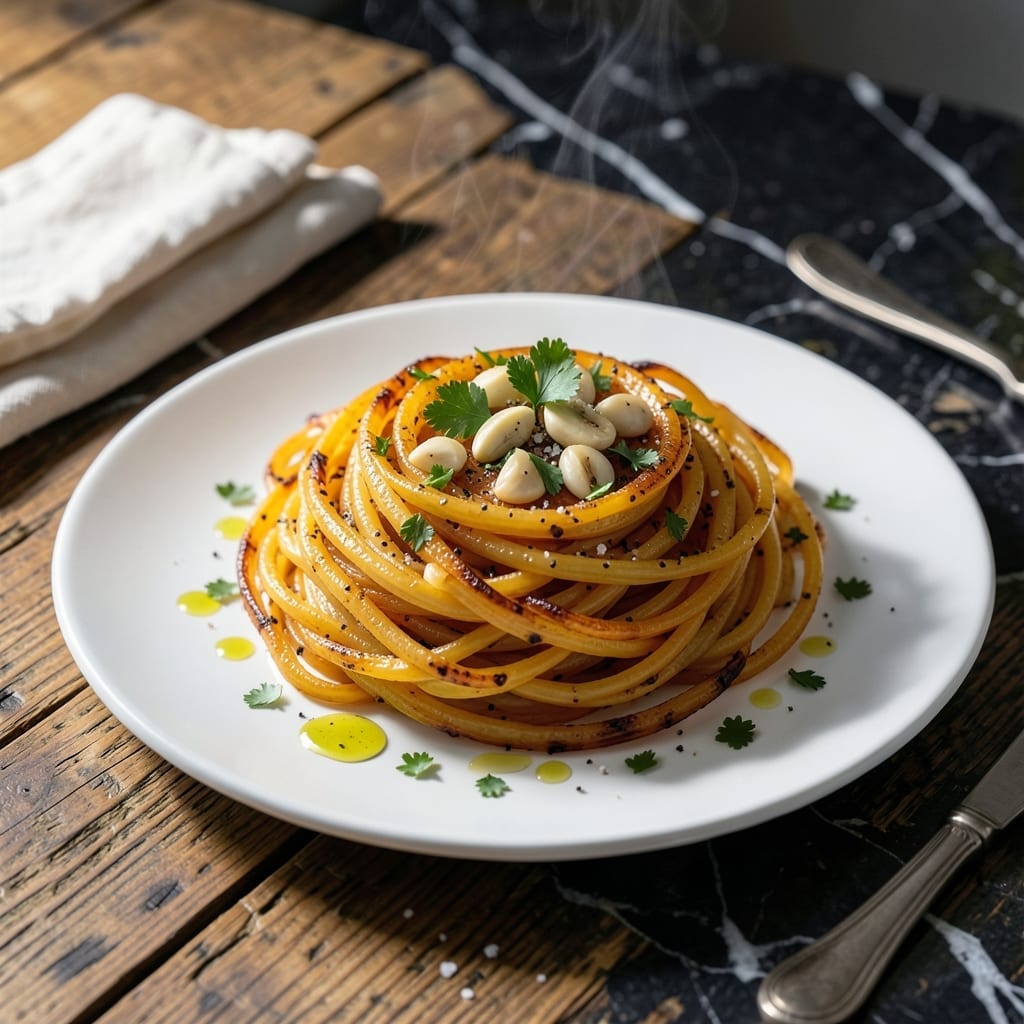
This dish transforms spaghetti squash into tender, noodle-like strands that perfectly mimic pasta.
With a simple roasting method at 400°F, you’ll achieve savory flavor and ideal texture for a satisfying vegetarian alternative.
Ingredients for Spaghetti Squash Recipe Spaghetti
Simple roasted squash strands with bold, savory toppings for a pasta-like experience.
| Ingredient | Amount | Notes |
|---|---|---|
| Spaghetti Squash 🎃 | 2 whole | Medium-sized, about 3-4 lbs each |
| Extra-Virgin Olive Oil 🫒 | 2 tbsp | Divided for roasting and finishing |
| Sea Salt 🧂 | 1 tsp | Fine grain, or to taste |
| Freshly Ground Black Pepper 🌶️ | ½ tsp | Or to taste |
| Garlic Cloves 🧄 | 3 cloves | Minced or pressed |
| Fresh Parsley 🌿 | ¼ cup | Chopped, for garnish |
| Grated Parmesan Cheese 🧀 | ½ cup | Optional, for serving |
| Red Pepper Flakes 🌶️ | ¼ tsp | Optional, for heat |
| Marinara Sauce 🍅 | 2 cups | Homemade or high-quality jarred |
| Fresh Basil Leaves 🌿 | ¼ cup | Thinly sliced, for garnish |
| Lemon Zest 🍋 | 1 tsp | Optional, for brightness |
[recipe_ingredient_scaler]
The spaghetti squash is the foundation here. Select firm, unblemished squash with a pale yellow rind—avoid any with soft spots or green streaks. A 3-4 lb squash yields about 4 servings of noodle-like strands. Most grocery stores carry them year-round, but farmers markets in fall often have the best selection. Cutting them can be tricky, so use a sharp chef’s knife and tap the blade with a mallet if needed.
No marinara on hand? Crushed tomatoes with garlic and herbs works in a pinch. Fresh parsley can be swapped for cilantro or basil if preferred. For a richer flavor, toasted panko breadcrumbs add a delightful crunch. The Parmesan is optional but recommended for depth—Pecorino Romano offers a sharper alternative. If avoiding dairy, nutritional yeast provides a cheesy note without the lactose.
Roasted strands keep in the fridge for 4-5 days in an airtight container. Reheat in a dry skillet to maintain texture. For longer storage, freeze cooked strands for up to 3 months. The squash itself stores at room temperature for 1-2 weeks before cooking.
Why You’ll Love This Recipe
- Hands-Off Cooking: I just halve the squash, roast it, and let the oven do the work—no stirring, no fuss.
- Garlic-Kissed Simplicity: The roasted garlic and olive oil turn the squash strands into something crave-worthy without overpowering them.
- Meal Prep Superstar: I make a big batch on Sunday and it keeps beautifully for quick lunches all week.
- Budget Dinner Win: Here’s what sold me—it’s cheaper than pasta but feels just as satisfying.
Step-by-Step Instructions for Spaghetti Squash Spaghetti
Master the technique for transforming squash into tender, noodle-like strands with rich flavor.
Step 1: Prepare and Roast the Spaghetti Squash
Preheat your oven to 400°F. Halve the 2 whole Spaghetti Squash lengthwise and scoop out seeds with a spoon. Brush the cut sides with 1 tbsp Extra-Virgin Olive Oil, then sprinkle evenly with 1 tsp Sea Salt and 0.5 tsp Freshly Ground Black Pepper.
Place the squash cut-side down on a rimmed baking sheet. Roast for 35-45 minutes until the flesh is tender and separates easily into strands when scraped with a fork. The skin should be golden brown in spots and the edges slightly caramelized.
Step 2: Sauté the Aromatics
While the squash roasts, heat the remaining 1 tbsp Extra-Virgin Olive Oil in a skillet over medium heat. Add the 3 cloves Garlic Cloves, minced, and cook for 30-60 seconds until fragrant but not browned.
For heat, add 0.25 tsp Red Pepper Flakes and stir for 10 seconds to toast lightly. Remove from heat immediately to prevent burning. This builds a flavorful base for the sauce.
Step 3: Combine Squash with Marinara and Finish
Use a fork to scrape the roasted spaghetti squash into long strands directly into the skillet with the garlic. Add 2 cups Marinara Sauce and toss gently to coat the strands evenly.
Cook over medium-low heat for 3-5 minutes until the sauce is heated through and the strands absorb some of the liquid. The mixture should be glossy and well-combined, not soupy.
Step 4: Garnish and Serve
Transfer the spaghetti squash to serving plates. Top with 0.5 cup Grated Parmesan Cheese, 0.25 cup Fresh Parsley, and 0.25 cup Fresh Basil Leaves, thinly sliced. For brightness, finish with 1 tsp Lemon Zest.
Serve immediately while warm. The strands should hold their shape but be tender, with the marinara clinging lightly to each bite. The Parmesan will melt slightly from the residual heat, creating a creamy texture.
Pro Tips For Making Spaghetti Squash Recipe Spaghetti
- Roast Cut-Side Down: Place the halved squash cut-side down on the baking sheet—I learned this the hard way after my first batch turned out watery instead of tender.
- Salt the Squash First: Sprinkle sea salt on the squash halves right after halving and before roasting; it draws out excess moisture so your strands don’t end up soggy.
- Skip the Overmixing: After scraping the squash into strands, resist the urge to toss it too much—overworking it makes the texture mushy rather than spaghetti-like.
- Warm the Oil: Heat the olive oil in the pan for 30 seconds before adding garlic; sounds simple, but it actually changes the outcome by preventing that harsh raw garlic bite.
Pro Cooking Tips for spaghetti squash recipe spaghetti
Uniform Strands
For the most pasta-like texture, choose squash that are 3-4 lbs each. Smaller ones produce shorter strands, while larger ones can be stringy. I always slice mine lengthwise through the stem for consistent 12-inch strands that twirl beautifully on a fork. 💪
Roasting Perfection
Don’t skip preheating your oven to 400°F—this ensures even cooking. Place squash cut-side down to steam the flesh, creating tender strands. If your oven runs hot, check 5 minutes early to prevent overcooking.
Fork Technique
After roasting, let the squash rest for 5 minutes before scraping. Use a fork’s tines to gently pull strands from the outer edge toward the center. Press too hard and you’ll get mushy bits instead of perfect noodles.
Sauce Absorption
Toss the strands with 2 cups marinara while still warm—they’ll absorb flavor better. If your sauce is thick, add ¼ cup pasta water to loosen it. I prefer heating the sauce separately to control consistency.
Seasoning Balance
The squash itself is mild, so don’t under-season. Taste before adding Parmesan and adjust with sea salt or lemon zest as needed. A pinch of red pepper flakes adds warmth without overpowering. 🔥
Plating Pro Tip
Use a fork to twirl strands into a loose nest on plates, just like pasta. The presentation elevates the dish. Garnish with fresh basil last so it stays vibrant and aromatic.
Nutrition Facts
Frequently Asked Questions
How do I get even strands from my squash?
Slice the squash lengthwise through the stem for consistent 12-inch strands. Use a fork to gently pull strands from the outer edge toward the center after roasting.
Can I roast squash at a lower temperature?
Stick to 400°F for best texture. Lower temps may produce mushy strands instead of tender, pasta-like results. Adjust time only if your oven runs hot.
Why are my strands watery?
Overcooking or not draining excess moisture causes this. Roast until just tender, then let rest 5 minutes before scraping. Press strands in a colander if needed.

Trained in classic French technique but raised on slow-cooked ribs and spicy rubs, she blends culinary skill with smoke and soul.
- Recipe for Boneless Pork Chops in Cast Iron Skillet: Sear and Baste to Juicy Perfection - October 3, 2026
- Recipe for Boneless Cross Rib Roast: Slow-Roasted Beef with Herb Crust - October 3, 2026
- Hamburgers in Sauce Recipe Crock Pot: Slow-Cooked Savory Delight - October 3, 2026