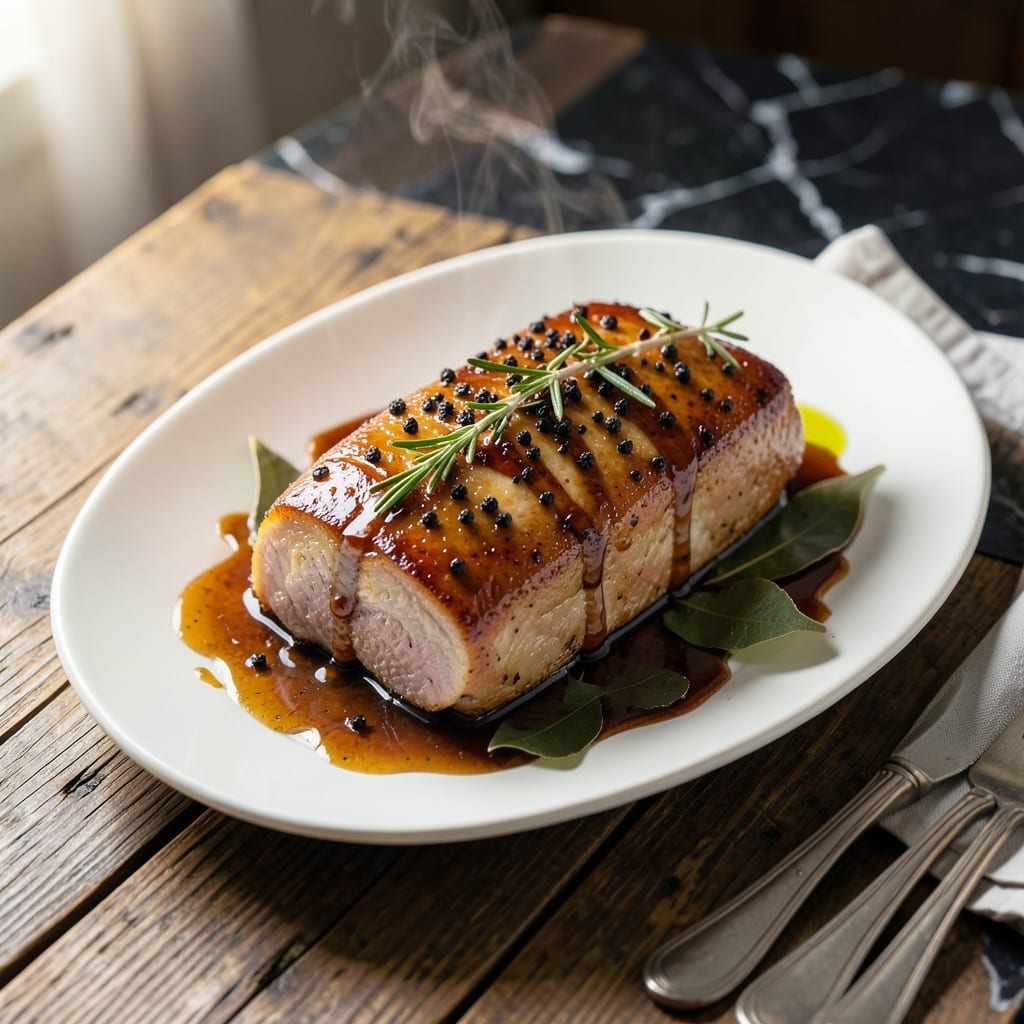
This simple brine transforms pork tenderloin into perfectly juicy, tender roasts every time. The salt solution breaks down muscle fibers while sugar balances the flavor, ensuring meat that stays moist through cooking.
I developed this method after years of dry, overcooked tenderloins. The right ratio of water, salt, and sugar makes all the difference, with optional herbs adding depth without overpowering the pork’s natural sweetness.
The process takes 15 minutes of active prep, then just time in the fridge. A 12-hour soak guarantees maximum moisture retention, so your final dish is never tough or stringy.
Use this for roasting, grilling, or smoking. The results will speak for themselves.
Ingredients for Brine Recipe for Pork Tenderloin
Nine ingredients for a brine that guarantees juicy, tender pork every single time.
| Ingredient | Amount | Notes |
|---|---|---|
| Water 💧 | 4 cups | Cold, for brine base |
| Kosher Salt 🧂 | ½ cup | Diamond Crystal preferred |
| Brown Sugar 🍚 | ¼ cup | Light or dark variety |
| Black Peppercorns 🌶️ | 1 tbsp | Whole, lightly crushed |
| Bay Leaves 🍃 | 2 whole | Fresh or dried |
| Fresh Rosemary 🌿 | 2 tbsp | Chopped, stems removed |
| Fresh Thyme 🌿 | 1 tbsp | Leaves stripped from stems |
| Garlic Cloves 🧄 | 4 cloves | Smashed, peeled |
| Juniper Berries 🫒 | 1 tsp | Lightly crushed (optional) |
[recipe_ingredient_scaler]
The salt is the workhorse here. Diamond Crystal kosher salt dissolves fastest and gives consistent results—table salt works but use half the amount. Brown sugar adds balance; light or dark doesn’t matter much. Most grocery stores carry everything you need, but Whole Foods has great bulk options for spices if you want to stock up.
No brown sugar? White sugar or maple syrup works fine. Fresh out of rosemary or thyme? Dried herbs at half the quantity will do the trick. Juniper berries are optional but add a nice depth—skip them if you don’t have them. The peppercorns and bay leaves are classic, but red pepper flakes can add a little heat if that’s your thing.
This brine keeps in the fridge for 1 week if you make extra. Store in a sealed container away from raw meat. For best results, use within 3 days of making it.
Why You’ll Love This Recipe
- 5-Minute Setup: I just stir water, salt, sugar, and spices in a pot—no chopping, no fuss.
- Sweet & Savory Magic: The brown sugar and peppercorns give the pork this deep, caramelized crust I can’t resist.
- Meal Prep Hero: I brine a few tenderloins on Sunday and roast them all week for sandwiches, salads, or tacos.
- Pocket-Friendly Feast: Honestly, a $6 pork tenderloin in this brine tastes like a $20 entree at a fancy restaurant.
Step-by-Step Instructions for Pork Tenderloin Brine
This method guarantees juicy, flavorful results with minimal effort and maximum impact.
Step 1: Bloom the Aromatics in Hot Water
In a medium saucepan, combine 1 cup of the 4 cups Water with the 0.5 cup Kosher Salt and 0.25 cup Brown Sugar. Heat over medium-high heat just until the salt and sugar dissolve completely—this usually takes 2-3 minutes.
Remove from heat and add the 1 tbsp Black Peppercorns, 2 whole Bay Leaves, 2 tbsp Fresh Rosemary, 1 tbsp Fresh Thyme, 4 cloves Garlic Cloves, and 1 tsp Juniper Berries. Stir well and let steep for 5 minutes—this extracts maximum flavor from the herbs and spices.
Step 2: Cool the Brine Completely
Stir the remaining 3 cups Water into the warm brine mixture. This rapidly brings the temperature down. Now, let the entire mixture cool to room temperature—this is critical for food safety and proper brining.
I speed this up by placing the saucepan in an ice bath and stirring occasionally. You’ll know it’s ready when the brine feels cool to the touch, usually after 15-20 minutes. Never add pork to warm brine—it can start cooking the meat unevenly.
Step 3: Submerge the Pork in the Brine
Place your pork tenderloin in a large resealable bag or non-reactive container. Pour the cooled brine over the meat, ensuring it’s completely submerged. If using a bag, squeeze out as much air as possible before sealing.
For even brining, I like to use a zip-top bag and lay it flat in the refrigerator, flipping it halfway through. This ensures all surfaces of the pork make constant contact with the brine.
Step 4: Brine for Optimal Tenderness
Refrigerate the pork in the brine for 12 to 24 hours. This is the sweet spot for tenderloin—long enough to deeply season and tenderize the meat without making it overly salty.
I find 18 hours gives the best balance of flavor and texture. The pork will look slightly plumped when it’s done brining, which means the solution has properly penetrated the meat fibers.
Step 5: Rinse and Pat Dry Before Cooking
Remove the pork from the brine and discard the liquid. Give the tenderloin a quick rinse under cold water to remove any clinging herbs or excess salt on the surface. This prevents the exterior from becoming too salty during cooking.
Pat the pork extremely dry with paper towels. This is crucial for achieving a good sear later. The surface should feel slightly tacky but not wet. Now your pork is ready for roasting, grilling, or any cooking method you prefer.
Pro Tips For Making Brine Recipe For Pork Tenderloin
- Chill the Brine: Always use ice-cold water or refrigerate the brine for 30 minutes before adding the pork—warm brine starts cooking the meat and ruins the texture. I learned this the hard way after a few tough, over-brined tenderloins.
- Dissolve the Sugar: Stir the brown sugar and salt into warm water first until fully dissolved, then cool completely. Sounds tedious, but it prevents undissolved grains from sticking to the pork.
- Don’t Over-Salt: Use 1/4 cup kosher salt per quart of water—more than that and you’ll end up with a cure, not a brine. My first attempt tasted like a salt lick.
- Brine 4-12 Hours: Any shorter and the flavor won’t penetrate, any longer and the pork turns mushy. For tenderloin, 6 hours in the fridge is the sweet spot—I set a timer so I don’t forget.
Pro Cooking Tips for Perfect Results
Salt Selection Matters
I always use Diamond Crystal kosher salt for brining—it dissolves faster than table salt and gives consistent results. If you only have table salt, use half the amount by volume. The right salt makes all the difference in flavor penetration. 💪
Temperature Control
Never add pork to warm brine—it can start cooking the meat unevenly. I cool my brine in an ice bath while stirring, which brings it to room temperature in 15-20 minutes. This ensures food safety and proper brining.
Submersion Technique
Use a zip-top bag and lay it flat in the fridge for even brining. Squeeze out all air before sealing, and flip the bag halfway through. This guarantees all surfaces of the pork make constant contact with the brine.
Perfect Brining Time
For pork tenderloin, 12-24 hours is ideal. I find 18 hours gives the best balance of flavor and texture. The meat will look slightly plumped when ready, meaning the solution has fully penetrated.
Drying for Better Sear
After brining, rinse the pork quickly under cold water to remove excess salt. Pat it extremely dry with paper towels—the surface should feel slightly tacky. This step is crucial for achieving a perfect sear later.
Equipment Recommendation
For best results, use a large resealable bag or non-reactive container. I prefer bags because they allow you to squeeze out air and maximize contact with the brine. Avoid metal containers, as they can react with the salt.
Nutrition Facts
Frequently Asked Questions
How long should I brine pork tenderloin?
For the best results, brine for 12 to 24 hours. I recommend 18 hours for ideal flavor and tenderness. The meat will appear slightly plumped when ready.
Can I reuse the brine for another batch?
No, never reuse brine. Once it has been in contact with raw pork, bacteria can multiply, making it unsafe. Always discard after use.
What if I don’t have kosher salt?
Use half the amount of table salt by volume. For example, use ¼ cup table salt instead of ½ cup kosher salt.
Should I rinse the pork after brining?
Yes, a quick rinse under cold water removes excess salt. Pat it extremely dry afterward for a better sear.

Trained in classic French technique but raised on slow-cooked ribs and spicy rubs, she blends culinary skill with smoke and soul.
- Recipe for Boneless Pork Chops in Cast Iron Skillet: Sear and Baste to Juicy Perfection - October 3, 2026
- Recipe for Boneless Cross Rib Roast: Slow-Roasted Beef with Herb Crust - October 3, 2026
- Hamburgers in Sauce Recipe Crock Pot: Slow-Cooked Savory Delight - October 3, 2026