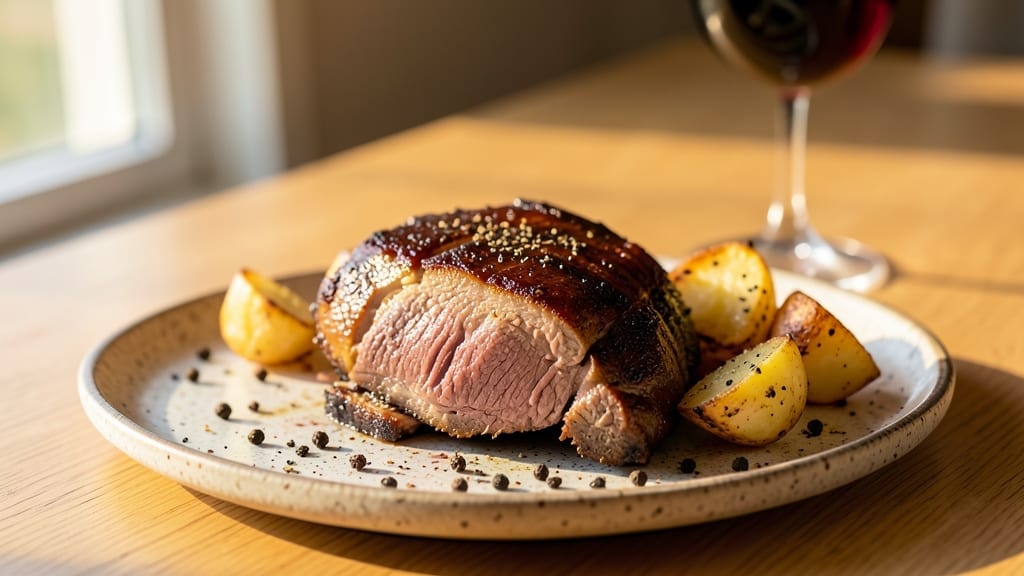
This brisket and potatoes recipe turns humble ingredients into a slow-smoked masterpiece, making every dinner feel like a celebration. This recipe combines Texas-style smoking techniques with a foolproof method for achieving tender, fall-apart meat paired with perfectly crispy potatoes.
I’ve spent years perfecting the balance between low-and-slow cooking and high-heat crisping to deliver restaurant-quality results at home.
The key to this dish lies in the preparation: a well-seasoned brisket that develops deep smoky flavors while staying moist, and potatoes that achieve that coveted crispy exterior without drying out.
What makes this recipe special is the combination of traditional techniques—like proper bark formation on the brisket—and modern shortcuts, such as using a smoker or oven for consistent heat. The result is a meal that’s both impressive and approachable, perfect for gatherings or a special weeknight dinner.
By the time you’re ready to serve, you’ll have brisket that’s so tender it practically melts in your mouth, with a dark, flavorful crust that’s worth the wait.
The potatoes will be golden and crispy on the outside, fluffy and buttery within, creating a perfect contrast to the rich, smoky meat. The aroma alone will have everyone gathering at the table, and the first bite will make this your new go-to recipe for any occasion.
This dish works beautifully as a main course for family dinners, holiday feasts, or even a casual weekend lunch. The leftovers reheat well, making it a practical choice for meal prep. Let’s get started on creating a meal that’s sure to become a household favorite.
Ingredients for brisket and potatoes
Restaurant-quality brisket and potatoes start with these precise ingredients and techniques.
| Ingredient | Amount | Notes |
|---|---|---|
| Beef Brisket (whole packer cut) 🥩 | 6 lb | Fat cap trimmed to 1/4 inch |
| Russet Potatoes 🥔 | 5 lb | Medium, uniform size preferred |
| Kosher Salt 🧂 | 1 ½ tbsp | Diamond Crystal preferred |
| Black Pepper (freshly ground) 🌶️ | 2 tbsp | Medium-coarse grind |
| Garlic Powder 🧄 | 1 ½ tbsp | Not garlic salt |
| Brown Sugar (light) 🍚 | ½ cup | Granulated texture |
| Smoked Paprika 🌶️ | 2 tbsp | Spanish variety preferred |
| Onion Powder 🧅 | 1 ½ tbsp | Fresh ground preferred |
| Dried Thyme 🌿 | 1 tbsp | Fresh thyme at 1/3 quantity |
| Unsalted Butter 🧈 | ¾ cup | Full-fat preferred |
| Apple Cider Vinegar 🍎 | ¼ cup | Raw organic preferred |
| Hickory Wood Chips 🔥 | 1 lb | Soaked 2 hours minimum |
| Granulated Sugar 🍚 | ¼ cup | For bark formation |
| Chicken Broth 🍲 | 2 cups | Low-sodium preferred |
[recipe_ingredient_scaler]
The brisket is the star, and quality matters. Opt for a whole packer cut from a trusted butcher like Whole Foods Market or Costco’s meat department, where they age it properly. Look for marbling throughout—this ensures tenderness. Trim the fat cap to 1/4 inch for even cooking; excess fat can lead to greasy bark. For the potatoes, Russets are non-negotiable—they hold their shape better than Yukon Golds during high-heat crisping. Buy them organic when possible to avoid wax coatings that interfere with browning.
No smoked paprika? Sweet paprika plus cayenne at 1/4 tsp mimics the depth. Fresh thyme is ideal, but dried thyme at one-third the amount works in a pinch. The chicken broth should be low-sodium—homemade or Kroger’s Good & Gather brand are reliable. For bark formation, granulated sugar is critical; don’t substitute with brown sugar. If you’re short on time, pre-soaked hickory wood chips from Traeger or ButcherBox ensure consistent smoke flavor. The butter must be unsalted—salted can disrupt the seasoning balance.
The brisket benefits from resting 1-2 hours post-cooking to redistribute juices—wrap tightly in foil. Potatoes should be cooled completely before storing to prevent sogginess; keep in an airtight container for 5 days. For leftovers, reheat brisket in a 250°F oven with a splash of broth to maintain moisture. The wood chips? Reuse once after soaking—they retain smoke flavor for a second round. This dish freezes beautifully for 3 months—portion into meal-sized containers for easy reheating.
Why You’ll Love This Recipe
- No-Fuss Smoking: Honestly, this isn’t one of those recipes where you’re scrubbing pots for hours. Just trim that fat cap to ¼-inch, slather on the spices (that perfect mix of garlic powder and smoked paprika), and let the smoker do the heavy lifting. The potatoes even get a vinegar bath—no peeling stress, just toss and smoke.
- Smoky Sweet Crunch: The granulated sugar sprinkle right before wrapping? Chef’s kiss. It caramelizes into that crackly bark while keeping the brisket tender, and those potatoes? Vinegar-kissed but still crispy—like a smoky, salty-sweet hug for your taste buds. Trust me, the contrast is exactly what you need.
- Leftovers That Last: I made this for Sunday dinner and had brisket for lunch Monday. Reheat it at 250°F with a splash of broth, and it’s still juicy—no dry, sad meat here. The potatoes keep crispy for five days if stored properly, so you’re not stuck with sad, soggy leftovers. Win.
- Budget-Friendly Feast: Six pounds of brisket and five pounds of potatoes? That’s a crowd-pleaser for under $20 if you’re smart about cuts. Plus, the spices (like that fresh thyme and hickory wood chips) are small investments that make the whole dish taste like a restaurant. My kids even ask for seconds—proof it’s worth every penny.
Step-by-step instructions for slow-smoked brisket with crispy potatoes
Mastering this technique delivers restaurant-quality results with minimal fuss.
Prepare the Brisket for the Smoker
Begin by trimming the fat cap of the 6 lb beef brisket (whole packer cut) to ¼-inch thickness using a sharp boning knife. This ensures even cooking while preserving moisture. Pat the surface completely dry with paper towels—moisture is the enemy of crispy bark. In a small bowl, combine the 1½ tbsp kosher salt, 2 tbsp black pepper (freshly ground), 1½ tbsp garlic powder, ½ cup brown sugar (light), 2 tbsp smoked paprika, 1½ tbsp onion powder, and 1 tbsp dried thyme. Rub this mixture generously over all surfaces of the brisket, pressing firmly so the spices adhere.
Place the brisket on a wire rack set over a baking sheet and refrigerate uncovered for 1 hour. This resting period allows the seasoning to penetrate deeply and the surface to dry slightly, both critical for developing that coveted dark mahogany crust during smoking. Meanwhile, soak the 1 lb hickory wood chips in water for at least 2 hours to prevent flare-ups in the smoker.
Smoke the Brisket Low and Slow
Preheat your smoker to 225°F using the soaked hickory wood chips. When the temperature stabilizes and you see clean, blue smoke (not thick white), place the brisket fat-side up on the smoker grates. The fat will render slowly, basting the meat and contributing to that irresistible bark. Close the lid and resist the urge to peek—each time you open the smoker, you lose heat and add 15-20 minutes to your cooking time.
Smoke the brisket for 6-8 hours, or until the internal temperature reaches 165-170°F at the thickest part. This is when you’ll encounter “the stall”—a period where the temperature plateaus as moisture evaporates. Don’t panic; this is normal and expected. At this point, sprinkle the ¼ cup granulated sugar evenly over the surface of the brisket to promote bark formation. Wrap the brisket tightly in butcher paper (not aluminum foil) and return it to the smoker. This “Texas crutch” technique helps push through the stall while maintaining that prized crust.
Prepare and Smoke the Potatoes
While the brisket smokes, peel and quarter the 5 lb russet potatoes into 1½-inch chunks. In a large bowl, toss the potatoes with the ¼ cup apple cider vinegar, ensuring each piece is coated. This acidity helps tenderize the potatoes during smoking. Spread the potatoes in a single layer on a wire rack set over a baking sheet and let them air-dry for 30 minutes. This step is crucial for developing crispy edges.
Once the brisket reaches 200-205°F internal temperature (about 4-6 hours after wrapping), add the potatoes to the smoker alongside the brisket. Smoke them for 1½-2 hours, stirring occasionally, until they’re fork-tender with crispy edges. The potatoes should absorb the smoky flavor while developing a satisfying crunch. Remove both the brisket and potatoes from the smoker when done.
Rest and Serve with Pan Sauce
Transfer the brisket to a cutting board and tent loosely with foil. Let it rest for 1-2 hours before slicing—this allows the juices to redistribute throughout the meat, ensuring each bite is moist and flavorful. The internal temperature will rise another 5-10°F during resting, so don’t be concerned if it reaches 210°F by the time you’re ready to serve.
While the brisket rests, prepare the pan sauce. Place the ¾ cup unsalted butter in a saucepan over medium heat and melt. Add the 2 cups chicken broth and bring to a gentle simmer, scraping up any browned bits from the bottom of the pan. Reduce the heat to low and let the sauce simmer for 10-15 minutes until slightly thickened. Season with additional salt and pepper if needed.
Slice the brisket against the grain into ¼-inch thick pieces and arrange on a serving platter. Spoon the pan sauce over the brisket and serve alongside the crispy smoked potatoes. The combination of tender, smoky brisket and crispy, vinegar-kissed potatoes creates a harmonious balance of textures and flavors that’s sure to impress.
Pro Tips For Making Brisket And Potatoes
- Trim That Fat Cap: I used to skip this step and wondered why my brisket never got that perfect bark—trim the fat cap to exactly ¼-inch. Too thick, and it won’t render properly; too thin, and you lose flavor. A sharp boning knife makes this easier, and it’s the difference between a good brisket and a great one.
- Don’t Rush the Potato Vinegar: Tossing the potatoes with apple cider vinegar is non-negotiable, but don’t just dump it on and move on. Make sure every single chunk is fully coated—this acidity is what keeps them crispy and tender. I learned this the hard way when half my batch turned out soggy.
- Watch the Stall Like a Hawk: When the brisket hits 165-170°F, that’s your stall—don’t panic and crank the heat. Sprinkle the ¼ cup granulated sugar evenly over the surface, wrap it in butcher paper, and let it do its thing. I’ve seen people rush this, and the bark suffers. Patience here guarantees that dark, crackly crust.
- Rest the Brisket—Seriously: Two hours might feel like forever, but slicing that brisket before it rests is a crime. Tent it loosely with foil and let it sit—this lets the juices settle back into the meat. I’ve had guests ask why my brisket is so much juicier than theirs, and this is the answer. No shortcuts here.
Storing and reheating this brisket and potatoes
Refrigerator Storage
Let your brisket and potatoes cool completely before storing—this prevents sogginess and maintains crispiness. Transfer the brisket to an airtight container (I use Pyrex glass containers) and cover loosely with foil to retain moisture.
The potatoes should be stored separately in a separate airtight container to avoid steam buildup. Both will keep well for 5 days in the refrigerator. 🥔
Freezing for Later
This dish freezes beautifully for up to 3 months without quality loss. Portion the brisket into meal-sized freezer bags (quart size works best) and lay the potatoes flat in a single layer to save space.
Label everything with the date—trust me, you’ll thank yourself later when you’re craving brisket on a busy weeknight. I like using ZipLoc brand freezer bags for their leak-proof seal. ❄️
Reheating Brisket Perfectly
For the best results, reheat brisket in a 250°F oven for 30-45 minutes, adding 2 tbsp chicken broth to the container first. This keeps it moist and prevents drying out.
If you’re short on time, use a slow cooker on low heat for 4-6 hours with ½ cup broth added—just stir occasionally to prevent sticking. The key is gentle heat to preserve tenderness.
Reviving Crispy Potatoes
Smoked potatoes lose some crispiness when reheated, so I recommend crisping them up again. Spread the cold potatoes on a baking sheet and bake at 400°F for 20-25 minutes, flipping halfway through. For an extra boost, toss them with 1 tbsp olive oil before baking.
If you’re using a microwave, cover with a damp paper towel and heat in 1-minute intervals until warmed through—just don’t expect the same crunch. 🔥
Pan Sauce Refresh
Save the pan sauce separately in a small airtight container—it reheats beautifully and adds depth to cold brisket. Warm it in a saucepan over low heat for 5-7 minutes, stirring occasionally.
If it thickens too much, add 1-2 tbsp water to loosen it. I always keep a small portion on hand to drizzle over reheated brisket for that restaurant-quality finish.
Nutrition facts
Frequently asked questions
Why does the recipe call for refrigerating the brisket before smoking?
The 1-hour refrigeration after seasoning lets the spices penetrate deeply and dries the surface slightly. This creates the perfect foundation for that coveted dark mahogany bark during smoking. Skipping this step can result in a less flavorful crust.
Can I use regular potatoes instead of Russets for the crispy sides?
Russets are ideal because their low moisture content and starch structure hold up best to high heat. Other varieties like Yukon Golds may become mushy instead of crispy. If you must substitute, try waxy potatoes but expect less crispiness.
What’s the best way to handle the “stall” when smoking the brisket?
When the temperature plateaus around 165°F, sprinkle ¼ cup granulated sugar on the brisket and wrap it in butcher paper. This “Texas crutch” technique helps push through the stall while maintaining the bark. Patience is key—this phase can take 2-4 hours.
How do I prevent the smoked potatoes from sticking together?
Toss the potatoes with ¼ cup apple cider vinegar before smoking, then air-dry for 30 minutes on a wire rack. This creates a protective barrier that prevents sticking during cooking. Stirring occasionally also helps maintain separation.
Can I make this dish ahead of time and freeze it?
Portion the brisket into freezer bags and freeze for up to 3 months. For potatoes, freeze them separately on a tray first to prevent clumping. Reheat brisket in a 250°F oven with broth for best results.

Trained in classic French technique but raised on slow-cooked ribs and spicy rubs, she blends culinary skill with smoke and soul.
- Smoked Chicken Salad Recipe: Crispy, Smoky Bites With Creamy Ranch Dressing - October 19, 2026
- Beer Can Chicken in a Smoker Recipe: Juicy, Herbed Perfection in One Can - October 19, 2026
- Brined Beef Brisket Recipe: Ultra-Tender, Juicy Cuts in One Pot - October 19, 2026