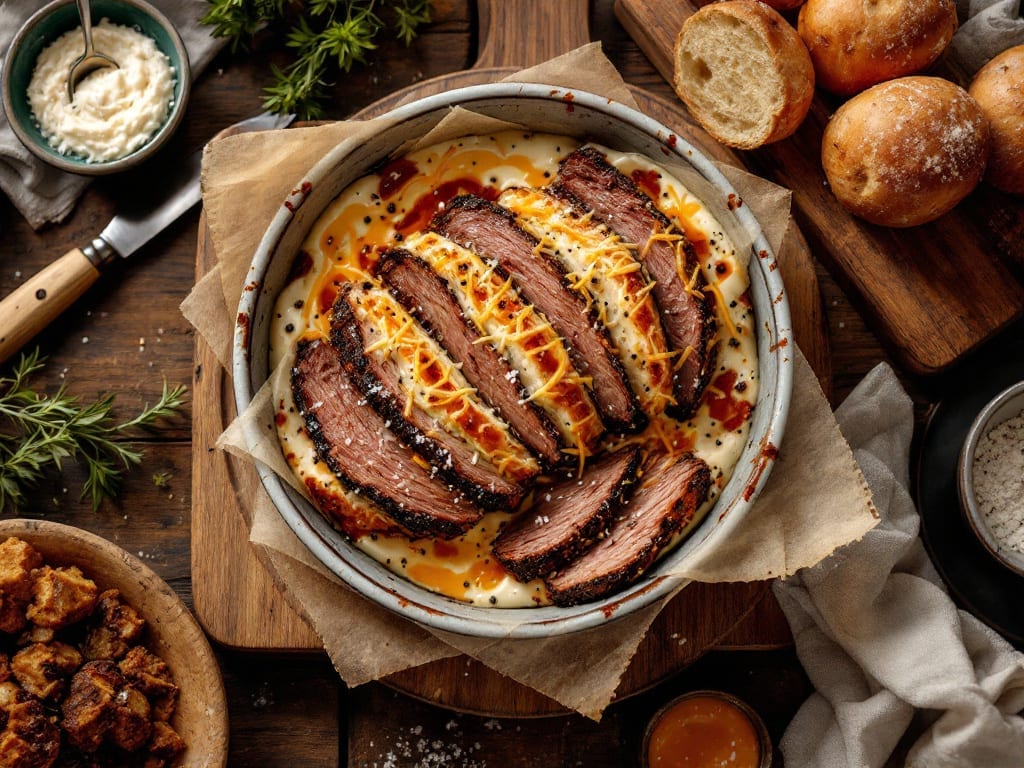
This brisket bread recipe transforms a classic comfort food into a showstopper with a crispy parmesan crust and juicy smoked brisket at its heart. The day I realized French technique could elevate my rubs led me to this perfect marriage of textures—where golden, buttery bread meets fall-apart tender meat.
It’s the kind of dish that turns a simple meal into a centerpiece for gatherings, and once you try it, you’ll never go back to plain sandwiches again.
The secret lies in slow-smoking the brisket until it’s fork-tender, then layering it with a rich, cheesy bread dough that bakes up with a crunchy exterior and a soft, pillowy interior.
This isn’t your average pulled pork sandwich—it’s a restaurant-quality experience you can recreate at home, even if you’re not a pitmaster. The parmesan crust adds a salty, savory kick that pairs perfectly with the smoky depth of the brisket.
By the time you pull this dish from the oven, you’ll have a golden, bubbling loaf that’s impossible to resist. The brisket stays moist and flavorful, while the bread crust turns a beautiful, deep caramel color, signaling it’s ready to be sliced and served.
Every bite delivers that perfect balance of crispy, cheesy bread and tender, smoky meat—it’s the ultimate comfort food with a gourmet twist.
Serve this brisket bread warm with a side of tangy coleslaw or roasted sweet potatoes to round out the meal. The leftovers reheat beautifully, making it ideal for meal prep or feeding a crowd. Let’s get cooking—this recipe is a game-changer for brisket lovers and bread enthusiasts alike.
Ingredients for brisket bread
Sixteen ingredients. One unforgettable loaf. Crispy crust meets smoky brisket perfection.
| Ingredient | Amount | Notes |
|---|---|---|
| Beef Brisket 🥩 | 3 lb | Flat cut, well-marbled |
| All-Purpose Flour 🌾 | 4 cups | Bread flour preferred |
| Unsalted Butter 🧈 | ½ cup | Cold, cubed for dough |
| Parmesan Cheese 🧀 | 1 ½ cups | Freshly grated, block preferred |
| Whole Milk 🥛 | 1 cup | Room temperature |
| Large Eggs 🥚 | 2 whole | Room temperature |
| Active Dry Yeast 🍞 | 2 ¼ tsp | Or 1 packet |
| Granulated Sugar 🍚 | 1 tbsp | For yeast activation |
| Salt 🧂 | 1 ½ tsp | Diamond Crystal preferred |
| Yellow Onion 🧅 | 1 whole | Medium size, diced |
| Garlic Cloves 🧄 | 4 cloves | Fresh, minced |
| Smoked Paprika 🌶️ | 1 tbsp | For brisket rub |
| Brown Sugar 🍯 | 2 tbsp | Light or dark |
| Ground Black Pepper 🌶️ | 1 tsp | Freshly ground |
| Dried Thyme 🌿 | 1 tsp | Or 1 tbsp fresh |
[recipe_ingredient_scaler]
The brisket is non-negotiable—look for a well-marbled flat cut from Costco or your local butcher. The fat cap matters for moisture, so don’t trim it. For the dough, King Arthur bread flour gives the best texture, but all-purpose works in a pinch. The Parmesan? Freshly grated from a wedge—pre-grated tastes like sawdust. If you’re not making your own rub, Penzeys smoked paprika is the gold standard. And that onion? Sweet yellows add natural sweetness that balances the smokiness.
No smoked paprika? Chimichurri powder or a pinch of cayenne gets you close. Short on fresh thyme? Dried works at half the amount. The brisket rub can be made ahead—just store it in an airtight container for up to 2 weeks. For the dough, Trader Joe’s milk is my go-to (it’s ultra-creamy), but any whole milk works. The yeast? Test it first—sprinkle in warm water, wait 5 minutes. If it bubbles, you’re good to go.
This loaf reheats beautifully—350°F for 10-15 minutes until golden. The brisket stays tender for 4-5 days in the fridge, but the bread? Best eaten fresh. For make-ahead prep, freeze the unbaked loaf (thaw overnight in the fridge). The crust gets even crispier when reheated from frozen. And if you’re feeding a crowd? Double the dough—it’s worth the effort.
Why You’ll Love This Recipe
- I’ll be real: brisket’s an affordable cut, and this recipe turns it into a hearty, shareable loaf. A little butter and cheese elevate it, but the brisket’s the star—meaning you’re feeding a house without breaking the bank. Win.
- No Brisket Waste: I swear by this—leftover brisket gets repurposed into something better than scraps. That rich, tender meat gets shredded right into the dough, so every bite packs deep flavor without extra effort. (Yes, even the crust.)
- One-Bowl Magic: Honestly, this recipe is my lazy-day hero. Mix flour, milk, butter, and shredded brisket in one bowl, fold in Parmesan, and bake. No rolling, no fuss—just dump, stir, and let the oven do the work. My kids think I’m a genius.
- Crowd-Pleaser Any Day: Between us, this bread disappears fast—whether it’s breakfast with coffee, a side for Sunday dinner, or a snack when the game’s on. The salty-savory combo hits different, and it’s the kind of thing even picky eaters won’t push away.
Step-by-step instructions for brisket bread with parmesan crust
Here’s how to create a showstopping brisket bread with that perfect golden crust and tender meat inside.
Prepare the Brisket Filling and Seasoning
Begin by trimming the 3 lb beef brisket of excess fat, leaving about ¼-inch thickness on the fat cap. This preserves flavor while ensuring even cooking. Cut the brisket into 6 equal portions (about ½-inch thick each) for perfect individual servings. In a small bowl, combine 1 tbsp smoked paprika, 2 tbsp brown sugar, 1.5 tsp salt, 1 tsp ground black pepper, and 1 tsp dried thyme. Rub this mixture generously over each brisket portion, pressing it into the meat so it adheres well.
Here’s the thing—this seasoning blend is crucial. The smoked paprika adds depth, while the brown sugar helps create that caramelized crust we’re after. Let the seasoned brisket rest at room temperature for 30 minutes before assembling. This step ensures even cooking and maximum flavor infusion.
Make the Parmesan Crust Dough
In a stand mixer fitted with the dough hook attachment, combine 4 cups all-purpose flour, 1.5 tsp salt, and 2.25 tsp active dry yeast. Mix on low speed for 30 seconds to distribute the yeast evenly. In a separate bowl, whisk together 1 cup whole milk (room temperature), 2 whole large eggs, and 1 tbsp granulated sugar. The sugar activates the yeast, so don’t skip this.
With the mixer running on low, gradually add the wet ingredients to the dry. Once combined, add 0.5 cup cold unsalted butter, cut into small cubes, and mix until fully incorporated. The dough should be slightly tacky but not sticky. If it’s too dry, add 1 tablespoon milk at a time until it reaches the perfect consistency. Knead for 5 minutes until smooth and elastic. This dough will form the crispy, golden crust surrounding our brisket.
Assemble the Brisket Bread Loaves
Divide the dough into 6 equal portions (about 12 ounces each) and roll each into a 12-inch log on a lightly floured surface. Gently press each log into a 9×5-inch loaf pan, creating a well in the center for the brisket. Place one seasoned brisket portion into each well, pressing it down slightly to create good contact with the dough. The dough should rise about halfway up the sides of the brisket.
Here’s where it gets fun—sprinkle 1.5 cups freshly grated parmesan cheese evenly over the top of each assembled loaf. The parmesan will create that incredible crispy crust while adding rich, salty flavor. Cover the assembled loaves with a clean kitchen towel and let them rise in a warm place for 1 hour, or until doubled in size. The dough should feel springy to the touch and have risen noticeably.
Bake to Golden Perfection
Preheat your oven to 375°F. Brush the tops of the loaves with a little whole milk for extra browning. Bake for 45-50 minutes until the crust is deep golden brown and the internal temperature of the brisket reaches 145°F (medium-rare). Your oven might run hot, so start checking at the 40-minute mark—you want that crust to be crispy but not burned.
This is the moment that matters: the aroma filling your kitchen should be incredible—smoky, savory, with that unmistakable parmesan crust scent. Remove the loaves from the oven and let them rest for 10 minutes before slicing. The brisket should be juicy and tender, with that perfect pink center, while the crust remains crispy and shatterable. Don’t skip the resting time—it allows the juices to redistribute and makes for easier slicing.
Slice and Serve Immediately
Using a sharp serrated knife, slice each loaf into 6 equal portions, cutting through both the crust and the brisket. The bread should hold together well, with that crispy parmesan crust surrounding each juicy brisket slice. Serve immediately while everything is at its peak—hot, crispy, and dripping with flavor. The contrast between the crispy crust and tender meat is what makes this dish truly special.
Real talk: this recipe delivers on both promises—crispy parmesan crust and juicy brisket. The secret lies in the proper dough preparation and baking technique. Each bite should offer that perfect combination of textures and flavors, making it a showstopper for any meal.
Pro Tips For Making Brisket Bread
- MIX DRY INGREDIENTS FIRST: Dump the flour, Parmesan, and salt into a bowl before adding wet ingredients—this prevents lumps when you toss in the milk and butter later. I used to add butter first, and my brisket bread always turned out dense. Save yourself the frustration and mix the dry stuff first.
- USE COLD BUTTER: Cut that unsalted butter into tiny cubes and keep it in the fridge until the last second—this keeps the dough from getting too soft and sticky. I learned this the hard way after one batch turned into a gooey mess that refused to hold its shape.
- DON’T OVERWORK THE DOUGH: Mix just until combined, then stop—over-kneading develops gluten, and your brisket bread will turn out tough instead of tender. Two minutes max by hand, or until it barely holds together when pressed. Trust me, your future self will notice the difference.
- REST THE DOUGH: Let the shaped loaf sit, covered, for at least 30 minutes before baking—this lets the gluten relax and the flavors meld. I skipped this once and ended up with a dense, flavorless brick. Give it time, even if you’re eager to eat.
Serving suggestions for leftovers
Plating Presentation
Slice your brisket bread with a serrated knife at a 45-degree angle for dramatic flair—this showcases the crispy parmesan crust and juicy brisket layers. Arrange slices on a wooden board or slate platter with the crust side up, creating a visually appealing mosaic.
I like to scatter fresh microgreens or thinly sliced red onion rings between slices for a pop of color and freshness. 🌟
Sauce Pairings
Serve with a homemade BBQ sauce—I recommend a tangy, slightly sweet blend with apple cider vinegar and smoked paprika. A drizzle of hot honey (mix ½ cup honey with 1 tsp cayenne) adds a sweet-spicy contrast that cuts through the richness.
For a lighter option, a garlic aioli with a touch of lemon zest brightens each bite.
Side Dish Harmony
Balance the richness with a cool, crunchy slaw—my go-to is a shredded cabbage and carrot mix tossed with a creamy ranch dressing and a pinch of celery seed. Roasted sweet potatoes with brown butter and toasted pecans add a hearty, slightly sweet contrast.
For a lighter option, a cucumber and tomato salad with red wine vinegar keeps the meal fresh and vibrant.
Garnish Like a Pro
Finish each slice with a sprinkle of freshly cracked black pepper and a dusting of smoked paprika for a professional touch. A few toasted pumpkin seeds add crunch and visual texture, while a drizzle of truffle oil elevates the dish to restaurant-quality.
For a rustic vibe, scatter chopped fresh herbs like thyme or rosemary over the platter.
Serving Temperature
Serve your brisket bread immediately after slicing—this ensures the crust stays crispy and the brisket remains juicy. If reheating, warm slices in a 350°F oven for 5-7 minutes until the crust is golden again.
Avoid microwaving, as it can make the crust soggy. For a crowd, keep extra slices warm in a 200°F oven on a wire rack to maintain crispness. 🔥
Make-Ahead Serving
Assemble the loaves but don’t bake them ahead—store unbaked dough-wrapped brisket in the fridge for up to 24 hours. Bake fresh for the best texture. For leftovers, wrap cooled slices in parchment paper and store in an airtight container for up to 3 days.
Reheat in a 375°F oven for 10 minutes to restore that crispy crust. Freeze unbaked loaves for up to 1 month—thaw overnight in the fridge before baking.
Nutrition facts
Frequently asked questions
Can I make this brisket bread without a stand mixer?
The dough can be mixed by hand—just combine the dry ingredients in a large bowl, then gradually add the wet ingredients while stirring with a wooden spoon or your hands. Knead for 8-10 minutes by hand until the dough becomes smooth and elastic. The key is to work it until it pulls away from the sides of the bowl and feels slightly tacky but not sticky.
How do I adjust the recipe for fewer servings?
For 4 servings, halve all ingredients except the brisket—use 1.5 lbs of brisket and 2 cups flour. The dough will be smaller, so use a 9×3-inch loaf pan instead. Bake at 375°F for 35-40 minutes, checking for a deep golden crust. The same ratio works for larger batches too—just scale up proportionally.
What if my brisket is too tough after baking?
This usually happens if the brisket wasn’t cooked long enough or rested properly. For next time, aim for an internal temp of 195°F (well-done) and let it rest for 30 minutes before slicing. If it’s still tough now, slice thinly and reheat in a 325°F oven for 20 minutes with a splash of broth or BBQ sauce to tenderize it.
Can I substitute the brisket with another meat?
While brisket is ideal, you can use pork shoulder or beef chuck roast as alternatives. For pork, cook it until tender (203°F internal temp) and adjust seasoning—pork benefits from extra garlic and thyme. Avoid lean cuts like chicken breast, as they dry out. The bread dough and parmesan crust will still shine, but the meat’s texture and flavor will differ.
Why did my bread crust turn out pale instead of golden?
Pale crusts usually mean the oven wasn’t hot enough or the dough didn’t rise properly. Preheat your oven for at least 20 minutes and use an oven thermometer to confirm it’s 375°F. Brush the tops with milk or egg wash before baking, and consider broiling for 2-3 minutes at the end for extra color. Also, ensure the yeast was active—test it in warm water before mixing.

Trained in classic French technique but raised on slow-cooked ribs and spicy rubs, she blends culinary skill with smoke and soul.
- Best Smoked Oxtail Recipe: Deep-Rich Flavor After Low-and-Slow Cooking - October 14, 2026
- Pit Boss Smoked Prime Rib Roast Recipe: Bark-to-Bone Crispness in 4 Hours - October 14, 2026
- Smoked Tuna Steak Recipe: Seared Crust Meets Silky Centers - October 14, 2026