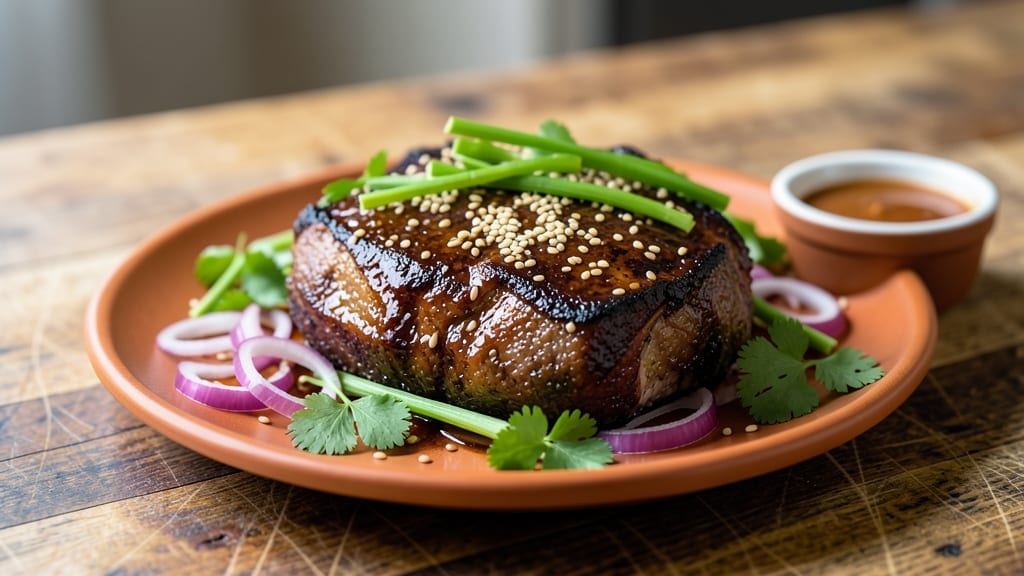
This brisket recipe with apple cider vinegar transforms tough beef into melt-in-your-mouth perfection through a slow-smoking process that builds deep, complex flavors. The tangy acidity of the vinegar tenderizes the meat while creating a glossy bark that holds up beautifully against the smoky aroma.
I perfected this technique during a particularly chilly Portland winter when I needed a dish that could feed a crowd and keep everyone coming back for seconds.
The secret lies in the marinade—a blend of apple cider vinegar, brown sugar, and aromatic spices that work together to break down the connective tissue while adding layers of sweetness and acidity.
Unlike traditional brisket recipes that rely solely on salt or dry rubs, this method uses a liquid marinade that penetrates deeply, ensuring every bite is tender and flavorful.
The slow cooking process—typically 12 to 16 hours—allows the meat to absorb these flavors evenly, resulting in a texture that’s impossible to resist.
By the time you pull that brisket from the smoker, you’ll have a piece of meat so tender it practically falls apart at the touch, with a crust that’s rich and caramelized.
The apple cider vinegar adds a bright, slightly tangy note that cuts through the richness, balancing the smoky, sweet flavors of the bark. This is the kind of brisket that turns a simple weeknight dinner into a memorable feast, perfect for gatherings or when you want to impress.
Serve it sliced thin against a bed of pickled onions, drizzled with a touch of BBQ sauce, or even shredded into sandwiches for the ultimate comfort food experience.
The versatility of this recipe means it works just as well for a casual family dinner as it does for a holiday spread. Let’s get started on creating your most tender brisket yet.
Ingredients for brisket recipe apple cider vinegar
Just a few crowd-pleasing ingredients transform tough brisket into melt-in-your-mouth perfection.
| Ingredient | Amount | Notes |
|---|---|---|
| Beef Brisket 🥩 | 8 lb | Flat cut preferred, trimmed of excess fat |
| Apple Cider Vinegar 🍎 | 1 cup | Raw, unfiltered preferred for depth |
| Light Brown Sugar 🍚 | 1 cup | Packed, not granulated |
| Yellow Onion 🧅 | 1 whole | Medium, sliced into rings |
| Garlic Cloves 🧄 | 8 cloves | Fresh, peeled and smashed |
| Smoked Paprika 🌶️ | 2 tbsp | For authentic smoky flavor |
| Ground Black Pepper 🌶️ | 1 ½ tbsp | Freshly cracked for heat |
| Kosher Salt 🧂 | 2 tbsp | Diamond Crystal preferred |
| Black Coffee ☕ | 1 cup | Cold brew or strong drip |
| Beef Broth 💧 | 2 cups | Low-sodium preferred |
| Honey 🍯 | 2 tbsp | Wildflower preferred for floral notes |
| Fresh Thyme 🌿 | ¼ cup | Leaves only, stems removed |
| Wood Chips 🌳 | 2 cups | Hickory or oak preferred |
| Charcoal Chunks 🔥 | 10 whole | For smoker heat source |
| Pickled Red Onions 🧅 | 1 ½ cups | For serving, store-bought or homemade |
[recipe_ingredient_scaler]
The brisket is the star here—flat cut is ideal for even cooking, but point cut works too. Costco or Whole Foods sell pre-trimmed briskets that save time, but if you’re trimming yourself, leave about 1/4-inch fat cap for flavor. Apple cider vinegar should be raw and unfiltered—the cloudiness means more flavor. I grab mine from Trader Joe’s or make my own with local apples. For the wood chips, hickory gives classic BBQ flavor, but oak adds a touch of sweetness that pairs beautifully with the vinegar’s tang.
No apple cider vinegar? White vinegar or red wine vinegar work in a pinch, but you’ll lose some depth. Brown sugar substitutes? Coconut sugar or muscovado add caramel notes, but regular granulated sugar works if you’re in a hurry. Fresh thyme hard to find? Dried thyme at half the amount is fine, but the fresh version really sings. The coffee in the marinade might sound odd, but it deepens the meat’s flavor—cold brew or strong drip both work. For the wood chips, mesquite adds a distinct earthiness if you want to experiment.
Brisket reheats best at 200°F wrapped in foil—keeps it moist for up to 5 days. Freeze portions in vacuum-sealed bags for 6 months. The marinade? Use it all or freeze it in ice cube trays for future batches. I always make extra pickled onions—they keep for 2 weeks in the fridge and elevate every bite. For serving, slice against the grain for maximum tenderness, and save the juices for gravy.
Why You’ll Love This Recipe
- No-Fuss Flavor Bomb: That 12-24 hour dry rub with packed light brown sugar and smashed garlic? It’s lazy genius. No chopping, no fuss—just slap that rub on, refrigerate, and forget about it until smoke day. The vinegar marinade even handles itself while you prep the smoker.
- Tangy Twist You’ll Crave: The apple cider vinegar isn’t just there—it’s the star. It cuts through the richness of the brisket like a bright, zesty whisper, while the coffee and honey in the marinade add layers of depth. Trust me, that first bite with the pickled onions? Dangerously addictive.
- Feeds a Crowd (Without the Guilt): Eight pounds of brisket isn’t just for holidays—it’s your I-forgot-to-grocery-shop backup plan. Serve it at a backyard BBQ, pack it for tailgates, or reheat those foil-wrapped portions for lunch. The butcher paper method keeps it juicy for days, so no sad leftovers here.
- Budget Meets Smoky Heaven: Brisket is affordable, but this recipe stretches it further with the vinegar-broth marinade and coffee infusion (no fancy spices needed). And if you’ve got pickled onions on hand, you’re already halfway there. The smoked paprika and thyme? A little goes a long way, and your wallet thanks you.
Step-by-step instructions for brisket with apple cider vinegar
Here’s how to transform an 8 lb brisket into melt-in-your-mouth perfection using these exact ingredients.
Create the Dry Rub and Prep the Brisket
In a medium bowl, combine the 1 cup light brown sugar, 2 tbsp smoked paprika, 1½ tbsp ground black pepper, and 2 tbsp kosher salt. This dry mix is your flavor foundation—don’t skip the brown sugar, as it helps caramelize during smoking. Add the 8 peeled and smashed garlic cloves to the bowl and mix until evenly distributed throughout the rub.
Pat the 8 lb beef brisket dry with paper towels, then apply the garlic-infused rub generously all over, pressing it into every crevice. The garlic will infuse deep flavor as it smokes. Place the brisket on a rack set over a tray, fat-side up, and refrigerate uncovered for 12-24 hours. This drying step is crucial for developing that coveted bark.
Build the Smoker and Add the Vinegar-Broth Marinade
Fill your smoker with 10 charcoal chunks and add 2 cups wood chips (hickory or oak). Light the charcoal and let the smoker preheat to 225°F. While it heats, prepare the marinade by combining 1 cup apple cider vinegar, 2 cups beef broth, 1 cup black coffee, 2 tbsp honey, and ¼ cup fresh thyme in a saucepan. Simmer for 10 minutes to meld flavors, then strain out the thyme leaves.
Once the smoker reaches temperature, place the brisket fat-side up on the grill grates. Pour the warm marinade into a spray bottle and lightly mist the brisket every 30 minutes during the first 4 hours of cooking. The vinegar helps tenderize while adding bright acidity that cuts through the richness. Slice the 1 yellow onion into rings and place them in a small foil pan on the smoker shelf—they’ll caramelize beautifully as the brisket cooks.
Smoke Low and Slow with Coffee Infusion
Smoke the brisket undisturbed for 6-8 hours until the internal temperature reaches 165°F. This is where the magic happens—the slow cook breaks down collagen into gelatin, creating that signature fall-apart texture. Every 90 minutes, spritz the brisket with any accumulated juices from the pan below. The coffee in the marinade adds depth that pairs perfectly with the apple cider vinegar’s tang.
When the brisket hits 165°F, wrap it tightly in butcher paper (not foil) and return it to the smoker. This “Texas crutch” technique helps push through the stall while preserving that beautiful bark. Continue smoking until the internal temperature reaches 203°F, which should take another 3-5 hours. The brisket is done when it’s fork-tender with a deep mahogany crust.
Rest and Serve with Pickled Onions
Remove the brisket from the smoker and let it rest in the butcher paper for 2 hours at room temperature. This resting period allows the juices to redistribute, ensuring every slice is moist. While it rests, prepare to serve by arranging 1½ cups pickled red onions on a platter. The acidity of the onions will complement the rich, smoky brisket beautifully.
Slice the brisket against the grain into ¼-inch thick pieces and serve immediately. The combination of apple cider vinegar’s brightness, coffee’s depth, and honey’s sweetness creates a sauce-like quality in each bite. Pair with the caramelized onions and any remaining pan juices for a complete, restaurant-quality meal that delivers on that promised tenderness.
Pro Tips For Making Brisket Recipe Apple Cider Vinegar
- Smash That Garlic: I learned this the hard way—peeled garlic cloves need to be smashed, not chopped, or they’ll turn bitter during smoking. The flat surface releases flavor better, and it sticks to the rub like glue, so every bite gets that deep, garlicky punch.
- Don’t Rush the Vinegar: That 1 cup of apple cider vinegar isn’t just for flavor—it’s the tenderizer. Skimping or skipping the 10-minute simmer with the broth and coffee means missing out on the bright, tangy depth that cuts through the fat. Trust me, the first 4 hours of spritzing are worth it.
- Butcher Paper Only: Wrapping in foil after the stall is a rookie move—it steams the bark right off. Butcher paper lets moisture escape while keeping the crust intact. I used foil twice before I finally got it right, and the difference in texture is night and day.
- Caramelize the Onions Early: Slice that 1 yellow onion into rings before the brisket goes on the smoker—it’ll be done by the time you hit the 165°F mark. Pro tip: Toss them in a little of the pan juices while they cook, and they’ll turn into sweet, sticky rings that make the whole plate sing.
Serving suggestions for this dish
Plating Like a Pro
Arrange your sliced brisket on a large wooden board or slate platter—it adds rustic charm that makes the dish feel special. I always use a 12×18-inch butcher board from New Seasons Market because it shows off the meat beautifully.
Scatter the 1½ cups pickled red onions around the edges for a pop of color and acidity that cuts through the richness. The onions’ bright pink hue makes the deep mahogany crust of the brisket pop even more. 🍽️
Sauce & Drizzle Finishes
Drizzle a thin layer of the pan juices over the brisket slices before serving—this adds moisture and extra flavor. For a little sweetness, I like to drizzle wildflower honey from my backyard garden in thin streams.
The honey’s floral notes complement the vinegar’s tang perfectly. If your guests love heat, add a sprinkle of hot honey or a dash of chipotle powder at the table.
Bread & Side Pairings
A warm, crusty sourdough loaf from Portland’s Stumptown Bakery soaks up every last bit of juices. I also love serving cornbread muffins with a honey butter glaze—it balances the smoky richness beautifully.
For a lighter option, a simple green salad with arugula, shaved fennel, and a balsamic glaze adds freshness to the meal.
Garnish for Presentation
Fresh herbs elevate the dish instantly. Tuck sprigs of fresh thyme or rosemary into the meat slices, or garnish with thinly sliced green onions. A sprinkle of flaky sea salt like Maldon adds texture and enhances the flavors.
The contrast of textures and colors makes the dish look as good as it tastes—guests will be impressed! 💫
Family-Style Feast
For a true crowd-pleaser, serve the brisket in a large ceramic bowl with the pickled onions and caramelized onion rings scattered around. Let everyone serve themselves—it’s the perfect way to share the meal and keep the conversation flowing.
I always make extra pickled onions and set them aside in a small bowl for easy access. This approach makes the dish feel communal and festive.
Nutrition facts
Frequently asked questions
Why does apple cider vinegar tenderize brisket better than other liquids?
The natural acidity in apple cider vinegar breaks down collagen faster than water or other liquids, creating that signature tender texture. The 1 cup used in this recipe also adds depth of flavor that balances the smoky sweetness of the bark, making every bite more complex. The vinegar’s tang also helps develop that glossy crust you love!
Can I skip the butcher paper wrap and use foil instead?
While foil works, butcher paper is better for this recipe because it allows the brisket to breathe slightly while still trapping moisture. The 2-hour rest in butcher paper helps maintain that perfect bark texture—foil can make the surface soggy. Trust the process for that restaurant-quality crust!
What if my smoker doesn’t reach 225°F consistently?
If your smoker runs hotter or cooler, adjust the charcoal placement. For 225°F, place charcoal in a single layer on one side and close the lid. Use a meat thermometer to monitor—if too hot, move charcoal further away. The key is maintaining steady 225°F for those first 6-8 hours of smoking.
How do I know when the brisket is done without cutting into it?
Use an instant-read thermometer to check the thickest part of the brisket. When it reaches 203°F internally, it’s done—no cutting needed! The Texas crutch (butcher paper wrap) helps push through the stall, so trust the temperature over visual cues alone. A deep mahogany crust confirms it’s ready!
Can I make this recipe in a regular oven instead of smoking?
While smoking is ideal, you can adapt this for an oven: place the brisket on a rack in a roasting pan, cover loosely with foil, and cook at 275°F for 8-10 hours. Spritz with marinade every 2 hours and wrap in butcher paper for the last 2 hours. The texture won’t be exactly the same, but it’ll still be tender!

Trained in classic French technique but raised on slow-cooked ribs and spicy rubs, she blends culinary skill with smoke and soul.
- Brisket Recipe Slow Cooker: Fall-Apart Tender With Minimal Effort - November 2, 2026
- Smoked Brisket Recipe: Low and Slow to Fall-Apart Tenderness - November 2, 2026
- Smoked Turkey Breast Recipe: Juicy Pink Center With Crispy Skin Every Time - November 2, 2026