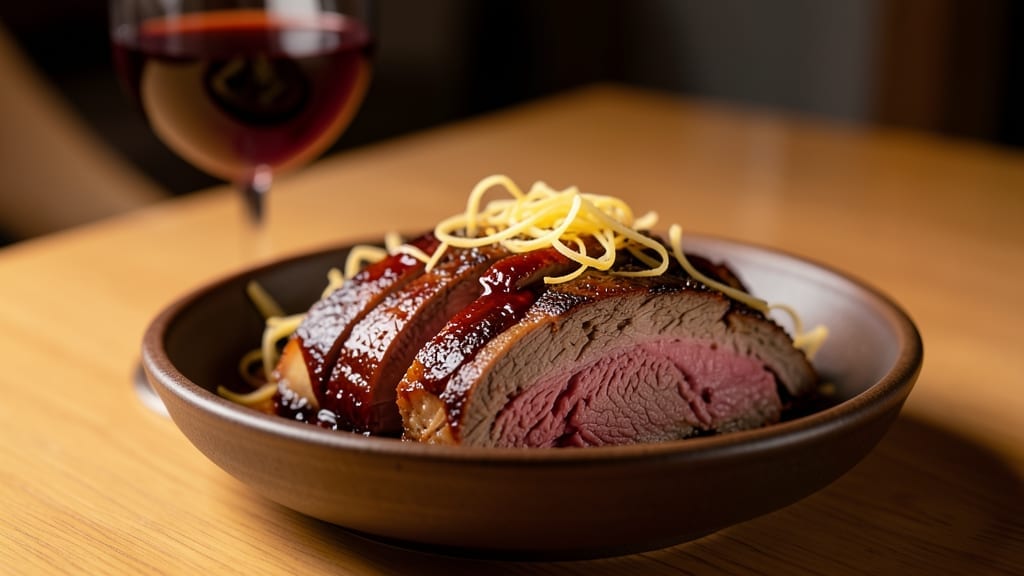
This apple cider beef brisket recipe transforms a tough cut into melt-in-your-mouth tenderness with a caramelized crust that tastes like autumn in every bite.
The key lies in slow-braising the brisket with apple cider, which tenderizes the meat while infusing it with sweet, tangy depth that no dry rub could match. I developed this method after years of experimenting with brisket—balancing time, temperature, and liquid to achieve restaurant-quality results at home.
The process begins with a simple yet effective preparation: trimming excess fat and creating small cuts to help the apple cider penetrate deeply during cooking. Unlike traditional smoking methods, this recipe relies on a braising approach that ensures even moisture distribution and a rich, glossy finish.
The apple cider doesn’t just flavor the meat—it creates a natural glaze that caramelizes beautifully, adding layers of complexity as the brisket cooks.
By the time you slice into this brisket, you’ll find perfectly tender meat that pulls apart easily, with a surface so caramelized it practically dissolves on your tongue. The apple cider’s natural sweetness balances the beef’s richness, while its acidity keeps the flavors bright.
This isn’t just a brisket—it’s a centerpiece dish that elevates any fall or winter meal.
Pair it with roasted root vegetables, a crisp apple cider sauce, or even a simple cornbread to complete the experience. The beauty of this recipe is its versatility—whether you’re hosting a holiday gathering or craving a comforting weeknight dinner, this brisket delivers foolproof, restaurant-quality results with minimal effort.
Let’s get started on creating your next showstopper dish.
Ingredients for apple cider beef brisket
Just quality beef and autumn flavors. The secret lies in slow braising with apple cider.
| Ingredient | Amount | Notes |
|---|---|---|
| Beef Brisket 🥩 | 4 lb | Flat cut, 1-inch thick, trimmed of excess fat |
| Apple Cider 🍎 | 3 cups | Unpasteurized for best flavor, preferably local |
| Yellow Onions 🧅 | 2 whole | Medium size, sliced into half-moons |
| Carrots 🥕 | 4 whole | Medium size, cut into 2-inch chunks |
| Garlic Cloves 🧄 | 6 cloves | Peeled, smashed for deeper flavor |
| Fresh Thyme 🌿 | 2 sprigs | Stems removed, leaves tied with twine |
| Fresh Rosemary 🌿 | 1 sprig | Woody stems removed, leaves tied with twine |
| Beef Broth 💧 | 2 cups | Low-sodium, homemade preferred |
| Dark Brown Sugar 🍚 | ½ cup | Packed, for caramelization |
| Apple Cider Vinegar 🍋 | ¼ cup | For brightness and depth |
| Olive Oil 🫒 | 2 tbsp | Extra-virgin, for searing |
| Salt 🧂 | 1 ½ tsp | Diamond Crystal kosher, for seasoning |
| Black Peppercorns 🌶️ | 1 tsp | Freshly cracked, for heat |
| Bay Leaves 🍃 | 2 whole | Fresh if available, dried works too |
[recipe_ingredient_scaler]
The beef is non-negotiable here. Look for a 4-pound flat cut with good marbling—Costco or Whole Foods usually carry the best. Trim excess fat to about 1/4-inch thickness for even cooking. If you can’t find unpasteurized apple cider, Mott’s or Woodchuck are solid choices, but unpasteurized has more depth. The onions and carrots should be firm—no soft spots. For the herbs, fresh is always better, but dried thyme and rosemary work at half the amount if you’re in a pinch. I like to buy my spices in bulk from Penzeys or the bulk section at Whole Foods—they stay fresher longer.
No apple cider vinegar? Substitute with white vinegar or even lemon juice, but reduce to 2 tablespoons. Running short on beef broth? Water plus 1 teaspoon soy sauce works in a bind. The dark brown sugar adds caramelization—if you only have white sugar, lightly toast it in a dry pan first to mimic the molasses notes. For the vegetables, parsnips or celery root can replace carrots, and shallots work just as well as onions. The key is balancing sweetness and acidity—don’t skip the vinegar, or the dish will taste flat. If you’re making this ahead, prep all ingredients the night before—it saves time on cooking day.
This brisket tastes even better the next day—plan accordingly. Store leftovers in the fridge for up to 5 days, covered with its juices. For longer storage, freeze portions for 3 months. The caramelized crust is delicate, so reheat gently in the oven at 300°F with a splash of apple cider. I like to slice it thin against the grain and serve with extra caramelized onions on top—they soak up all the glorious juices. The brisket keeps well in the fridge, so make extra for sandwiches the next day.
Why You’ll Love This Recipe
- No-Pot-Washing Regret: Honestly, this recipe is my secret weapon for lazy Sundays. One Dutch oven, one sear, and the rest is hands-off oven magic. I toss in the onions and carrots, dump everything in, and forget about it while I make coffee. The only cleanup is scraping browned bits—no boiling pots or scrubbing.
- Sweet, Tangy, Chef’s Kiss Crust: The dark brown sugar and apple cider vinegar create that perfect balance—rich but not cloying, with a tang that wakes up every bite. That crispy edge from the sear? It’s the kind of texture that makes you pause mid-chew, then take another bite. My kids don’t even notice the rosemary and thyme; they just go back for seconds.
- Feast or Fancy Freezer Friend: This brisket is the ultimate meal-prep MVP. Cook once, and you’ve got five days of fridge-friendly lunches or dinners. Or, if you’re feeling ahead, freeze portions for months—just pop it out when company’s coming. Serve it on cornbread, in tacos, or even over mashed potatoes. It’s that versatile.
- Budget’s Your Bestie: A 4-pound brisket feeds a crowd without breaking the bank, and the apple cider and carrots are cheaper than you’d think. The dark brown sugar and vinegar add depth without costing extra. I’ve made this for Thanksgiving leftovers and a rainy Tuesday night—same delicious result. No guilt, just satisfaction.
Step-by-step instructions for apple cider beef brisket
This method delivers melt-in-your-mouth brisket with caramelized edges and deep apple cider flavor.
Sear the Brisket to Lock in Juices
Heat a heavy Dutch oven over medium-high heat until hot. Add the 2 tbsp olive oil and let it shimmer for 30 seconds. Pat the 4 lb beef brisket dry with paper towels and season generously with 1½ tsp salt and 1 teaspoon freshly cracked black peppercorns on all sides.
Place the brisket fat-side down in the Dutch oven and sear for 8-10 minutes until deeply browned. Press down gently with a metal spatula during the first minute to prevent curling. Flip and sear the other side for another 6-8 minutes until golden brown. Remove the brisket and set it aside on a cutting board.
Build the Sweet-Savory Braising Liquid
In the same Dutch oven, add the 2 yellow onions and cook for 5 minutes until softened. Stir in the 4 carrots cut into 2-inch chunks and cook for another 3 minutes. Add the 6 smashed garlic cloves, 2 sprigs fresh thyme, 1 sprig fresh rosemary, and 2 bay leaves, stirring for 30 seconds until fragrant.
Deglaze the pan with the 3 cups apple cider, scraping up all the browned bits. Stir in the 2 cups beef broth, ½ cup packed dark brown sugar, and ¼ cup apple cider vinegar. Bring to a simmer, then carefully place the seared brisket back into the Dutch oven, fat-side up.
Slow-Braise Until Fork-Tender
Cover the Dutch oven tightly and transfer to a preheated 300°F oven. Braise for 3 hours, then carefully flip the brisket and add ½ cup water to the pot. Continue cooking for another 2-3 hours until the meat is fork-tender and easily pulls apart.
Check for doneness by inserting a meat thermometer into the thickest part of the brisket—it should read 203-205°F. If the liquid reduces too much, add small amounts of water during the last hour to keep the brisket moist.
Rest and Caramelize the Crust
Remove the brisket from the pot and tent loosely with foil. Let it rest for 30 minutes while you increase the oven temperature to 400°F. Discard the thyme and rosemary sprigs and bay leaves from the braising liquid.
Return the Dutch oven to the oven for 10-15 minutes to reduce the braising liquid into a thick, glossy sauce. Slice the brisket against the grain into ½-inch thick pieces and serve with the caramelized apple cider reduction spooned over the top.
Pro Tips For Making Apple Cider Beef Brisket
- Press That Brisket: The first minute of searing is when most people mess up—don’t let the brisket curl into a roll. Press down firmly with a spatula for those first 60 seconds, or you’ll end up with uneven browning and a fight to flip it later. I learned this the hard way after wrestling with a stubborn, curled-up brisket that refused to sear properly.
- Smash That Garlic: Those 6 garlic cloves aren’t just for show—smashed (not minced) means they’ll infuse the cider and onions with flavor instead of burning into bitterness. Use the flat side of your knife to crush them lightly; I skip the peeler here because the skins add texture to the braise.
- Don’t Skimp on the Vinegar: The ¼ cup apple cider vinegar might seem small, but it’s the acid that cuts through the sweetness and keeps the sauce from tasting like a dessert. Add it with the broth and sugar—this is when the magic happens, not at the end. Trust me, your brisket will taste flat without it.
- Flip and Add Water: Halfway through the braise, flip the brisket and splash in ½ cup water. This isn’t just to prevent drying—it’s a chance to check for doneness and adjust the liquid. The brisket should be tender but not falling apart; if it’s still tough, that extra hour at 300°F will save the day. (Yes, even if you’re impatient like me.)
Common mistakes when making this dish
Skipping the Sear
One of the most common mistakes I see is skipping the sear step entirely. That initial 8-10 minutes of searing on medium-high heat creates the Maillard reaction that gives your brisket its caramelized crust.
Without it, you’ll end up with a bland, rubbery texture instead of that coveted golden-brown exterior. Trust me—this step is non-negotiable for restaurant-quality results. 🔥
Overcrowding the Pot
When building your braising liquid, avoid overcrowding the Dutch oven with too many vegetables. While onions and carrots add flavor, stuffing it with 4 carrots and 2 onions can dilute the apple cider’s intensity and slow down the cooking process.
Stick to the recipe’s measurements—this ensures the brisket stays submerged in flavorful liquid without absorbing too much vegetable water.
Ignoring the Flip
The recipe calls for flipping the brisket after 3 hours of braising to ensure even cooking. Skipping this step can lead to uneven tenderness—one side might be perfectly fork-tender while the other remains tough.
I’ve learned this the hard way, so always flip it and add ½ cup water to prevent the liquid from becoming too concentrated.
Rushing the Rest
After removing the brisket from the oven, many cooks can’t wait to slice into it. But resting for 30 minutes is critical—it lets the juices redistribute so every bite is moist and flavorful. Slicing too soon? You’ll end up with dry, uneven pieces. Patience here makes all the difference. ⏰
Underestimating Liquid Reduction
Reducing the braising liquid to a glossy sauce is what ties everything together, but some cooks rush this step. The final 10-15 minutes at 400°F should concentrate the flavors, not just simmer away.
If the sauce is thin, the brisket will taste watery. Keep an eye on it and adjust the oven temperature if needed to achieve that perfect caramelized finish.
Nutrition facts
Frequently asked questions
Why does apple cider work so well for brisket?
The apple cider tenderizes the tough brisket fibers while adding natural sweetness and acidity that balances the beef’s richness. Its sugars caramelize beautifully during cooking, creating a glossy crust that enhances every bite. The 3 cups used in this recipe ensures deep flavor penetration without overpowering the meat.
Can I use a slow cooker instead of an oven?
Yes! Transfer the covered Dutch oven to a slow cooker on “Low” for 6-8 hours after searing. Check the brisket after 3 hours and flip it, adding ½ cup water if needed. The texture will be similar, though the caramelized crust may be less pronounced than oven-braised.
What if my brisket isn’t fork-tender after 3 hours?
Keep cooking! Most briskets need the full 5-6 hours total to reach 203-205°F. If the liquid reduces too fast, add ¼ cup water every hour. The key is patience—rushing leads to dry meat. If it’s still tough, return it to the oven with ½ cup beef broth and cook another hour.
How do I make the sauce thicker without burning it?
After removing the brisket, strain the liquid into a saucepan and simmer it uncovered on medium-low heat for 15-20 minutes, stirring occasionally. If it thickens too fast, add 1-2 tablespoons water. The ½ cup brown sugar in the original liquid helps create a natural reduction without burning.

Trained in classic French technique but raised on slow-cooked ribs and spicy rubs, she blends culinary skill with smoke and soul.
- Chinese Braised Beef Brisket with Daikon Recipe: Silky Tender Meat and Crunchy Roots - October 18, 2026
- Oklahoma Joe’s Smoked Beans Recipe: Slow-Smoked Flavor That Rivals the Original - October 18, 2026
- Beef Brisket Chili Recipe: Slow-Simmered Richness with Deep Flavor Layers - October 18, 2026