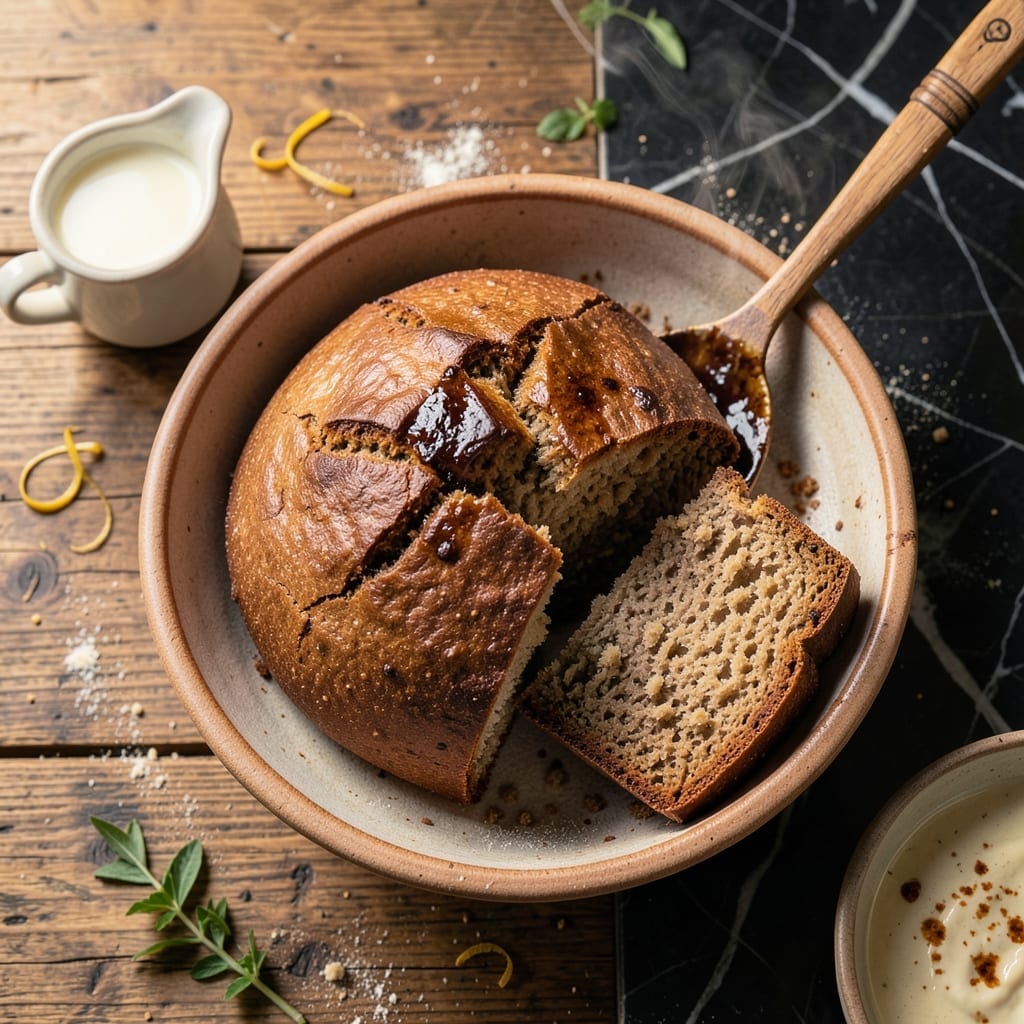
This traditional Irish soda bread brings the heart of Ireland to your kitchen with its dense, slightly sweet molasses flavor.
Using simple ingredients and a no-yeast method, it delivers authentic taste with minimal effort, just like my grandmother used to make.
Ingredients for Brown Bread Recipe Ireland
Traditional Irish ingredients create dense, molasses-kissed brown bread with no yeast required.
| Ingredient | Amount | Notes |
|---|---|---|
| Whole Wheat Flour 🌾 | 3 cups | Stone-ground preferred for texture |
| All-Purpose Flour 🌾 | 1 cup | For lighter crumb balance |
| Baking Soda 🧂 | 1 ½ tsp | Leavening agent, no yeast |
| Salt 🧂 | 1 ½ tsp | Diamond Crystal kosher preferred |
| Molasses 🍯 | ¼ cup | Unsulphured for clean flavor |
| Buttermilk 🥛 | 1 ¾ cups | Cold, for moisture and tang |
| Unsalted Butter 🧈 | 2 tbsp | Melted and cooled slightly |
| Large Egg 🥚 | 1 whole | Room temperature for binding |
| Oats 🌾 | ½ cup | Old-fashioned rolled oats |
| Wheat Bran 🌾 | ¼ cup | For extra fiber and texture |
| Brown Sugar 🍚 | 2 tbsp | Light or dark, packed |
| Cinnamon 🌿 | 1 tsp | Ground, for warmth |
[recipe_ingredient_scaler]
Whole wheat flour is non-negotiable for authenticity. King Arthur or Bob’s Red Mill stone-ground varieties deliver the right texture. Molasses should be unsulphured—Brer Rabbit is widely available and reliable. Buttermilk must be cold; low-fat works but full-fat adds richness. Most supermarkets carry all these easily—no specialty stores needed for this traditional loaf.
No buttermilk? 1 cup milk plus 1 tbsp lemon juice or vinegar rested 5 minutes works perfectly. Substitute honey for molasses if needed, though the flavor profile changes slightly. The oats can be quick oats in a pinch, but old-fashioned rolled provide better texture. For a lighter loaf, reduce whole wheat to 2 cups and increase all-purpose to 2 cups.
Store bread wrapped in a clean tea towel at room temperature for 2 days, or slice and freeze for up to 3 months. This bread actually improves overnight as flavors meld. Warm slices briefly before serving to revive that fresh-baked taste.
Why You’ll Love This Recipe
- I’ll be real: it stays fresh for days, and the flavor only gets better.
- No Fuss Mixing: I just stir the whole wheat and all-purpose flour with baking soda, salt, and molasses—no yeast, no waiting.
- Rich, Earthy Sweetness: The molasses gives it this deep, caramel-like warmth that pairs perfectly with the nuttiness of the whole wheat.
- Breakfast to Dinner: Honestly, it’s just as good toasted with butter in the morning as it is alongside a hearty stew.
Step-by-Step Instructions for Traditional Irish Soda Bread With Molasses
This traditional method delivers authentic texture and rich molasses flavor in every slice.
Step 1: Combine Dry Ingredients for Perfect Rise
In a large mixing bowl, whisk together the 3 cups Whole Wheat Flour, 1 cup All-Purpose Flour, 1.5 tsp Baking Soda, and 1.5 tsp Salt until fully integrated. The baking soda needs to be evenly distributed to ensure consistent leavening throughout the loaf.
Add the 0.5 cup Oats, 0.25 cup Wheat Bran, 2 tbsp Brown Sugar, and 1 tsp Cinnamon. Stir to combine. These additions create the characteristic hearty texture and subtle sweetness that defines traditional Irish brown bread.
Step 2: Incorporate Wet Ingredients for Moist Crumb
In a separate bowl, beat the 1 whole Large Egg lightly, then whisk in the 0.25 cup Molasses and 2 tbsp Unsalted Butter until smooth. The molasses should be at room temperature to blend evenly with the other wet ingredients.
Create a well in the center of your dry mixture and pour in the 1.75 cups Buttermilk along with the molasses mixture. Using a wooden spoon, stir just until the dough comes together. The batter will be thick and slightly sticky—this is correct. Overmixing at this stage develops gluten, which results in a tough, dense loaf.
Step 3: Shape and Prepare for Baking
Turn the dough onto a lightly floured surface and gently knead for 30 seconds just to bring it together. The dough should still be slightly tacky but manageable. Form it into a round loaf about 8 inches in diameter.
Place the loaf on a parchment-lined baking sheet. Using a sharp knife, score a deep cross into the top of the dough, cutting about ½ inch deep. This traditional technique allows the bread to expand properly during baking and helps heat penetrate the center.
Step 4: Bake to Golden Perfection
Preheat your oven to 375°F. Bake the loaf on the middle rack for 45-50 minutes until the top is deep golden brown and the loaf sounds hollow when tapped on the bottom. The internal temperature should read 200-205°F on an instant-read thermometer.
If the top begins to brown too quickly, tent the loaf with aluminum foil for the remaining baking time. The bread is done when a toothpick inserted into the center comes out clean. This ensures the molasses has fully caramelized and the crumb is set throughout.
Step 5: Cool Completely Before Slicing
Transfer the baked loaf to a wire rack and let it cool for at least 1 hour before slicing. I know it’s tempting to cut into it while warm, but cooling allows the structure to set and prevents a gummy texture.
The finished bread should have a slightly crisp crust with a moist, tender interior speckled with oats and wheat bran. Each slice will showcase the deep, caramelized molasses flavor balanced by the subtle warmth of cinnamon. Serve at room temperature for the best texture.
Pro Tips For Making Brown Bread Recipe Ireland
- Warm the Molasses: Measure your molasses first, then warm the measuring cup in hot water for 10 seconds—it slides right out instead of sticking like glue.
- Mix Dry Ingredients First: I learned this the hard way: whisk your whole wheat flour, all-purpose flour, baking soda, and salt together before adding wet ingredients to prevent bitter pockets of concentrated baking soda.
- Don’t Overmix: After combining wet and dry, stir just until the flour disappears—20 seconds max. Overworking develops gluten, turning your loaf dense instead of tender.
- Use Buttermilk: Skip water and use buttermilk instead for a richer, more authentic Irish crumb. The acidity reacts perfectly with the baking soda for maximum rise.
Flavor Customization for These Flavors
Sweetness Boost
For a richer molasses experience, increase the molasses to ⅓ cup and add 1 extra tbsp brown sugar. This creates a deeper caramelized flavor that reminds me of the brown bread my grandmother served with afternoon tea. The extra sweetness pairs beautifully with sharp cheddar. 💛
Spiced Warmth
Add ½ tsp ground ginger and ¼ tsp nutmeg to the dry ingredients for a warmer spice profile. I love this variation during fall—it fills the kitchen with cozy aromas. The ginger especially complements the molasses’ deep, earthy notes.
Nutty Texture
Fold in ½ cup chopped walnuts or pecans with the wet ingredients for added crunch. Toast the nuts first in a dry pan over medium heat for 3-4 minutes to enhance their flavor. This adds a lovely contrast to the bread’s dense, moist crumb.
Fruit Addition
For a fruity twist, mix in ½ cup raisins or chopped dried apricots soaked in warm water for 10 minutes. Drain well before adding to avoid excess moisture. The fruit’s natural sweetness balances the molasses’ bitterness.
Seedy Crunch
Stir in 2 tbsp sunflower seeds or pumpkin seeds for extra texture and nutrition. I often add these when I’m foraging for wild herbs—it’s a great way to use up seeds I’ve collected. The seeds add a pleasant bite to each slice.
Savory Option
Reduce the brown sugar to 1 tbsp and add ½ cup grated sharp cheddar to the dry ingredients for a savory version. This works wonderfully with soups or stews. The cheese melts into pockets of gooey goodness throughout the loaf. ✨
Nutrition Facts
Frequently Asked Questions
Can I use honey instead of molasses?
Yes, but the flavor will be milder and less complex. Use the same ¼ cup amount and expect a lighter color. Molasses adds the deep, caramelized taste that defines traditional Irish brown bread.
Why do I need to score the top?
Scoring a cross allows the bread to expand evenly during baking and prevents cracking. It also helps heat reach the center for thorough cooking. This traditional method ensures a beautiful, professional-looking loaf.
How do I know when it’s done?
The loaf should be deep golden brown with a hollow sound when tapped. An internal temperature of 200-205°F confirms it’s fully baked. If the top browns too fast, cover loosely with foil.

Trained in classic French technique but raised on slow-cooked ribs and spicy rubs, she blends culinary skill with smoke and soul.
- Recipe for Boneless Pork Chops in Cast Iron Skillet: Sear and Baste to Juicy Perfection - October 3, 2026
- Recipe for Boneless Cross Rib Roast: Slow-Roasted Beef with Herb Crust - October 3, 2026
- Hamburgers in Sauce Recipe Crock Pot: Slow-Cooked Savory Delight - October 3, 2026