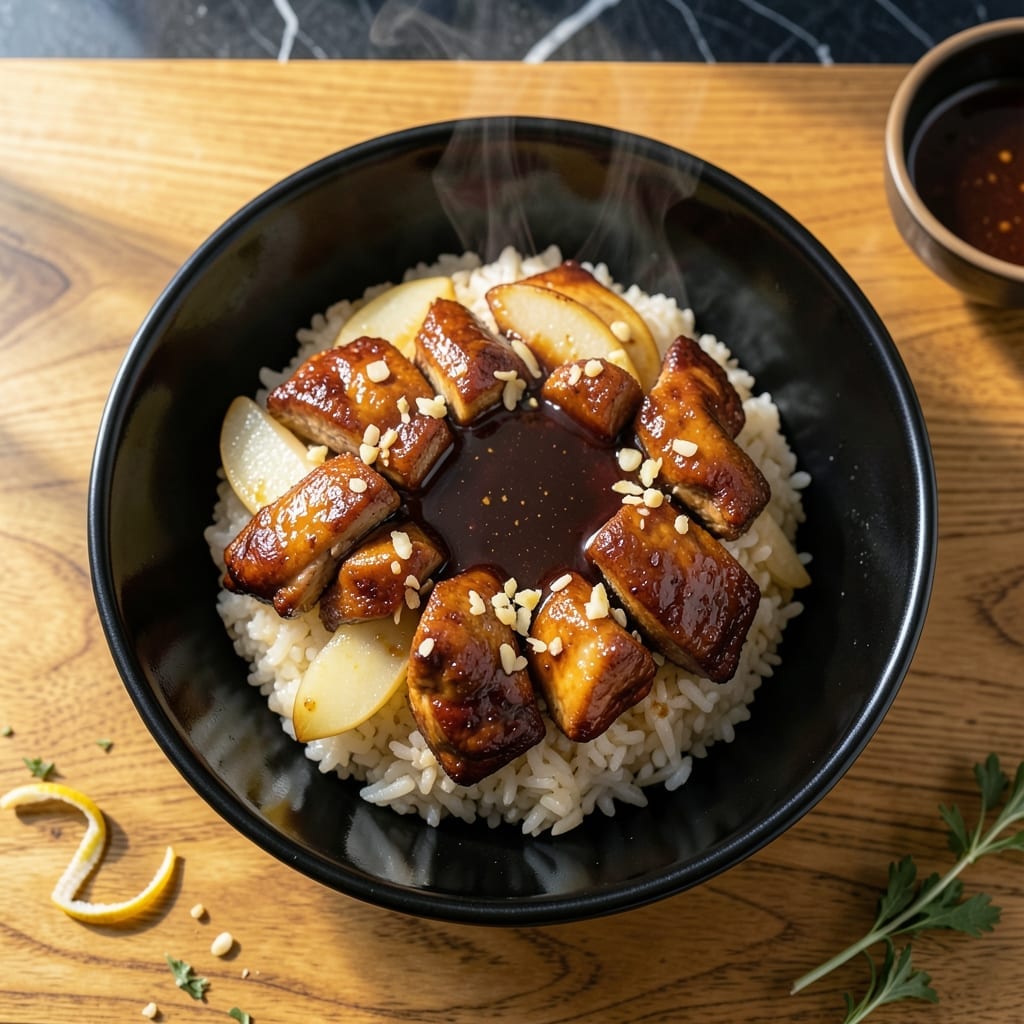
This bulgogi chicken delivers authentic Korean flavors with a perfect balance of sweet and savory. The marinade transforms ordinary chicken into tender, caramelized perfection.
Traditional techniques meet simple ingredients for a dish that’s impressive yet approachable. Serve with rice and fresh vegetables for a complete meal.
Ingredients for Bulgogi Chicken Recipe Korean
Simple ingredients deliver authentic Korean flavors in this tender, caramelized dish.
| Ingredient | Amount | Notes |
|---|---|---|
| Boneless Chicken Thighs 🍗 | 1 ½ lb | Skinless, cut into thin strips |
| Soy Sauce 🫒 | ½ cup | Low-sodium preferred for balance |
| Brown Sugar 🍚 | ⅓ cup | Light or dark both work |
| Asian Pear 🍐 | ½ whole | Peeled and finely grated |
| Garlic Cloves 🧄 | 5 cloves | Minced for maximum flavor |
| Fresh Ginger Root 🌿 | 1 tbsp | Peeled and minced |
| Sesame Oil 🫒 | 2 tbsp | Toasted for depth of flavor |
| Rice Vinegar 🍯 | 2 tbsp | Or apple cider vinegar |
| Gochujang 🌶️ | 1 tbsp | Korean chili paste for heat |
| Toasted Sesame Seeds 🌰 | 2 tbsp | For garnish and texture |
| Green Onions 🧅 | 4 whole | Thinly sliced for garnish |
| Neutral Oil 🫒 | 1 tbsp | For cooking chicken |
| Black Pepper 🌶️ | ½ tsp | Freshly ground for best results |
[recipe_ingredient_scaler]
The chicken cut is critical here. Boneless thighs stay juicier than breasts during marinating and cooking. Look for skinless to avoid excess fat. The Asian pear is the secret weapon—its enzymes tenderize the meat. H Mart or Korean markets carry them, but Bosc pears work in a pinch. For soy sauce, Kikkoman low-sodium is widely available and consistent.
No Asian pear? Kiwi or pineapple offers similar tenderizing properties. Short on gochujang? Sriracha plus a pinch of sugar gets you close to the flavor profile. Mirin can replace half the brown sugar for a more traditional touch. The sesame oil must be toasted—regular sesame oil lacks the depth. For a gluten-free version, use tamari instead of soy sauce.
Marinate the chicken for at least 4 hours—overnight is ideal for maximum flavor penetration. Cooked bulgogi keeps in the fridge for 3-4 days or freezes for 3 months. Always toast sesame seeds fresh before garnishing for the best aroma and crunch.
Why You’ll Love This Recipe
- One Pot Wonder: I just toss everything in a bowl, let it marinate, and cook it all in one pan—minimal cleanup, maximum flavor.
- Sweet & Savory Magic: The brown sugar caramelizes with the soy sauce, and the Asian pear adds this juicy sweetness that’s just ridiculous.
- Meal Prep MVP: I make a big batch on Sunday and it’s just as good for Tuesday’s lunch or a quick dinner.
- Budget Stretcher: Boneless chicken thighs are cheap, and this recipe turns them into something restaurant-worthy. Honestly, it feels like a steal.
Step-by-Step Instructions for Bulgogi Chicken
Master the marinade timing and high-heat cooking for authentic Korean flavors at home.
Step 1: Create the Bulgogi Marinade
In a large bowl, whisk together the 0.5 cup Soy Sauce, 0.33 cup Brown Sugar, 0.5 whole Asian Pear (peeled and finely grated), 5 cloves Garlic Cloves (minced), and 1 tbsp Fresh Ginger Root (peeled and minced). The Asian pear acts as a natural tenderizer, breaking down proteins to ensure the chicken stays juicy.
Add the 2 tbsp Sesame Oil, 2 tbsp Rice Vinegar, and 1 tbsp Gochujang to the bowl. The gochujang provides a subtle heat and depth of flavor characteristic of authentic bulgogi. Stir in the 0.5 tsp Black Pepper. Whisk until the Brown Sugar fully dissolves and the mixture is smooth and well combined.
Step 2: Marinate the Chicken
Add the 1.5 lb Boneless Chicken Thighs (cut into thin strips) to the marinade. Use your hands to ensure every piece is thoroughly coated. The thin strips maximize surface area, allowing the marinade to penetrate deeply and evenly.
Cover the bowl with plastic wrap and refrigerate. For best results, marinate for at least 4 hours, but ideally overnight. This extended marinating time lets the flavors meld and the chicken absorb the sweet, savory, and slightly spicy notes of the marinade. Do not skip this step—it’s essential for authentic bulgogi flavor.
Step 3: Cook the Chicken
Heat 1 tbsp Neutral Oil in a large skillet or wok over high heat until it shimmers. Working in batches to avoid crowding the pan, add the marinated chicken in a single layer. Cook undisturbed for 2-3 minutes to develop a caramelized crust.
Stir the chicken and cook for another 3-4 minutes until it is fully cooked through and the edges are deeply browned. The high heat ensures a perfect sear while keeping the inside tender and juicy. Avoid overcrowding the pan, as this will steam the chicken instead of searing it.
Step 4: Garnish and Serve
Transfer the cooked chicken to a serving platter. Drizzle any remaining marinade from the bowl over the top, but only if it has not come into contact with raw chicken. Sprinkle with the 2 tbsp Toasted Sesame Seeds and 4 whole Green Onions (thinly sliced) for freshness and a nutty crunch.
Serve immediately with steamed rice and your favorite Korean side dishes, such as kimchi or pickled radish. The chicken should be glossy from the marinade, with a balance of sweet, savory, and umami flavors in every bite. The sesame seeds and green onions add the perfect finishing touch.
Pro Tips For Making Bulgogi Chicken Recipe Korean
- Slice Against Grain: Cut those boneless chicken thighs into thin strips against the grain—about 1/4-inch thick—for the most tender bite. I learned this the hard way after chewing through rubbery chicken my first three attempts.
- Grate the Pear: Sounds weird, but it works: finely grate the Asian pear instead of blending to get that perfect sweet-tangy marinade texture without chunks. Your sauce will cling better to the chicken.
- Don’t Overcrowd Pan: Cook the chicken in batches if needed—overcrowding steams instead of sears, and you’ll lose that caramelized edge from the brown sugar. I skip this when I’m lazy, but the dish is noticeably better when I don’t.
- Marinate 30 Minutes: Give the chicken a solid 30 minutes in the soy sauce, pear, and garlic mix—any less and the flavors won’t penetrate. After burning three batches, I finally figured out patience pays off here.
Pro Cooking Tips for bulgogi chicken recipe korean
Marinade Perfection
For the most tender chicken, finely grate the Asian pear—its enzymes work wonders. I use a microplane for this. Whisk the marinade vigorously for 2 minutes to fully emulsify the sesame oil and soy sauce. This prevents separation during marinating. 💡
Thin Slicing Trick
Partially freeze the boneless chicken thighs for 20 minutes before slicing. This firms up the meat, making it easier to cut into even ¼-inch strips. I place the chicken between parchment paper and pound lightly with a rolling pin for uniform thickness.
High-Heat Cooking
Use a cast iron skillet or wok for best results—it retains heat beautifully. Heat the neutral oil until it just starts to smoke before adding chicken. This ensures a proper sear. Don’t stir for the first 2 minutes to develop that crucial caramelized crust. 🔥
Batch Cooking
Cook in batches to avoid steaming. Crowding the pan drops the temperature, resulting in soggy chicken. I use a 12-inch Lodge skillet and never cook more than ½ lb at a time. Keep cooked batches warm in a 200°F oven while finishing the rest.
Marinade Reuse
If you want to use leftover marinade as sauce, boil it for 3-5 minutes to kill bacteria. I strain out solids first for a smoother texture. This works great drizzled over the finished dish or served on the side for dipping.
Resting Time
Let the chicken rest for 5 minutes after cooking. This allows juices to redistribute. I tent loosely with foil to keep it warm. The flavors will meld together beautifully during this short rest period.
Nutrition Facts
Frequently Asked Questions
Can I use chicken breast instead of thighs?
Yes, but thighs stay juicier. If using breasts, marinate for 2-3 hours max to prevent drying. Slice thinly and cook 1-2 minutes less since breast cooks faster.
How do I make it less sweet?
Reduce brown sugar to 2 tablespoons and add 1 tablespoon more soy sauce. For depth, include 1 teaspoon fish sauce to balance flavors without extra sweetness.
What if I don’t have an Asian pear?
Substitute ¼ cup grated kiwi or ¼ cup pineapple puree. Both contain enzymes that tenderize the meat similarly. Avoid papaya—it can make the chicken mushy.
Can I grill this instead of pan-frying?
Use medium-high heat and oil the grates well. Cook for 3-4 minutes per side, basting with extra marinade. Watch closely to prevent burning from the sugar.

Trained in classic French technique but raised on slow-cooked ribs and spicy rubs, she blends culinary skill with smoke and soul.
- Recipe for Boneless Pork Chops in Cast Iron Skillet: Sear and Baste to Juicy Perfection - October 3, 2026
- Recipe for Boneless Cross Rib Roast: Slow-Roasted Beef with Herb Crust - October 3, 2026
- Hamburgers in Sauce Recipe Crock Pot: Slow-Cooked Savory Delight - October 3, 2026