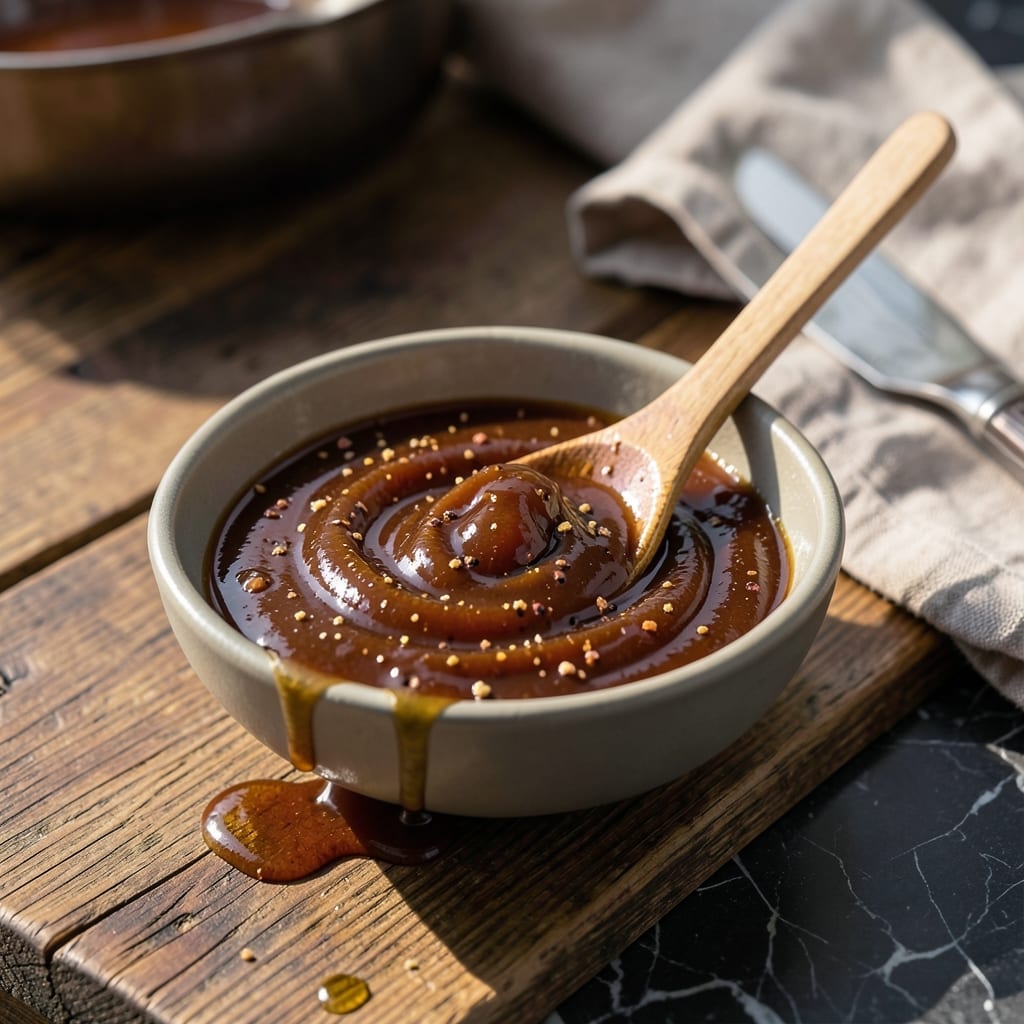
This sauce delivers bold smoky depth with ingredients you likely have on hand. I developed it to elevate any grilled dish without overpowering the main flavors.
Simple to make and versatile to use, it brings that perfect balance of sweet, tangy, and smoky notes. The best part? It keeps well, so you can always have it ready for your next cookout.
Ingredients for Bullhead Barbecue Sauce
Ten pantry staples blend into this bold, smoky, tangy sauce everyone will love.
| Ingredient | Amount | Notes |
|---|---|---|
| Ketchup 🍅 | 1 ½ cups | Quality brand recommended |
| Apple Cider Vinegar 🍏 | ½ cup | Balances sweetness with tang |
| Molasses 🍯 | ¼ cup | Adds rich, deep sweetness |
| Worcestershire Sauce 💧 | 2 tbsp | For umami depth |
| Smoked Paprika 🌶️ | 1 tbsp | Key for smoky flavor |
| Garlic Powder 🧄 | 1 tsp | Enhances savory notes |
| Onion Powder 🧅 | 1 tsp | Adds aromatic base |
| Brown Sugar 🧂 | ¼ cup | Light or dark works |
| Dijon Mustard 🟡 | 1 tbsp | Sharp tang cuts sweetness |
| Liquid Smoke 🔥 | ½ tsp | Optional but recommended |
[recipe_ingredient_scaler]
The molasses and brown sugar are doing the heavy lifting here. Brands like Grandma’s for molasses and Domino for brown sugar are solid—nothing fancy needed. Smoked paprika is the MVPs for that signature smoky depth, so don’t skip it. Most grocery stores carry it in the spice aisle. If you’re making this often, Penzeys has great bulk options.
No molasses? Honey or maple syrup at the same amount works, though the flavor shifts slightly. Out of apple cider vinegar? White vinegar plus a pinch of sugar gets you close. The Worcestershire can be swapped for soy sauce or coconut aminos if needed. Liquid smoke is optional but one-half teaspoon makes a difference if you want that campfire vibe.
This keeps in the fridge for about 2 weeks in a sealed jar. The flavors meld and deepen over time, so it tastes even better after a few days. Freeze portions for up to 3 months if you want to batch it.
Why You’ll Love This Recipe
- 5-Minute Mix: I dump everything in one bowl—ketchup, vinegar, molasses—and stir. Honestly, it’s faster than waiting for takeout.
- Smoky Sweet Kick: That molasses and smoked paprika combo? Ridiculously good—sweet with just enough depth to make ribs or chicken sing.
- Grill or Jar: I slather it on burgers, drizzle over pulled pork, or even jar it for last-minute gifts. Between us, it’s my secret weapon for potlucks.
- Pantry Staples: No fancy ingredients—just what’s already in my cupboard. I’ll be real: it saves me a grocery run every time.
Step-by-Step Instructions for Bullhead Barbecue Sauce
This simple method delivers rich, smoky flavor with minimal effort and maximum payoff.
Step 1: Combine the Wet Ingredients
In a medium saucepan, whisk together the 1.5 cups Ketchup, 0.5 cup Apple Cider Vinegar, and 0.25 cup Molasses until smooth. I like to use a silicone whisk for this—it really helps incorporate everything without leaving streaks.
Place the saucepan over medium heat and bring the mixture to a gentle simmer. You’ll notice the colors start to deepen as the ingredients meld together. This is where the magic begins.
Step 2: Add the Flavor Boosters
Stir in the 2 tbsp Worcestershire Sauce, 1 tbsp Dijon Mustard, and 0.5 tsp Liquid Smoke. The Worcestershire adds a savory depth that balances the sweetness, while the mustard provides a sharp tang.
The Liquid Smoke is optional but recommended for that signature smoky flavor. If you’re sensitive to strong smoke flavors, start with half the amount. You can always add more to taste later.
Step 3: Incorporate the Spices and Sweetener
Add the 1 tbsp Smoked Paprika, 1 tsp Garlic Powder, 1 tsp Onion Powder, and 0.25 cup Brown Sugar. Stir well to combine. The smoked paprika reinforces the smoky notes, while the garlic and onion powders build a solid aromatic foundation.
The Brown Sugar adds a caramelized depth to the sauce. Light or dark both work, but dark brown sugar will give you a slightly more robust molasses flavor. Stir until the sugar dissolves completely.
Step 4: Simmer to Thicken
Reduce the heat to medium-low and let the sauce simmer for 15-20 minutes. Stir occasionally to prevent sticking. You’ll want to keep an eye on it as it thickens.
The sauce is ready when it coats the back of a spoon and has reduced by about a third. It should be thick enough to cling to foods but still pourable. If it thickens too much, just stir in a tablespoon or two of water to reach your desired consistency.
Taste and adjust seasoning if needed. Some brands of ketchup are sweeter or tangier than others, so you might want to add a pinch more sugar or vinegar to balance.
Pro Tips For Making Bullhead Barbecue Sauce
- Simmer Low and Slow: Keep the heat at a gentle simmer for at least 15-20 minutes—this lets the molasses and vinegar meld properly without scorching. I learned this the hard way after burning a batch that tasted more like bitter tar than barbecue sauce.
- Bloom the Paprika: Toast the smoked paprika in a dry pan for 30 seconds before adding liquids. Sounds weird, but it works: this wakes up the smoky depth that makes bullhead sauce special.
- Balance the Vinegar: Apple cider vinegar can overpower fast—start with half the amount, taste, then add more. After ruining a batch with too much tang, I now measure with a light hand.
- Use Real Molasses: Skip the blackstrap or substitutes; regular unsulphured molasses gives the right sweetness and thickness. My grandmother swore by this, and she was right: the cheap stuff just doesn’t cut it.
Essential Equipment for This Dish
Saucepan Selection
I always reach for my 2-quart stainless steel saucepan from All-Clad for this recipe. The even heat distribution prevents hot spots that could scorch your sauce. Avoid nonstick for this—you want the fond that builds to develop deeper flavors.
Whisk Matters
A silicone whisk is my tool of choice here. It scrapes the bottom without scratching and really helps emulsify the ingredients. I keep a 10-inch whisk from OXO in my sauce-making kit. 💡
Measuring Tools
Accurate measurements make a difference with sauces. I use stainless steel measuring cups and a magnetic spice jar set for my paprika and powders. The 1 tbsp and 1 tsp measures get heavy use in this recipe.
Storage Containers
For storing your finished sauce, I love 16-ounce mason jars with airtight lids. The glass won’t absorb odors, and you can see the sauce’s rich color. I also keep a few squeeze bottles from Restaurantware for easy application during cookouts.
Simmer Control
A candy thermometer clipped to the pan helps monitor temperature. Keep it between 180-200°F for the perfect simmer. I use a Taylor classic that’s lasted me years. The sauce thickens beautifully at this range.
Cleanup Helper
Have a bench scraper ready for getting every last bit of sauce out of the pan. Mine from Ateco is always within reach. It also helps divide batches evenly into storage containers. 🔥
Nutrition Facts
Frequently Asked Questions
How long does this sauce keep in the fridge?
It stays fresh for about 2 weeks in an airtight container. The flavors actually deepen over time, so it tastes even better after a few days.
Can I make it less sweet?
Reduce the brown sugar to 2 tablespoons or swap molasses for 1 tablespoon of apple cider vinegar. Balance is key—taste as you adjust.
What if I don’t have liquid smoke?
Skip it or use ½ teaspoon of chipotle powder for a smoky kick. The smoked paprika already adds depth, so it’ll still taste great.
Can I use this sauce for grilling and dipping?
Yes! It’s perfect for both. Brush it on during the last 5 minutes of grilling, or serve as a dipping sauce. Thin with water if needed for brushing.

Trained in classic French technique but raised on slow-cooked ribs and spicy rubs, she blends culinary skill with smoke and soul.
- Recipe for Boneless Pork Chops in Cast Iron Skillet: Sear and Baste to Juicy Perfection - October 3, 2026
- Recipe for Boneless Cross Rib Roast: Slow-Roasted Beef with Herb Crust - October 3, 2026
- Hamburgers in Sauce Recipe Crock Pot: Slow-Cooked Savory Delight - October 3, 2026