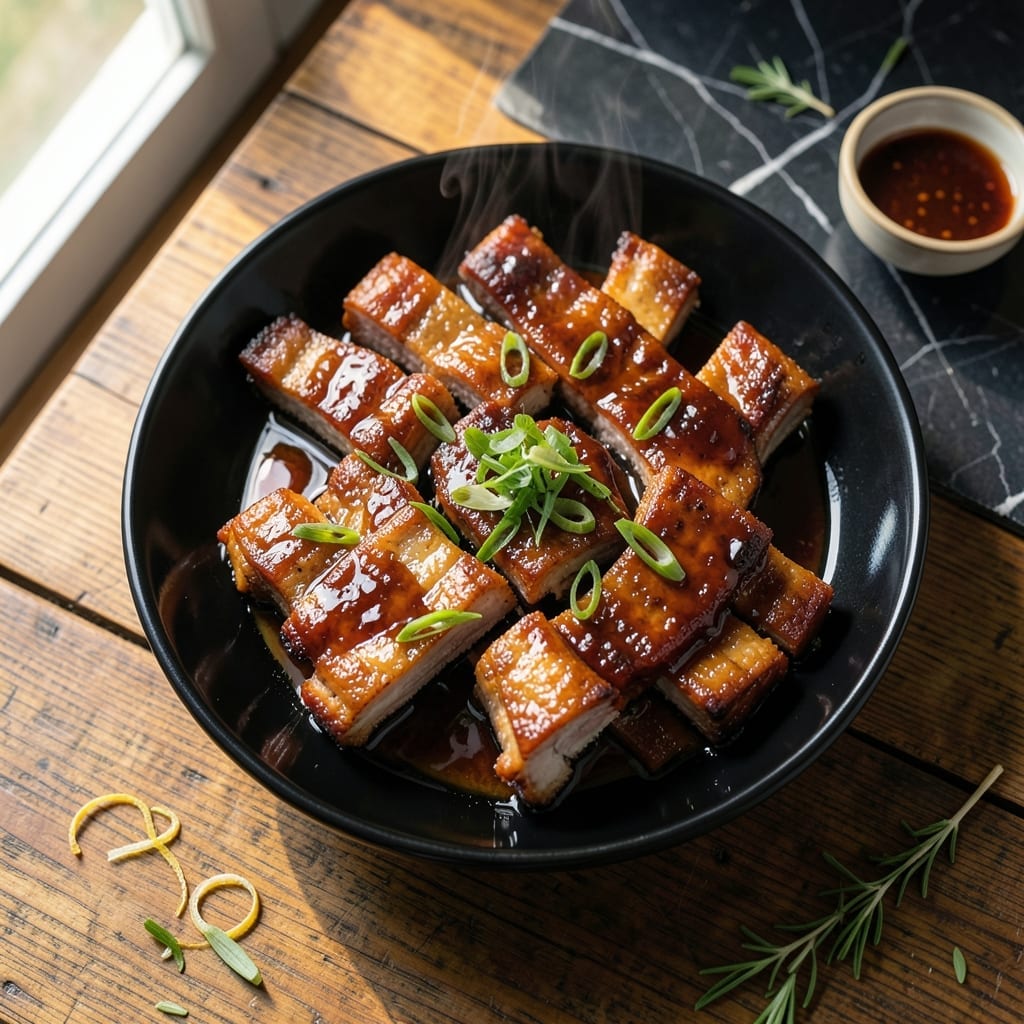
This recipe transforms ribs with a smoky-sweet Chinese-inspired glaze over direct heat. My pitmaster training meets Asian flavors for a dish that’s both bold and balanced.
You’ll achieve fall-off-the-bone tenderness with a sticky, caramelized finish. The sauce builds layers of sweetness, depth, and just enough heat to keep things interesting.
Ingredients for Chinese Barbecue Sauce Recipe Ribs
Ribs meet bold Asian flavors with a sticky, caramelized glaze you won’t forget.
| Ingredient | Amount | Notes |
|---|---|---|
| Pork Baby Back Ribs 🥩 | 2 lb | Full rack, membrane removed |
| Hoisin Sauce 🥫 | ¾ cup | Koon Chun or Lee Kum Kee brand |
| Ketchup 🍅 | ½ cup | Smooth, no chunks |
| Soy Sauce 🥫 | ¼ cup | Low-sodium preferred |
| Honey 🍯 | ¼ cup | Pure, not processed |
| Rice Vinegar 🧉 | 3 tbsp | Unseasoned variety |
| Garlic Cloves 🧄 | 4 cloves | Minced finely |
| Fresh Ginger 🌿 | 1 tbsp | Peeled and grated |
| Sesame Oil 🫒 | 1 tbsp | Toasted, for depth |
| Chinese Five-Spice Powder 🌶️ | 1 tsp | Freshly ground if possible |
| Red Pepper Flakes 🔥 | ½ tsp | Adjust for heat preference |
| Brown Sugar 🍚 | 2 tbsp | Light or dark works |
| Green Onions 🧅 | 3 whole | Thinly sliced for garnish |
| Sesame Seeds 🌰 | 1 tbsp | Toasted for garnish |
[recipe_ingredient_scaler]
The ribs are the foundation here. Baby back ribs give you that perfect meat-to-bone ratio for fall-off-the-bone tenderness. Look for racks with good marbling at Costco or your local butcher—they’ll often trim the membrane for you if you ask. Pork spares work too, but they need a bit more cooking time. Don’t skip removing the membrane (that papery layer on the bone side)—it keeps the sauce from penetrating properly.
No hoisin? Substitute with equal parts soy sauce and molasses, though the flavor won’t be as complex. Out of rice vinegar? Apple cider vinegar at the same amount gets you close. The honey can be swapped for maple syrup or agave if you’re avoiding bee products. For extra depth, add a splash of oyster sauce (yes, it’s Chinese barbecue—it works). The five-spice powder is key, but if you’re missing it, use a mix of cinnamon, star anise, and cloves (worth the extra minute).
The sauce keeps in the fridge for up to 1 week and freezes beautifully for 3 months. Ribs are best the day they’re made, but leftovers reheat well wrapped in foil at 300°F for 20 minutes. Always bring the sauce to a boil before using if it’s been stored.
Why You’ll Love This Recipe
- Five Minute Sauce: The hoisin, ketchup, and soy blend together in one bowl—no simmering, no fuss.
- Sticky Sweet Bite: That honey glaze caramelizes on the ribs, giving every piece a glossy, finger-licking finish.
- Crowd Feeder: I’ve served these at summer potlucks and weeknight dinners with equal success.
- Next-Day Win: They reheat beautifully, and honestly, the flavors taste even deeper the next day.
Step-by-Step Instructions for Chinese Barbecue Sauce Ribs
This method delivers fall-off-the-bone ribs with sticky, caramelized glaze every time.
Step 1: Prepare and Season the Ribs
Start by patting the 2 lb Pork Baby Back Ribs completely dry with paper towels. I remove the membrane from the bone side if it’s still attached—this ensures the seasoning penetrates and the ribs cook evenly. The membrane can be tough to chew and prevents flavors from absorbing.
Season the ribs generously with 1 tsp Chinese Five-Spice Powder and 0.5 tsp Red Pepper Flakes, rubbing the spices into the meat on all sides. This dry rub creates a flavorful foundation that pairs perfectly with the sweet and tangy barbecue sauce you’ll add later.
Step 2: Create the Chinese Barbecue Sauce
In a medium bowl, whisk together the 0.75 cup Hoisin Sauce, 0.5 cup Ketchup, 0.25 cup Soy Sauce, 0.25 cup Honey, 3 tbsp Rice Vinegar, and 2 tbsp Brown Sugar until smooth. The hoisin provides depth, while the vinegar balances the sweetness.
Next, stir in the 4 cloves Garlic Cloves (minced), 1 tbsp Fresh Ginger (grated), and 1 tbsp Sesame Oil. The ginger and garlic add aromatic complexity, and the sesame oil gives the sauce a nutty undertone. Let the sauce sit for 10 minutes to allow the flavors to meld.
Step 3: Grill the Ribs Over Indirect Heat
Preheat your grill to medium heat (350-375°F) for indirect cooking. Place the seasoned ribs bone-side down on the grill, away from the direct flame. Cover and cook for 1 hour, flipping once halfway through. This slow, indirect heat ensures the ribs become tender without burning.
After the initial hour, brush the ribs generously with half of the barbecue sauce. Continue grilling for another 15-20 minutes, turning and basting occasionally, until the ribs are tender and the sauce begins to caramelize.
Step 4: Finish with Direct Heat for Char
Move the ribs over direct heat and cook for 2-3 minutes per side, basting with the remaining sauce. This step adds a smoky char to the ribs while creating a glossy, sticky glaze. Keep an eye on them to prevent burning—the sugars in the sauce can scorch quickly.
You’ll know they’re done when the meat pulls back from the bones slightly and the sauce has formed a thick, glossy coating. The ribs should be tender enough that a toothpick slides in easily but still hold their shape when lifted.
Step 5: Rest and Garnish for Serving
Transfer the ribs to a cutting board and let them rest for 5-10 minutes. Resting allows the juices to redistribute, ensuring every bite is moist and flavorful. Tent them loosely with foil to keep them warm.
Slice the ribs between the bones and arrange them on a platter. Garnish with the 3 whole Green Onions (thinly sliced) and 1 tbsp Sesame Seeds for a fresh, crunchy contrast. Serve immediately while the glaze is still sticky and glossy.
Pro Tips For Making Chinese Barbecue Sauce Recipe Ribs
- Low and Slow First: Start the ribs at 225°F for 2 hours before saucing—this renders the fat and keeps them tender enough to bend without snapping. I learned this the hard way after my first batch turned into chewy jerky.
- Balance the Sauce: Hoisin can overpower, so mix it with ketchup in a 1:1 ratio first, then adjust soy sauce and honey to taste. Sounds weird, but it works: the sweetness needs the tang to cut through the pork fat.
- Skip the Boil: Resist the urge to parboil the ribs first—it washes away flavor and makes the meat mushy. A dry rub of just salt and pepper before slow cooking actually changes the outcome.
- Glaze Last: Only brush on the barbecue sauce in the final 15 minutes of cooking to prevent burning. After burning three batches, I finally figured out that honey caramelizes fast over direct heat.
Best Sauces and Condiments for This Recipe
Sweet Heat Boosters
For extra punch, I drizzle Sriracha or chili crisp over the finished ribs. The heat cuts through the sweetness beautifully. Just 1-2 tsp per serving does it—any more and you’ll lose the balance we built. 🌶️
Tangy Contrasts
Pickled vegetables add a bright contrast that makes the dish pop. I love quick-pickled cucumbers with rice vinegar and a pinch of sugar. Thinly slice 1 English cucumber and let it sit in ¼ cup rice vinegar for 15 minutes.
Creamy Elements
A dollop of cooling yogurt sauce balances the bold flavors. Mix ½ cup Greek yogurt with 1 tsp honey and a squeeze of lime. The creaminess complements the sticky sauce without overpowering it.
Fresh Herb Garnishes
Beyond green onions, try cilantro or Thai basil for a different herbaceous note. I forage wild cilantro along the coast—its citrusy bite works wonderfully here. Just 2 tbsp chopped is all you need.
Crunchy Toppings
Toasted nuts add texture and depth. I crush ¼ cup peanuts lightly and sprinkle them over the ribs just before serving. For extra flair, toss them with ½ tsp five-spice powder first. 💡
Sauce Extensions
The leftover sauce is gold. Thin it with 1-2 tbsp water and use as a dipping sauce. Or brush it on grilled veggies—zucchini or bell peppers soak it up beautifully. Store in an airtight container for up to 1 week.
Nutrition Facts
Frequently Asked Questions
What type of grill works best for this recipe?
Charcoal grills add that classic smoky flavor, but gas grills work just as well. Maintain 350-375°F for indirect cooking.
Can I bake these ribs in the oven instead?
Yes! Bake at 325°F for 2-2.5 hours on a foil-lined tray, then broil for 2-3 minutes to caramelize the sauce.
How do I prevent the sauce from burning?
Keep the heat at medium and baste frequently. Move ribs to indirect heat if sauce starts to scorch.
What’s the best way to store leftovers?
Wrap ribs tightly in foil and refrigerate for up to 3 days. Reheat in the oven at 300°F for 15 minutes.

Trained in classic French technique but raised on slow-cooked ribs and spicy rubs, she blends culinary skill with smoke and soul.
- Recipe for Boneless Pork Chops in Cast Iron Skillet: Sear and Baste to Juicy Perfection - October 3, 2026
- Recipe for Boneless Cross Rib Roast: Slow-Roasted Beef with Herb Crust - October 3, 2026
- Hamburgers in Sauce Recipe Crock Pot: Slow-Cooked Savory Delight - October 3, 2026