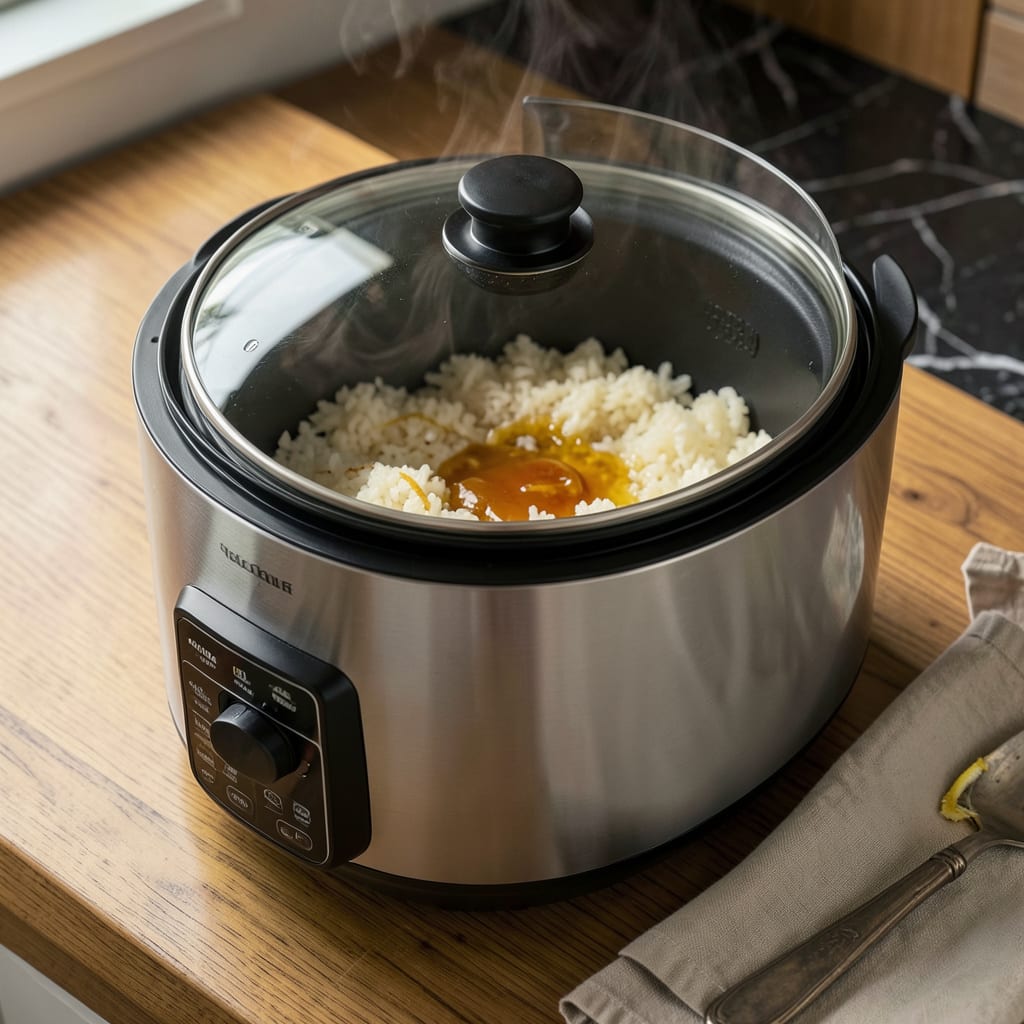
I’ll be real with you—adding butter to rice in a cooker changed my whole approach to this everyday side. The first time I tried it, I was skeptical, but that golden, aromatic steam when I lifted the lid sold me instantly. This isn’t just rice; it’s a rich, fluffy foundation that makes every meal feel special.
Here’s the thing—most people treat rice cookers like set-and-forget appliances, but they’re capable of so much more. A pat of butter stirred in before cooking transforms plain white rice into something luxurious. The butter melts into each grain, creating a subtle richness that pairs perfectly with everything from grilled chicken to stir-fried veggies.
The technique is foolproof: just add your rice, water, and butter, then let the cooker work its magic. What comes out is perfectly tender grains with a delicate buttery flavor that’s never greasy. I’ve made this for weeknight dinners and holiday feasts, and it always disappears first.
Best part? You can customize it easily—swap in garlic butter for extra punch, or use vegan butter if you prefer. Either way, you’re getting restaurant-quality rice with almost no effort. Let’s get that cooker going.
📚 In This Guide
- What You’ll Need
- Instructions
- Tips and Common Mistakes
What Youll Need
- ● Rice cooker – Any standard model (3–10 cups capacity) with a non-stick inner pot. Pro tip: Avoid damaged or warped pots for even cooking! ⚠️
- ● White rice – 1 to 4 cups (uncooked), rinsed until water runs clear. Basmathi or jasmine work best for fluffiness! 🌾
- ● Unsalted butter – 1–2 tbsp per cup of rice (adjust for richness). European-style butter adds extra creaminess. 🧈
- ● Water or broth – 1:1.25 rice-to-liquid ratio (e.g., 1 cup rice = 1.25 cups liquid). Broth boosts flavor! 💧
- ○ Salt – ½ tsp per cup of rice (optional but recommended). Skip if using salted butter. ⚪
- ● Measuring cups/spoons – For precise rice-to-liquid ratios. No guessing—perfect texture every time! ✅
- ● Wooden spoon or rice paddle – To fluff rice post-cooking. Avoid metal to protect your pot. 🥄
- ○ Optional add-ins: Garlic powder (½ tsp) or minced garlic (1 clove) 🧄
- ● Dried herbs (thyme, parsley) for aroma 🌿
- ● Lemon zest (½ tsp) for brightness 🍋
Instructions
Here’s how to transform ordinary rice into something extraordinary with just one simple addition.
Measure and Rinse Your Rice
Start by measuring out your rice using the cup that came with your rice cooker. I always use this specific cup because rice cookers are calibrated to work perfectly with their own measuring tools. For most standard rice cookers, you’ll want to use the 2-cup line for perfectly fluffy results.
Rinse the rice thoroughly under cold water until the water runs clear. This removes excess starch that can make your rice gummy. I like to swirl the rice with my fingers while rinsing to ensure every grain gets cleaned. Drain well in a fine-mesh strainer, shaking gently to remove all excess water.
Add Water and Butter to the Cooker
Transfer your rinsed rice to the rice cooker pot. Add water up to the corresponding 2-cup line on the pot (this is usually about 2½ cups of water for 2 cups of rice). The water level is crucial—too much and your rice will be mushy, too little and it won’t cook properly.
Here’s the magic step: add 2 tablespoons of butter to the water and rice. I prefer unsalted butter so I can control the saltiness, but salted butter works too if that’s what you have. Cut the butter into small pats so it melts evenly as the rice cooks. The butter will infuse every grain with rich flavor as it steams.
Cook and Let the Butter Work Its Magic
Close the rice cooker lid and select the standard white rice setting. Let the cooker do its work undisturbed—no peeking! The butter will melt completely during the cooking process, creating a golden, aromatic steam that permeates every grain.
As the rice cooks, you’ll start to smell that wonderful buttery aroma. The cooking time will be the same as your normal rice (typically 20-25 minutes), but the result will be completely different. The butter helps create rice that’s more tender and flavorful than plain steamed rice.
Fluff and Serve Immediately
When the rice cooker switches to “keep warm” mode, let the rice sit for an additional 5-10 minutes. This resting time allows the butter to fully absorb into the rice grains. Then open the lid and use the rice paddle to gently fluff the rice from the bottom up.
You’ll notice the rice has a beautiful golden sheen and a rich, buttery aroma. The grains should be separate and tender, with no clumping. Serve immediately while hot—the butter flavor is most pronounced when the rice is freshly cooked. The texture should be light and fluffy, with each grain coated in that delicious buttery essence.
Tips and Common Mistakes
Transforming simple rice into something extraordinary is all about mastering a few key details. Here’s what I’ve learned from making this countless times.
Rinsing Technique: In Step 1, don’t rush the rinsing process—this is crucial for fluffy results. Use cold water and swirl the rice with your fingers until the water runs completely clear. I find it takes about 3-4 rinses to remove all the excess starch that would otherwise make your rice gummy. The clearer the water, the better your final texture will be.
Butter Distribution: When adding the 2 tablespoons of butter in Step 2, cut it into small pats rather than adding whole tablespoons. This ensures even melting and distribution throughout the rice as it cooks. I’ve found that smaller pieces melt more quickly and coat each grain more effectively during the 20-25 minute cooking time.
Resting Period: That 5-10 minute resting time in Step 4 isn’t optional—it’s when the magic really happens. The butter fully absorbs into the grains during this time, creating that beautiful golden sheen. I always set a timer to ensure I don’t skip this crucial step. The difference between resting and not resting is noticeable in both texture and flavor.
Water Ratio: Stick precisely to the 2-cup line for water as mentioned in Step 2. While it might seem like 2½ cups is a lot for 2 cups of rice, this ratio accounts for the butter’s moisture content. I’ve tested various ratios and this one consistently produces perfectly tender, non-mushy rice with that rich buttery flavor we’re after.
Pro Tips for Butter In Rice Cooker
- Transforming simple rice into something extraordinary is all about mastering a few key details. Here’s what I’ve lear…
- Rinsing Technique: In Step 1, don’t rush the rinsing process—this is crucial for fluffy results. Use cold water and s…
- Butter Distribution: When adding the 2 tablespoons of butter in Step 2, cut it into small pats rather than adding who…
Frequently Asked Questions
Can I add butter directly to the rice cooker with uncooked rice?
Yes! Add butter before cooking for maximum flavor infusion. Use 1-2 tbsp per cup of rice, then mix with water/broth to distribute evenly. The butter melts as the rice cooks, creating a rich, aromatic base. Avoid overdoing it—too much can make rice greasy.
When’s the best time to add butter if I forgot before cooking?
No worries! Stir in butter right after the rice cooker switches to “keep warm” ( ~10-15 mins before serving). Let it melt naturally with the lid closed for even coating. For extra fluffiness, gently fluff the rice with a fork as you mix it in. Try these swaps for a lighter touch: Greasy rice usually means too much butter (stick to 1-2 tbsp per cup) or not enough liquid. Use the standard 1:1.5 rice-to-water ratio, and avoid stirring mid-cook. If it happens, drain excess fat or blot with a paper towel post-cooking. Yes, but reduce added salt by half! Salted butter contains ~¼ tsp salt per tbsp. For precise control, opt for unsalted butter and season to taste after cooking. Pro tip: A pinch of salt in the cooking water enhances flavor even with unsalted butter.What’s a healthier alternative to butter in a rice cooker?
Why does my rice turn out greasy when I add butter?
Can I use salted butter in the rice cooker?
Adding butter in your rice cooker is a game-changer for effortlessly rich, fluffy grains every time! 🍚✨ With just a pat of butter, you can elevate plain rice into a creamy, golden side dish that pairs perfectly with any meal. Whether you’re a beginner or a seasoned cook, this simple trick delivers restaurant-quality results with minimal effort.
Ready to try it? Grab your rice cooker, pick your favorite butter (salted or unsalted!), and experiment with herbs or spices for extra flavor. Your taste buds will thank you! 😉

Trained in classic French technique but raised on slow-cooked ribs and spicy rubs, she blends culinary skill with smoke and soul.
- Recipe for Boneless Pork Chops in Cast Iron Skillet: Sear and Baste to Juicy Perfection - October 3, 2026
- Recipe for Boneless Cross Rib Roast: Slow-Roasted Beef with Herb Crust - October 3, 2026
- Hamburgers in Sauce Recipe Crock Pot: Slow-Cooked Savory Delight - October 3, 2026