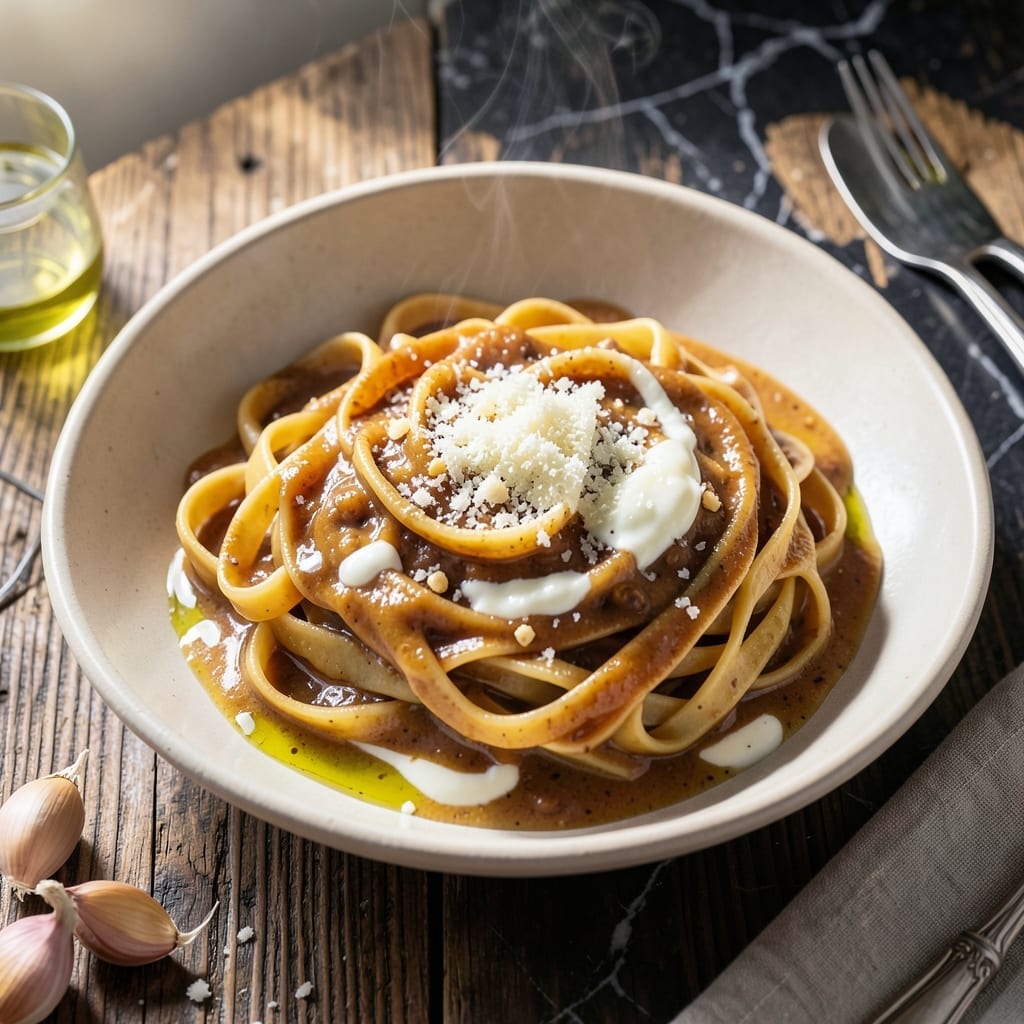
This butter sauce transforms simple pasta into a silky, restaurant-quality dish with minimal effort. The emulsion of melted butter and starchy pasta water creates a velvety base.
Parmesan adds depth while maintaining the sauce’s delicate texture. Master this technique and you’ll elevate any pasta night with a foolproof method that delivers consistent results.
Ingredients for Butter Sauce Recipe for Pasta
Nine ingredients create that silky, restaurant-quality emulsion with minimal effort and maximum flavor.
| Ingredient | Amount | Notes |
|---|---|---|
| Unsalted Butter 🧈 | ¾ cup | High-fat content preferred for emulsion |
| Parmesan Cheese 🧀 | ½ cup | Finely grated from wedge |
| Starchy Pasta Water 💧 | ½ cup | Reserved from cooking pasta |
| Heavy Cream 🥛 | ¼ cup | Optional for richer texture |
| Garlic Cloves 🧄 | 2 cloves | Minced for aromatic base |
| Fresh Lemon Juice 🍋 | 1 tbsp | Brightens the emulsion |
| Sea Salt 🧂 | ½ tsp | Fine grain for even distribution |
| White Pepper 🌶️ | ¼ tsp | Freshly ground for subtle heat |
| Fresh Parsley 🌿 | 2 tbsp | Finely chopped for finish |
[recipe_ingredient_scaler]
The butter is non-negotiable—European-style with 82% fat content emulsifies more smoothly than standard. Plugrá or Kerrygold are ideal, readily available at Whole Foods or most supermarkets. Parmesan must be Parmigiano-Reggiano, freshly grated from a wedge; pre-grated contains anti-caking agents that disrupt the emulsion. The pasta water should be heavily salted—think ocean-level salinity—to properly season the sauce.
No heavy cream? Whole milk at double the amount works, though the texture will be lighter. Substitute Pecorino Romano for Parmesan if you want sharper depth (use 25% less due to saltiness). For garlic, shallots at a 1:1 ratio offer a sweeter note. The lemon juice can be white wine vinegar in a pinch, but use sparingly—it’s more assertive.
This sauce waits for no one. Serve immediately for that velvety texture. Leftovers? Unlikely, but if needed, reheat gently with a splash of water to re-emulsify. Keeps 2-3 days refrigerated, though the texture may separate slightly. Not suitable for freezing.
Why You’ll Love This Recipe
- 5-Minute Magic: I can have this sauce ready before the pasta finishes boiling—just melt, stir, and pour.
- Garlic-Parmesan Bliss: The buttery garlic and sharp Parmesan create a rich, velvety coating that clings to every noodle.
- Weeknight Hero: Honestly, it’s my go-to for busy evenings when I need something fast but still crave-worthy.
- Budget Friendly: A handful of pantry staples turns into a restaurant-worthy dish without the restaurant prices.
Step-by-Step Instructions for Butter Sauce for Pasta
Master this technique and the emulsion will come together perfectly every time.
Step 1: Infuse the Butter with Garlic
Melt the 0.75 cup unsalted butter in a large skillet over medium-low heat. As it melts, add the 2 cloves minced garlic cloves and cook for 1-2 minutes until fragrant but not browned.
This gentle heat extracts the garlic’s aroma without burning it, which would introduce bitter notes. The butter should foam slightly but not brown—you’re building flavor, not color. Remove from heat if the butter starts to brown too quickly.
Step 2: Create the Emulsion Base
Add the 0.5 cup starchy pasta water to the garlic butter and whisk vigorously. The starch in the water acts as an emulsifier, binding the fat and liquid into a silky sauce. Maintain medium-low heat as you whisk.
You’ll notice the mixture begin to thicken and take on a glossy appearance. This is the foundation of your emulsion. If it looks separated, keep whisking—it will come together. The starch from the pasta water is doing critical work here.
Step 3: Incorporate the Cream and Cheese
Reduce heat to low and add the 0.25 cup heavy cream, whisking constantly. The cream adds richness and stability to the emulsion. After 30 seconds, begin sprinkling in the 0.5 cup finely grated parmesan cheese a little at a time.
Each addition of parmesan should be fully incorporated before adding more. The cheese melts into the sauce, adding depth and a velvety texture. Take your time with this step—rushing can cause the sauce to break.
Step 4: Season and Finish the Sauce
Add the 0.5 tsp sea salt, 0.25 tsp white pepper, and 1 tbsp fresh lemon juice. The salt enhances all flavors, the white pepper adds subtle heat without visual specks, and the lemon juice brightens the richness.
Stir for another 30-60 seconds until the sauce is smooth and coats the back of a spoon. Taste and adjust seasoning if needed. The sauce should be glossy and flow like heavy cream.
Step 5: Combine with Pasta and Garnish
Add your cooked pasta directly to the skillet with the sauce. Toss vigorously with tongs to coat every strand. The pasta continues to absorb the sauce, creating a perfect union of flavors and textures.
Transfer to serving plates and garnish with the 2 tbsp finely chopped fresh parsley. The parsley adds a fresh, herbal note that cuts through the richness. Serve immediately while the sauce is at its silkiest.
Pro Tips For Making Butter Sauce Recipe For Pasta
- Lower the Heat: After burning my first three batches, I finally learned—keep the sauce at a gentle simmer, not a rolling boil, or the butter will separate and the cheese will clump.
- Grate Your Own: Pre-grated parmesan has anti-caking agents that make the sauce grainy; take the extra 2 minutes to grate fresh for a silky texture.
- Save That Water: Don’t drain your pasta too thoroughly—reserve at least 1 cup of starchy pasta water to loosen the sauce and help it cling to the noodles.
- Bloom the Garlic: Cook the minced garlic in the butter for just 30 seconds until fragrant, but don’t let it brown or it’ll turn bitter and overpower the sauce.
Troubleshooting This Recipe
🥘 Sauce Separating or Breaking?
If your butter sauce looks greasy or split, it’s likely because the butter melted too quickly or the emulsion wasn’t stabilized. High heat can cause the fat to separate from the liquids.
Quick Fix: Remove from heat and whisk vigorously while adding a splash of warm pasta water or a teaspoon of cold butter to rebind the sauce.
🔥 Too Thin or Runny?
A thin sauce often means there wasn’t enough reduction or the butter wasn’t properly emulsified. If you added too much pasta water or didn’t cook it long enough, the sauce won’t thicken.
Quick Fix: Return the sauce to low heat and simmer for 1-2 minutes, stirring constantly. Add a pinch of grated Parmesan to help thicken it naturally.
🧂 Bland or Lacking Flavor?
Butter sauce can taste flat if under-seasoned or if the Parmesan wasn’t aged long enough. Salt enhances flavor, and fresh cheese makes a big difference.
Quick Fix: Stir in a pinch of salt, a squeeze of lemon juice for brightness, or extra freshly grated Parmesan to deepen the flavor.
⏰ Butter Burning or Browning?
Burnt butter can make your sauce taste bitter. This happens when the butter is cooked over too-high heat or left unattended, causing the milk solids to brown excessively.
Quick Fix: Immediately remove from heat and transfer to a cool bowl. Stir in fresh, cold butter to dilute the burnt flavor, then strain if needed.
Nutrition Facts

Trained in classic French technique but raised on slow-cooked ribs and spicy rubs, she blends culinary skill with smoke and soul.
- Recipe for Boneless Pork Chops in Cast Iron Skillet: Sear and Baste to Juicy Perfection - October 3, 2026
- Recipe for Boneless Cross Rib Roast: Slow-Roasted Beef with Herb Crust - October 3, 2026
- Hamburgers in Sauce Recipe Crock Pot: Slow-Cooked Savory Delight - October 3, 2026