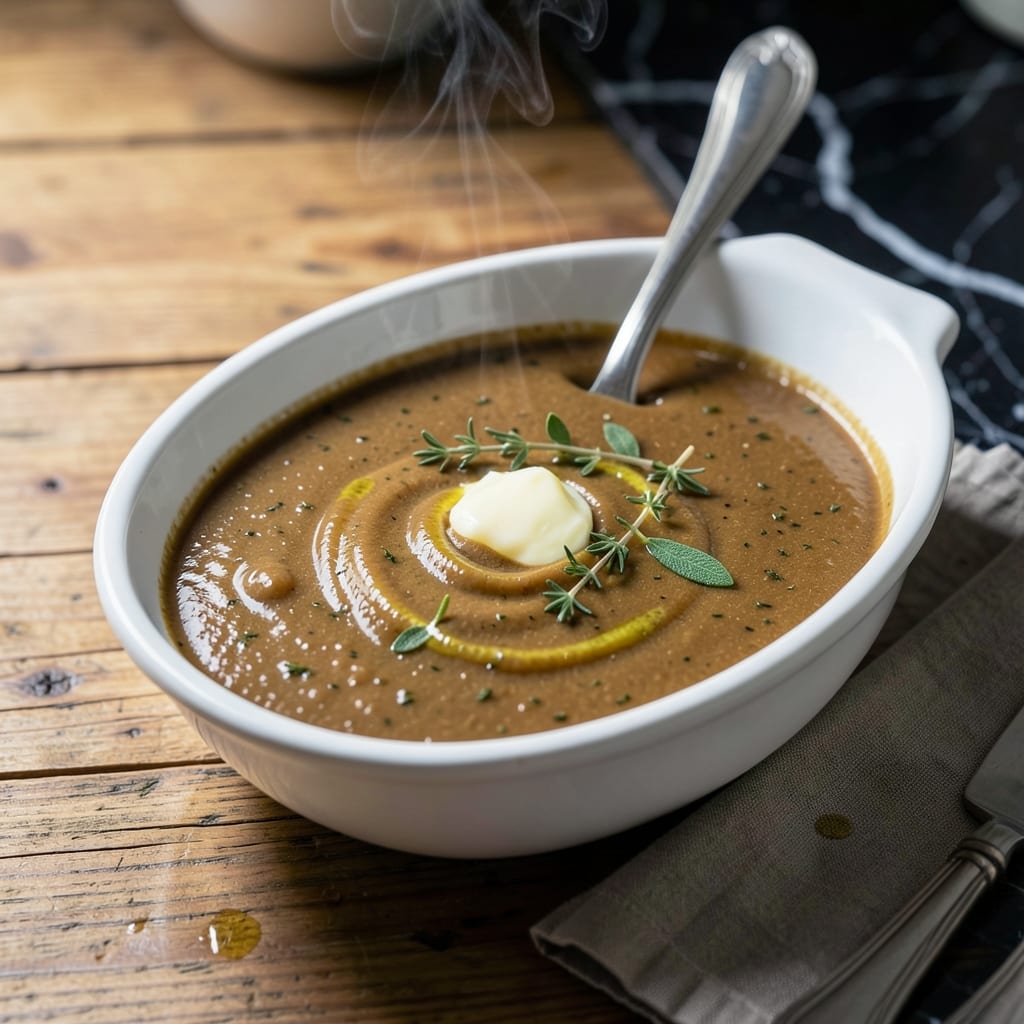
This gravy transforms turkey drippings into a rich, savory sauce that elevates any holiday meal. The key lies in properly skimming fat and reducing the pan juices for maximum flavor concentration.
Using a simple roux of butter and flour creates the perfect thickener without lumping. The process takes less than 20 minutes from start to finish, making it ideal for busy kitchen workflows.
What results is a silky, deeply flavored gravy with perfect consistency. It pairs beautifully with turkey, mashed potatoes, or stuffing for a complete holiday spread.
Make ahead and reheat gently to maintain that velvety texture. This method ensures professional results every time.
Ingredients for Butterball Gravy
Transform holiday drippings into luxurious sauce with these essential components for depth and silkiness.
| Ingredient | Amount | Notes |
|---|---|---|
| Turkey Drippings 🦃 | 2 cups | Fat skimmed off, from roasted turkey |
| Unsalted Butter 🧈 | ¼ cup | For roux base |
| All-Purpose Flour 🌾 | ¼ cup | For thickening roux |
| Chicken Broth 🍲 | 1 cup | Low-sodium preferred for control |
| Heavy Cream 🥛 | ¼ cup | For richness and velvety texture |
| Fresh Sage Leaves 🌿 | 6 pieces | Finely chopped for aromatic depth |
| Fresh Thyme Sprigs 🍃 | 4 whole | Leaves stripped from stems |
| Kosher Salt 🧂 | ½ tsp | Diamond Crystal preferred for consistency |
| Black Pepper 🌶️ | ½ tsp | Freshly ground for best flavor |
[recipe_ingredient_scaler]
The turkey drippings are non-negotiable for authentic flavor. Collect them fresh from your roasting pan, ensuring you skim off all but 2-3 tbsp of fat for the base. Professional kitchens use Wondra flour for lump-free roux, but standard all-purpose works if whisked constantly. For the broth, Better Than Bouillon offers superior depth compared to canned options.
No turkey drippings? Substitute with chicken stock plus 1 tbsp soy sauce for umami. Fresh herbs are ideal but dried at one-third the amount works in a pinch. For dairy-free gravy, replace butter with olive oil and cream with coconut milk. The flour can be swapped for cornstarch (mix with cold water first) but requires different cooking times.
Gravy thickens as it cools. Store in an airtight container for up to 4 days in the fridge or freeze for 3 months. Reheat gently to maintain that velvety texture—boiling causes separation. For make-ahead, prepare the roux separately and whisk in reheated drippings just before serving.
Why You’ll Love This Recipe
- One Pot Wonder: I love that it all comes together in a single saucepan—just melt the butter, whisk in flour, and slowly add the broth and drippings.
- Rich & Velvety: The heavy cream gives it this luxurious texture that’s so much better than store-bought. Honestly, it’s the star of the Thanksgiving table.
- Holiday Hero: This gravy works for turkey, mashed potatoes, or even biscuits the next day. Between us, it’s the reason my family asks for leftovers.
- Budget Stretcher: I use every last bit of turkey drippings, so nothing goes to waste. It’s a simple way to make the meal feel extra special without extra cost.
Step-by-Step Instructions for Homemade Turkey Gravy
Master the technique for silky gravy that elevates every bite of your holiday meal.
Step 1: Prepare the Aromatic Base
Finely chop the 6 pieces fresh sage leaves and strip the leaves from the 4 whole fresh thyme sprigs. This releases their essential oils for maximum flavor infusion. I prefer to use a sharp chef’s knife for the sage to avoid bruising the delicate leaves.
In a medium saucepan over medium heat, melt the 0.25 cup unsalted butter until it begins to foam. Add the chopped sage and thyme leaves, then cook for 1-2 minutes until fragrant but not browned. This blooms the herbs’ aromas in the fat, creating a deeply flavorful foundation for your gravy.
Step 2: Create the Roux for Thickening
Sprinkle the 0.25 cup all-purpose flour over the melted butter and herb mixture. Whisk constantly for 2-3 minutes to form a smooth paste. The roux should turn a light golden color—this indicates the flour is cooked and will thicken properly without a raw taste.
Keep the heat at medium and maintain constant motion with your whisk. If the roux darkens too quickly, reduce the heat slightly. The goal is to cook the flour just enough to eliminate its starchy flavor while developing subtle nutty notes that complement the turkey drippings.
Step 3: Incorporate Liquids Gradually
Slowly pour in the 2 cups turkey drippings, whisking continuously to prevent lumps from forming. The mixture will thicken immediately as the roux absorbs the liquid. Once fully incorporated, add the 1 cup chicken broth in the same manner.
Bring the mixture to a gentle simmer, then reduce heat to medium-low. At this stage, the gravy should coat the back of a spoon but still be thin enough to pour easily. If it’s too thick, the flour wasn’t properly cooked; if too thin, it needs more time to reduce.
Step 4: Finish with Cream and Seasoning
Stir in the 0.25 cup heavy cream and simmer for an additional 3-4 minutes. The cream adds a velvety richness that balances the deep turkey flavor. Watch for the gravy to reach your desired consistency—it should nappe (lightly coat) the back of a spoon.
Season with 0.5 tsp kosher salt and 0.5 tsp black pepper. Taste and adjust the seasoning as needed, remembering that the turkey drippings may already contain some salt. The finished gravy should have a glossy appearance and a consistency that’s thick enough to cling to mashed potatoes but still pourable.
Step 5: Strain and Serve Immediately
Remove the saucepan from heat and strain the gravy through a fine-mesh sieve into a serving vessel. This removes the herb pieces, leaving you with an ultra-smooth texture. Press gently on the solids with a spoon to extract all the flavorful liquid.
Serve the gravy immediately while hot. If it thickens too much as it sits, thin it with a splash of warm chicken broth. The ideal serving temperature is just below simmering, ensuring it flows beautifully over your turkey and sides without being watery.
Pro Tips For Making Butterball Gravy
- Skim the Drippings: After pulling the turkey, let the drippings sit for 5 minutes so the fat separates—I learned this the hard way after serving greasy gravy once. Spoon off the clear fat for the roux and leave the sediment behind.
- Equal Parts Flour and Butter: Use a 1:1 ratio by volume for your roux (about 3 tablespoons each for a standard batch). Sounds simple, but I used to eyeball it and ended up with lumpy or thin gravy every time.
- Whisk Before Boiling: Add your chicken broth slowly while whisking constantly over medium heat—this prevents flour clumps from forming. After burning two batches, I finally figured out that high heat too soon ruins the texture.
- Finish with Cold Cream: Stir in cold heavy cream at the very end, off the heat. My grandmother swore by this, and she was right: it keeps the gravy rich without curdling.
Regional Styles of This butterball gravy
Southern Comfort Style
In the South, we add a splash of apple cider vinegar (1 tbsp) for bright acidity that cuts through the richness. I also stir in 1 tsp Worcestershire sauce for depth. This version pairs perfectly with cornbread dressing and collard greens. 💛
New England Tradition
New England cooks often use turkey stock instead of broth for a more concentrated flavor. I like to add 1 tsp poultry seasoning to the roux for that classic Thanksgiving aroma. The result is a gravy with robust, homey character.
Midwest Creamy Style
Midwestern gravy tends to be extra creamy. I increase the heavy cream to ½ cup and add 1 tbsp cream cheese for extra body. This version is so rich it almost becomes a sauce. Perfect for smothering mashed potatoes.
Southwest Spiced
For a Tex-Mex twist, I stir in 1 tsp ground cumin and ½ tsp smoked paprika with the flour. A dash of chipotle powder adds subtle heat. This pairs wonderfully with turkey tamales or enchiladas. 🔥
California Light
West Coast cooks often use white wine (¼ cup) instead of broth for a lighter version. I add 1 tsp fresh rosemary and a pinch of orange zest for bright, fresh notes. The result is elegant and sophisticated.
Pennsylvania Dutch
In Amish country, they make potato gravy by stirring in ½ cup mashed potatoes at the end. I also add a pinch of nutmeg for warmth. This hearty version is perfect for pouring over stuffing. ✨
Nutrition Facts
Frequently Asked Questions
How do I fix lumpy gravy?
Whisk vigorously to break up lumps, or strain through a fine-mesh sieve. For stubborn lumps, use an immersion blender for 10-15 seconds. Prevention is key: add liquid slowly while whisking constantly.
Can I make this ahead of time?
Yes! Prepare and store in an airtight container for up to 4 days in the fridge. Reheat gently over low heat, stirring often. Adding a splash of broth helps restore consistency.
What if I don’t have turkey drippings?
Substitute with 2 cups chicken broth plus 1 tbsp soy sauce for depth. For extra richness, add 2 tbsp butter or a splash of heavy cream. The flavor will still be delicious!
How do I adjust the thickness?
Too thick? Thin with warm broth, 1 tbsp at a time. Too thin? Make a quick slurry with 1 tbsp cornstarch and 1 tbsp cold water, then whisk in. Simmer for 2 minutes to thicken.

Trained in classic French technique but raised on slow-cooked ribs and spicy rubs, she blends culinary skill with smoke and soul.
- Recipe for Boneless Pork Chops in Cast Iron Skillet: Sear and Baste to Juicy Perfection - October 3, 2026
- Recipe for Boneless Cross Rib Roast: Slow-Roasted Beef with Herb Crust - October 3, 2026
- Hamburgers in Sauce Recipe Crock Pot: Slow-Cooked Savory Delight - October 3, 2026