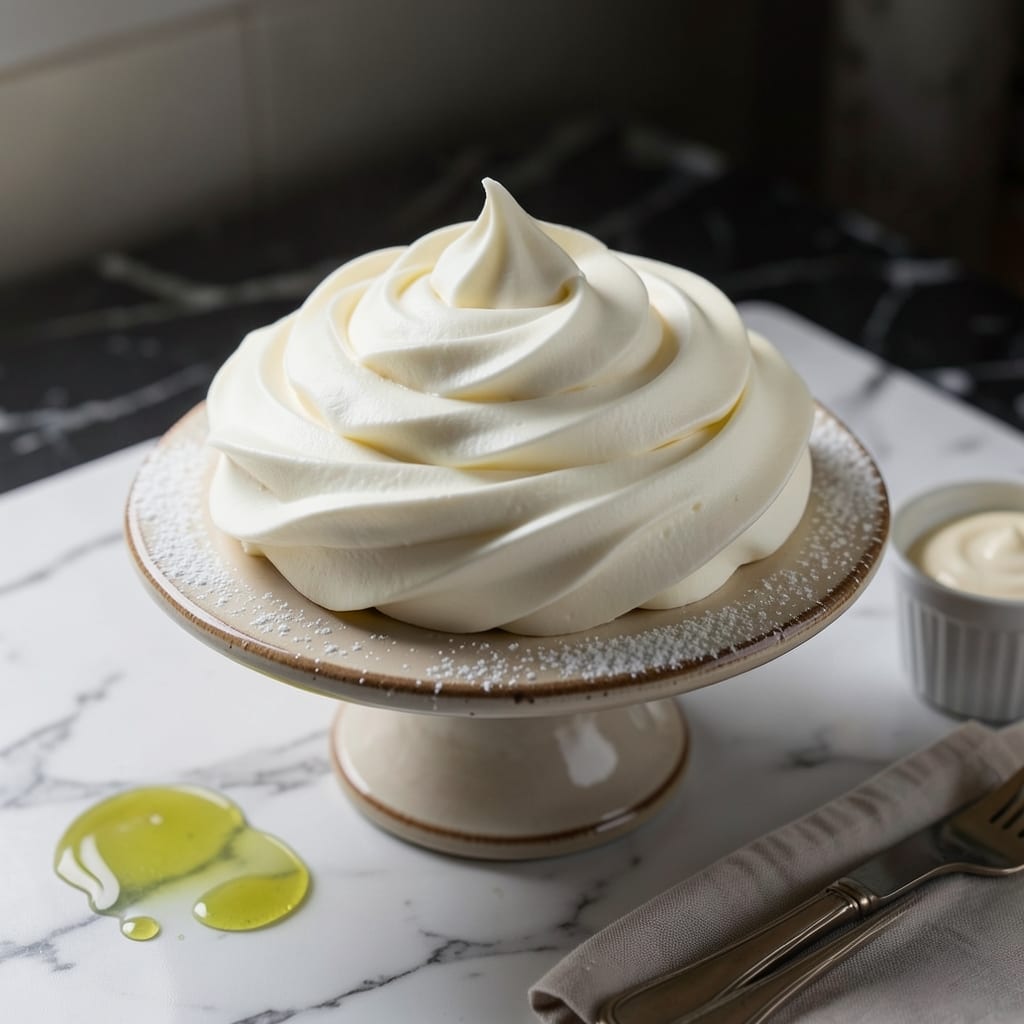
Achieving perfect piping consistency is non-negotiable for professional-quality cakes, and this buttercream delivers every time.
High ratio shortening creates a stable base that holds its shape in any temperature, eliminating the frustration of sagging decorations. The texture remains smooth and workable for hours, making it ideal for intricate designs.
Unlike traditional buttercream, this version won’t separate or develop air pockets during mixing. The result is a silky finish that pipes cleanly and maintains sharp edges.
Master this recipe and your cakes will look as impressive as they taste. The foundation for flawless decorations starts here.
Ingredients for Buttercream Icing Recipe Using High Ratio Shortening
Eight ingredients create a professional-grade buttercream that pipes perfectly every time.
| Ingredient | Amount | Notes |
|---|---|---|
| High Ratio Shortening 🧈 | 1 cup | Stable base for piping |
| Confectioners' Sugar 🍚 | 4 cups | Sifted for smooth texture |
| Whole Milk 🥛 | ¼ cup | Room temperature preferred |
| Vanilla Extract 🌿 | 2 tsp | Pure extract for best flavor |
| Salt 🧂 | ¼ tsp | Fine grain for even distribution |
| Almond Extract 🌰 | ½ tsp | Optional for depth of flavor |
| Butter Flavor Emulsion 🧈 | 1 tbsp | Enhances buttercream taste |
| Corn Syrup 🫙 | 2 tbsp | Light or clear variety |
[recipe_ingredient_scaler]
High ratio shortening is non-negotiable for stability—Crisco Professional or Sweetex are industry standards. Confectioners’ sugar must be sifted to eliminate lumps that clog piping tips. The milk adds creaminess without compromising structure. Professional kitchens always use room temperature liquids to prevent separation during mixing.
No high ratio shortening? Regular shortening plus 1 tbsp cornstarch per cup gets close but won’t hold sharp edges. Replace milk with heavy cream for richer flavor (reduce by half). For vanilla, clear imitation vanilla keeps the icing white. The almond extract is optional but adds depth—use sparingly as it’s potent.
Store in an airtight container at room temperature for 2 weeks or refrigerate for 1 month. Bring to room temperature and rewhip before using. Freezing is possible but may alter texture slightly—best used within 3 months.
Why You’ll Love This Recipe
- One Bowl Wonder: I just dump everything in and mix—no creaming butter, no waiting for it to soften. High ratio shortening blends smooth right out of the can.
- Silky Sweetness: The vanilla and salt balance that ultra-sweet confectioners’ sugar, giving it a rich, velvety finish that pipes like a dream.
- Decorates Anything: I’ve used it on cakes, cupcakes, even sugar cookies, and it holds up in heat better than butter-based versions.
- Budget Stretch: A single batch covers a three-layer cake, and leftover icing keeps for weeks in the fridge without going funky.
Step-by-Step Instructions for Buttercream Icing Using High Ratio Shortening
Master this technique for professional-quality buttercream that pipes smoothly and holds its shape perfectly.
Step 1: Cream the High Ratio Shortening
In a stand mixer fitted with the paddle attachment, beat the 1 cup High Ratio Shortening on medium-high speed for 2-3 minutes. The shortening should become pale and fluffy, with visible air incorporated throughout.
This step is crucial for achieving a light, stable base. High ratio shortening contains emulsifiers that allow it to hold more air and sugar than regular shortening, resulting in buttercream that’s both smooth and sturdy for piping.
Step 2: Gradually Incorporate the Confectioners’ Sugar
With the mixer on low speed, slowly add the 4 cups Confectioners’ Sugar, about ½ cup at a time. Allow each addition to fully incorporate before adding more. This gradual addition prevents a sugar dust cloud and ensures even distribution.
After all sugar is added, increase speed to medium and beat for 1-2 minutes until the mixture is completely smooth. The texture should resemble fine sand at this stage, with no graininess when rubbed between fingers.
Step 3: Add Liquid Ingredients in Stages
In a small bowl, combine the 0.25 cup Whole Milk, 2 tsp Vanilla Extract, 0.25 tsp Salt, 0.5 tsp Almond Extract, 1 tbsp Butter Flavor Emulsion, and 2 tbsp Corn Syrup. Add this mixture to the sugar-shortening base in three additions.
Beat on low speed after each addition until just combined, then increase to medium-high for 30 seconds between additions. The mixture will transform from dry to creamy as the liquids hydrate the sugar and emulsify with the shortening.
Step 4: Whip to Perfect Consistency
Once all liquid is incorporated, beat the buttercream on medium-high speed for an additional 3-4 minutes. The buttercream should become noticeably lighter in color and develop a silky, elastic texture.
Check the consistency by lifting the paddle: the buttercream should hold a soft peak that slowly melts at the tip. If it appears too stiff, add milk 1 teaspoon at a time; if too thin, add additional sifted confectioners’ sugar 1 tablespoon at a time.
Step 5: Test and Adjust for Piping
Transfer a small amount to a piping bag fitted with a star tip. Pipe a test rosette on a plate. The buttercream should hold its shape perfectly with defined edges and no slumping.
If the test isn’t satisfactory, return the buttercream to the mixer and adjust consistency as needed. For optimal piping, the buttercream should be slightly stiffer than spreading consistency. Let it rest for 5 minutes before using to allow air bubbles to dissipate.
Pro Tips For Making Buttercream Icing Recipe Using High Ratio Shortening
- Beat the Shortening First: Cream the high ratio shortening alone for 2-3 minutes until fluffy—I learned this the hard way after ending up with grainy icing from skipping this step.
- Sift the Sugar: Always sift the confectioners’ sugar before adding it, even if the bag says “pre-sifted.” My first few batches had tiny lumps that ruined the smooth texture.
- Add Milk Slowly: Pour the whole milk in 1 tablespoon at a time while mixing. After over-thinning three batches, I finally realized this is the only way to control consistency.
- Use Clear Vanilla: Swap vanilla extract for clear vanilla flavoring if you want bright white icing—sounds picky, but it actually changes the outcome for decorating.
Perfect Pairings for These Flavors
Cake Pairings
This buttercream pairs beautifully with vanilla or chocolate cakes. I love it on a classic yellow cake—the stable structure holds up to multiple layers. For a modern twist, try it with funfetti or confetti cake for vibrant celebrations.
Cookie Decorating
Use this for decorating sugar cookies—the smooth texture is perfect for flooding and piping details. I find it works especially well for holiday cookies that need to hold their shape for days. The high ratio shortening keeps designs crisp.
Cupcake Toppings
Pipe swirls on cupcakes for bakery-style results. It holds peaks perfectly, even in warm kitchens. I prefer a star tip for classic rosettes. The stability means you can decorate a whole batch in advance. 💫
Pastry Filling
This works as a filling for whoopie pies or macarons. The texture is thick enough to hold its shape but still creamy. For macarons, I pipe a small dollop on one shell and sandwich with another.
Coffee Pairings
Serve cakes or cookies with espresso or cappuccino—the bitterness balances the sweetness. I recommend a dark roast for bold flavor contrast. The buttercream’s richness stands up well to strong coffee. ☕
Fruit Complements
Pair with fresh berries or citrus curd for a bright contrast. The neutral flavor lets fruit shine. I love it with lemon cake and raspberry filling for a fresh, vibrant dessert.
Nutrition Facts
Frequently Asked Questions
Why use high ratio shortening instead of butter?
High ratio shortening contains emulsifiers that allow it to hold more air and sugar, creating a more stable icing. It won’t melt in warm temperatures and holds piping shapes better than butter-based versions.
How long can I store this buttercream?
Store in an airtight container at room temperature for up to 2 weeks. For longer storage, refrigerate for 1 month or freeze for 3 months. Bring to room temperature and rewhip before using.
Can I substitute regular shortening?
Yes, but add 1 tablespoon cornstarch per cup of regular shortening. It won’t be as stable for intricate piping but works in a pinch. Results may vary in hot or humid conditions.

Trained in classic French technique but raised on slow-cooked ribs and spicy rubs, she blends culinary skill with smoke and soul.
- Recipe for Boneless Pork Chops in Cast Iron Skillet: Sear and Baste to Juicy Perfection - October 3, 2026
- Recipe for Boneless Cross Rib Roast: Slow-Roasted Beef with Herb Crust - October 3, 2026
- Hamburgers in Sauce Recipe Crock Pot: Slow-Cooked Savory Delight - October 3, 2026