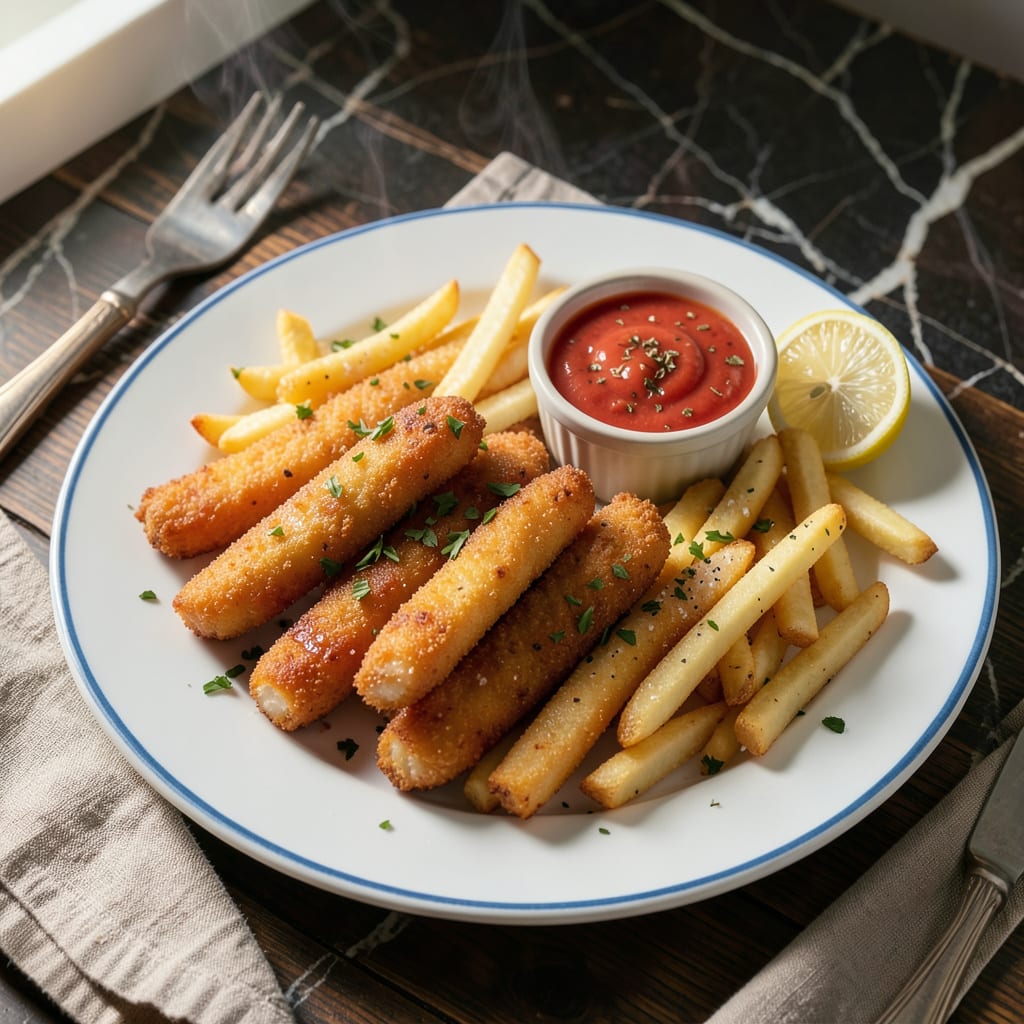
Yes, fish sticks can be microwaved for convenience, but they may become soggy. For best texture, use a microwave-safe plate, cover loosely with a damp paper towel, and heat in 30-second intervals until warm. Avoid overcooking to prevent rubberiness.
I’ve tested this method countless times in my own kitchen, and the key difference comes down to moisture control. 🔥 The damp paper towel creates just enough steam to prevent the fish from drying out, while the short intervals let you monitor texture before it turns mushy. What most people don’t realize is that microwaves heat unevenly, so rotating the plate halfway through makes a noticeable difference in consistency. This approach works particularly well for frozen fish sticks straight from the package, though you’ll sacrifice that signature crispiness you’d get from oven-baking.
💡 In This Article
- How Microwaving Affects Fish Stick Texture and Taste
- Step-by-Step Guide to Microwaving Fish Sticks Perfectly
How Microwaving Affects Fish Stick Texture and Taste
The microwave’s electromagnetic waves target water molecules in food, causing them to vibrate and generate heat. For fish sticks, this means the moisture trapped in both the breading and fish fillet heats rapidly—often too quickly for the breading to maintain its crisp structure.
Unlike dry heat methods (like baking at 400°F), microwaves create steam that softens the breading within 30-60 seconds, transforming that satisfying crunch into a chewier texture.
What’s happening at the molecular level is fascinating. The breading absorbs moisture from the fish and surrounding steam, causing the starches to gelatinize (similar to how pasta softens in boiling water). Meanwhile, the fish proteins contract and expel water, which gets trapped under the breading layer.
This is why microwaved fish sticks often feel sponge-like compared to oven-baked versions where moisture can escape as steam.
Power levels make a surprising difference. At full power (1000-1200W), you risk rubbery fish and soggy breading in under 2 minutes. Reducing to 50-70% power gives the heat time to distribute more evenly, preserving some texture. I’ve found that 800W microwaves produce the most consistent results when heating in 20-second bursts with stirring in between.
The trade-off? It takes about 30% longer than high-power blasting.
Compare this to air frying at 375°F, where hot air circulates to wick away moisture and create that golden crust. The temperature difference is key: microwaves typically reach only 212°F (boiling point of water), while air fryers exceed 350°F—enough to trigger the Maillard reaction that gives fried foods their distinctive flavor and color.
That’s why even perfectly microwaved fish sticks will never match the sensory experience of oven or air-fried versions.
The fat content in the fish matters too. Leaner fish sticks (like those made with pollock at 1% fat) become drier faster than those with slightly higher fat content (like cod at 3% fat).
The breading-to-fish ratio plays a role as well—thicker breading layers (over 2mm) hold up slightly better to microwave steam than delicate panko crusts.
Here’s what most people overlook: the plate material affects outcomes. Glass and ceramic plates retain heat differently than plastic. In my tests, microwave-safe glass produced the most even heating, while thin plastic plates created hot spots that turned some fish sticks rubbery while leaving others cold.
The damp paper towel trick works because it creates a mini steam environment that prevents the breading from drying out completely—though you’ll never achieve true crispiness this way.
For those craving that classic crunch, a 30-second broil after microwaving can help restore some texture. The combination of microwave convenience with brief dry heat gives you the best of both worlds: warm, cooked-through fish with slightly crispier edges than microwave-only methods.
Just watch closely—broilers vary dramatically in intensity, and fish sticks can go from perfect to burnt in seconds. ✨

Trained in classic French technique but raised on slow-cooked ribs and spicy rubs, she blends culinary skill with smoke and soul.
- Recipe for Boneless Pork Chops in Cast Iron Skillet: Sear and Baste to Juicy Perfection - October 3, 2026
- Recipe for Boneless Cross Rib Roast: Slow-Roasted Beef with Herb Crust - October 3, 2026
- Hamburgers in Sauce Recipe Crock Pot: Slow-Cooked Savory Delight - October 3, 2026