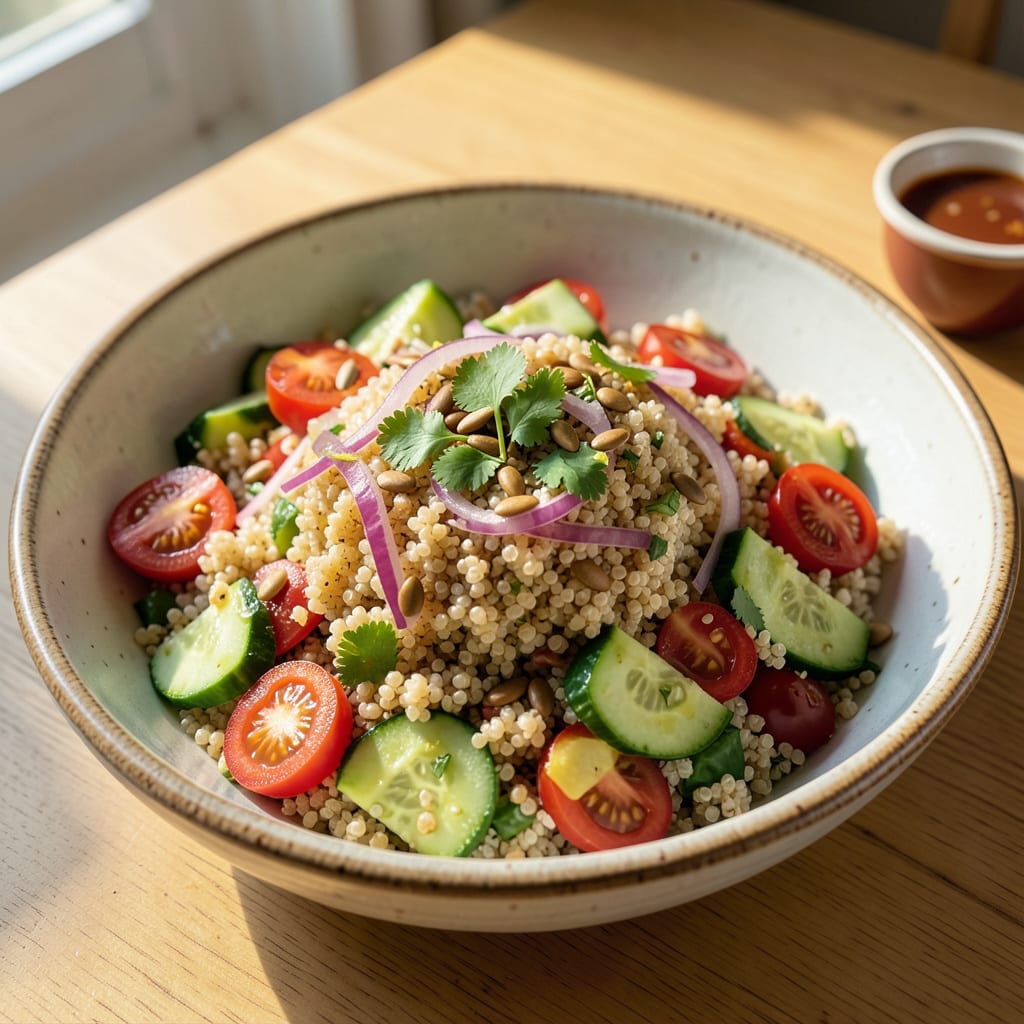
Yes, you can safely eat quinoa cold once it’s fully cooked and properly stored. Its nutty flavor and chewy texture work well in salads, grain bowls, or as a chilled side dish—just ensure it’s cooled quickly and refrigerated within two hours.
I love using chilled quinoa as a base for vibrant summer dishes because it absorbs flavors so well when cold. 🔥 The key is spreading it on a baking sheet to cool rapidly after cooking—this prevents the grains from turning mushy in the fridge. From my experience, a quick rinse under cold water before refrigerating removes excess starch and keeps the texture perfectly al dente for up to 5 days.
What makes cold quinoa special is its versatility with bold ingredients like lemon zest, fresh herbs, or crunchy vegetables. ✨ Unlike rice or pasta, it maintains its structure when chilled, making it ideal for make-ahead meals. I often prep a big batch on Sundays to toss into lunches throughout the week—it’s a protein-packed canvas for whatever flavors you’re craving.
💡 In This Article
- Food Safety Guidelines for Eating Cold Quinoa
- Delicious Cold Quinoa Recipes and Serving Ideas
Food Safety Guidelines for Eating Cold Quinoa
The secret to safe cold quinoa starts with rapid cooling. When cooked grains sit at room temperature between 40°F and 140°F for more than 2 hours, bacteria like Bacillus cereus can multiply exponentially. This pathogen thrives in starchy environments and produces heat-stable toxins that cause nausea and vomiting.
🔥 I always spread freshly cooked quinoa on a rimmed baking sheet in a single layer—this increases surface area for faster cooling before refrigeration.
Your fridge should maintain 40°F or below to inhibit bacterial growth. Store quinoa in shallow, airtight containers (no deeper than 2 inches) to ensure even cooling. Properly stored, it stays safe for 3-5 days, though I notice the texture degrades slightly after day 3.
The USDA confirms this timeline matches other cooked grains like rice and barley. What surprises most people is that quinoa’s natural saponin coating (removed by rinsing) actually has mild antimicrobial properties, giving it a slight safety advantage over rice.
Watch for these spoilage signs before eating: a sour or ammonia-like odor, visible mold (often white or green fuzzy spots), or a slimy texture when rubbed between fingers. 💫 Unlike rice that gets hard when bad, quinoa turns mushy and clumps together.
Pro tip: If you’re meal prepping, divide quinoa into portion-sized containers—this minimizes temperature fluctuations when you open the fridge door repeatedly.
The cooling process affects more than safety—it impacts texture. Quinoa that cools slowly in a pot develops a gummy consistency as the starches retrogradate (re-crystallize). This is why restaurant kitchens use blast chillers. At home, I mimic this by placing the baking sheet in the freezer for 15-20 minutes before transferring to the fridge.
The rapid temperature drop preserves that perfect al dente bite.
For extra protection, consider adding acidic ingredients like lemon juice (1 tablespoon per cup of quinoa) when cooling. The lower pH creates a less hospitable environment for bacteria while brightening the flavor. This technique works particularly well if you’re prepping quinoa for salads—it keeps the grains distinct and flavorful for days. ✨
Remember that reheating doesn’t always make spoiled quinoa safe. Some bacterial toxins, like those from Bacillus cereus, survive cooking temperatures up to 250°F. When in doubt, follow the old adage: “If it smells wrong, it is wrong.” Your nose is often more reliable than the calendar when assessing leftovers.

Trained in classic French technique but raised on slow-cooked ribs and spicy rubs, she blends culinary skill with smoke and soul.
- Recipe for Boneless Pork Chops in Cast Iron Skillet: Sear and Baste to Juicy Perfection - October 3, 2026
- Recipe for Boneless Cross Rib Roast: Slow-Roasted Beef with Herb Crust - October 3, 2026
- Hamburgers in Sauce Recipe Crock Pot: Slow-Cooked Savory Delight - October 3, 2026