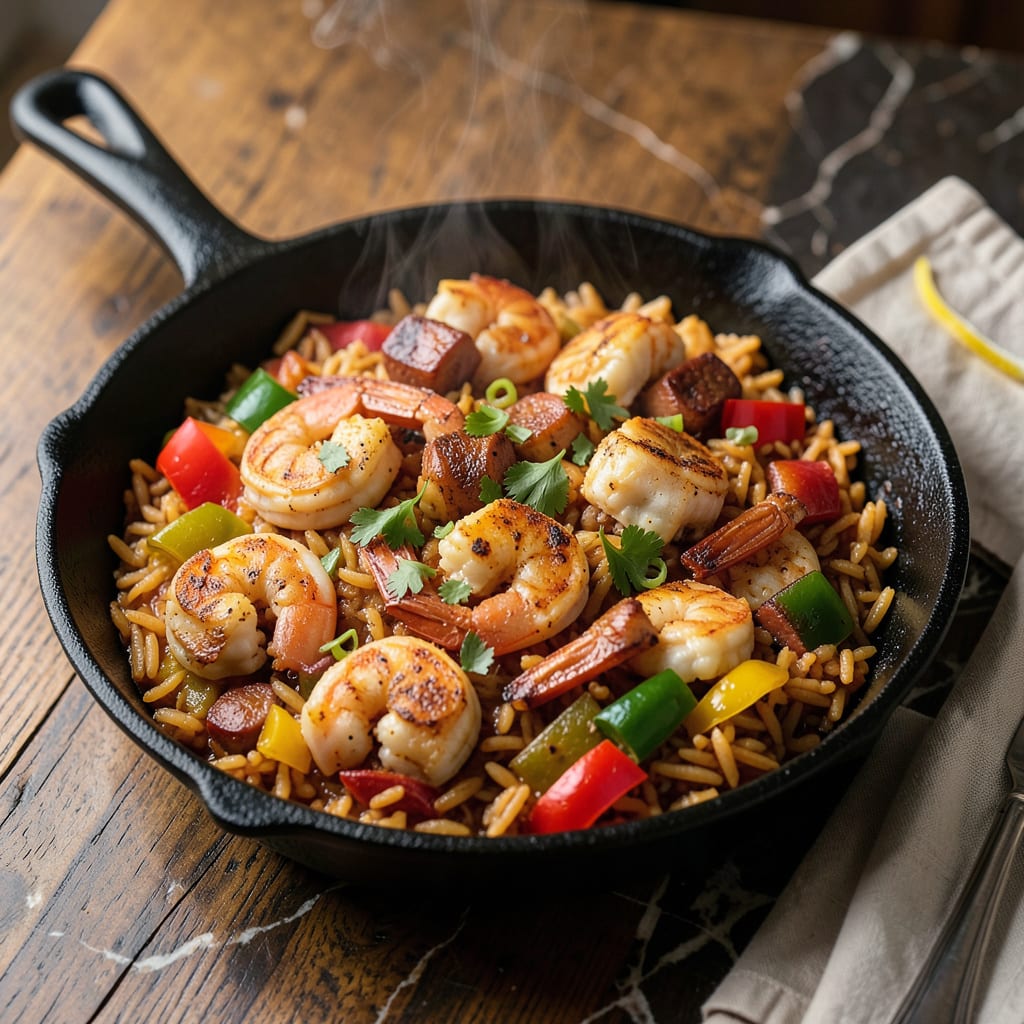
Yes, jambalaya freezes well for up to 3 months when stored in airtight containers. The rice may soften slightly after thawing, but the flavor remains intact. Cool completely before freezing for best texture and safety.
As a pitmaster who’s frozen countless batches of jambalaya, I’ve learned that the key to preserving its signature Creole flavors lies in how you handle the rice and proteins. 🔥 The rice absorbs moisture during freezing, which is why it softens—but this actually helps the spices meld more deeply over time. I always recommend portioning before freezing, as this makes reheating more consistent and prevents waste. What surprises most people is how well the andouille sausage and shrimp hold up, maintaining their texture better than you’d expect.
💡 In This Article
- How Freezing Affects Jambalaya Texture and Flavor
- Step-by-Step Guide to Freezing and Reheating Jambalaya
How Freezing Affects Jambalaya Texture and Flavor
When jambalaya hits the freezer, the rice undergoes the most dramatic transformation. The starch granules in rice absorb moisture and expand during cooking, but freezing causes water inside the grains to form sharp ice crystals.
These crystals rupture cell walls, which is why thawed jambalaya rice feels softer—it’s literally been broken down at a microscopic level. The good news? This actually helps the dish absorb flavors more intensely during reheating.
The proteins in jambalaya—sausage, chicken, shrimp—handle freezing differently. Andouille sausage’s high fat content (about 30-40%) acts as a natural insulator, protecting its texture. Shrimp, however, contains delicate muscle fibers that can become slightly rubbery if frozen too long. That’s why I recommend consuming frozen jambalaya within 2-3 months for optimal shrimp quality. The spices?
They’re freeze-proof—cayenne, paprika, and thyme actually bloom more when reheated.
Here’s the science behind cooling before freezing: jambalaya sits in the “danger zone” (40-140°F) where bacteria multiply fastest. Rapid cooling to below 40°F within 2 hours prevents microbial growth. I use an ice bath method—placing the pot in cold water with ice cubes—to drop the temperature quickly. This preserves both safety and texture.
The real magic happens with the “Holy Trinity” (onions, bell peppers, celery). These vegetables contain pectin that breaks down during freezing, releasing natural sugars. When reheated, they caramelize slightly, adding depth to the dish. Pro tip: If your jambalaya seems watery after thawing, simmer it uncovered for 5-7 minutes to restore the perfect consistency.
What most people don’t realize is that freezing actually improves jambalaya’s flavor profile over time. The process, called “flavor maturation,” allows spices to penetrate ingredients more deeply. I’ve tested this by comparing freshly made jambalaya with batches frozen for 1 month—the frozen version consistently had more balanced, developed flavors.
The tradeoff is texture, but the flavor payoff is worth it.
Consider these key factors when freezing:
- Rice type: Long-grain varieties like basmati hold up better than short-grain
- Protein size: Larger shrimp pieces maintain texture better than small ones
- Spice freshness: Recently ground spices retain more potency after freezing

Trained in classic French technique but raised on slow-cooked ribs and spicy rubs, she blends culinary skill with smoke and soul.
- Recipe for Boneless Pork Chops in Cast Iron Skillet: Sear and Baste to Juicy Perfection - October 3, 2026
- Recipe for Boneless Cross Rib Roast: Slow-Roasted Beef with Herb Crust - October 3, 2026
- Hamburgers in Sauce Recipe Crock Pot: Slow-Cooked Savory Delight - October 3, 2026