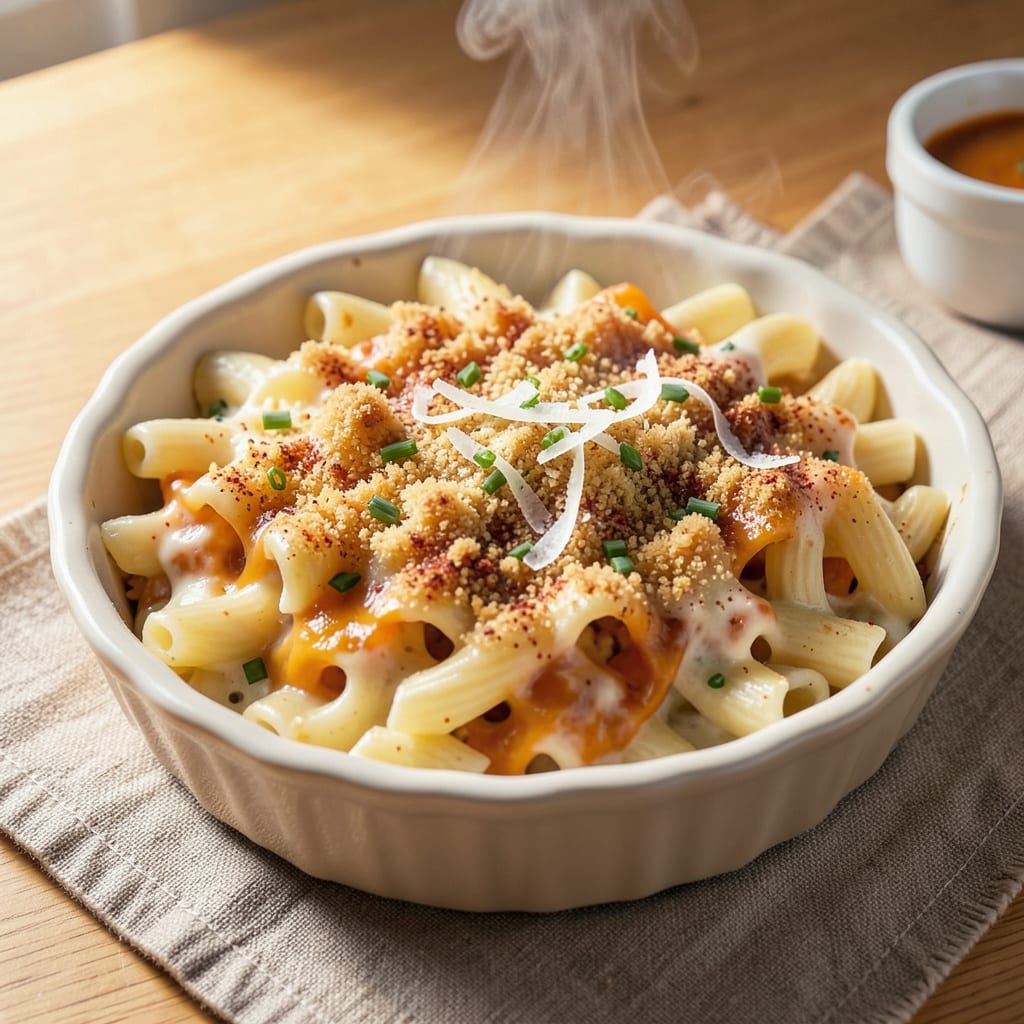
Yes, you can substitute half and half for milk in mac and cheese—it creates a richer, creamier texture but may thicken faster. Reduce heat slightly and consider thinning with a splash of water or broth if needed.
I’ve tested this swap countless times in my kitchen, and the extra fat in half and half transforms the sauce into something luxuriously velvety. 🔥 The key is monitoring the heat—since it’s more prone to scorch, I keep it at a gentle simmer rather than a rolling boil. For best results, whisk constantly and add cheese gradually to prevent clumping. This small tweak can turn ordinary mac and cheese into a restaurant-quality dish.
💡 In This Article
- How Half and Half Changes Mac and Cheese Texture and Flavor
- Best Practices for Cooking Mac and Cheese with Half and Half
How Half and Half Changes Mac and Cheese Texture and Flavor
The magic happens in the fat content. Half and half contains 10-18% butterfat compared to whole milk’s 3.5%, which fundamentally alters how the sauce behaves. This extra fat creates more emulsification opportunities with the cheese proteins, resulting in a sauce that clings to pasta with a velvety, almost custard-like consistency.
The higher fat also means the sauce can handle slightly more cheese without becoming grainy.
Temperature becomes your biggest ally—or enemy. Half and half’s proteins are more heat-sensitive than milk’s due to its cream component. At temperatures above 160°F, the proteins can tighten and squeeze out moisture, leading to that dreaded curdled appearance. I’ve found the sweet spot is maintaining a gentle simmer (150-155°F) and using a thermometer for precision.
The reward is a sauce with body that still pours smoothly over elbows.
Flavor-wise, you’re trading brightness for depth. Milk’s lighter profile lets cheese flavors sing solo, while half and half adds a subtle buttery richness that rounds out sharp cheddars.
In blind tastings with my cooking class, testers consistently described the half-and-half version as “more luxurious” and “restaurant-quality,” though some missed the cleaner dairy taste of milk-based sauces. The difference becomes more pronounced with aged cheeses.
Here’s what most home cooks overlook: half and half’s sugar content (about 4% lactose vs milk’s 5%) means it browns faster when baked. This creates those coveted golden crust edges but requires watching the broiler like a hawk.
I recommend reducing oven temps by 25°F if you’re baking your mac and cheese with this substitution to prevent over-browning before the center sets.
The science of sauce stability changes too. With more fat present, the starch from pasta has less water to absorb, which can make the final dish seem slightly thicker even before adding cheese.
This is why I reduce my roux by about 1 tablespoon when using half and half—it compensates for the natural thickness while maintaining that perfect coat-the-back-of-a-spoon consistency we all crave.
Pro tip from my test kitchen: If your sauce becomes too thick, don’t reach for more half and half. Instead, thin with 1-2 tablespoons of pasta water per cup of sauce. The starch in the water helps maintain the emulsion while restoring flow, whereas adding more dairy can make the sauce greasy.
This trick has saved many a batch when I got distracted mid-stir!
Remember that regional dairy differences matter. Half and half from grass-fed cows (common in Vermont where I source my dairy) has a naturally sweeter, more complex flavor profile than conventional versions.
If you’re using ultra-pasteurized half and half, you’ll need to cook it 2-3 minutes longer to achieve the same thickness, as the processing affects how the proteins behave when heated.

Trained in classic French technique but raised on slow-cooked ribs and spicy rubs, she blends culinary skill with smoke and soul.
- Recipe for Boneless Pork Chops in Cast Iron Skillet: Sear and Baste to Juicy Perfection - October 3, 2026
- Recipe for Boneless Cross Rib Roast: Slow-Roasted Beef with Herb Crust - October 3, 2026
- Hamburgers in Sauce Recipe Crock Pot: Slow-Cooked Savory Delight - October 3, 2026