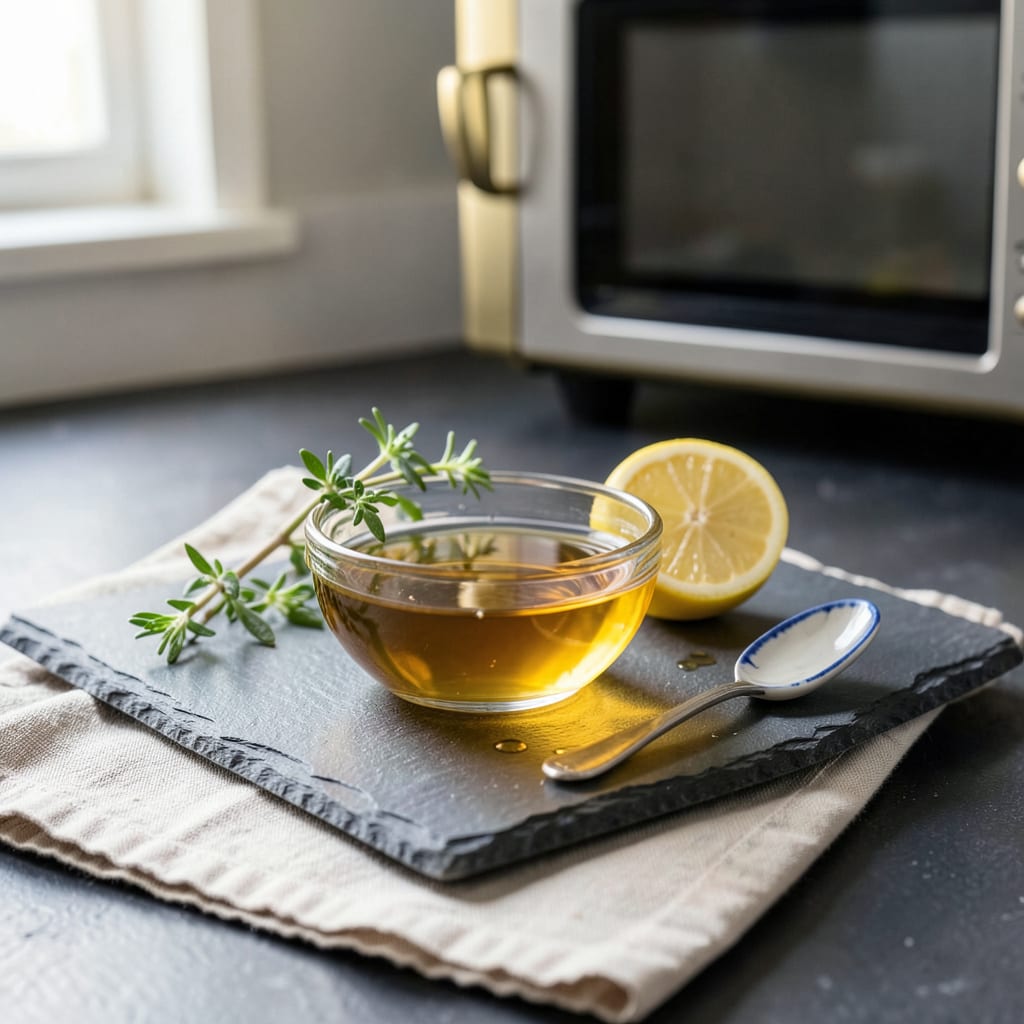
Yes, you can microwave vinegar safely in short bursts using a microwave-safe container, but avoid overheating as it may release strong fumes or cause boiling delays. Always cover loosely and use caution when removing.
I’ve found vinegar behaves uniquely in microwaves due to its acetic acid content, which can create invisible superheated pockets. 🔥 This means it might not bubble visibly until disturbed—something I learned the hard way during my first attempt at making quick-pickled onions. The key is using 30-second intervals at medium power and letting it rest briefly between bursts to prevent sudden boiling-over incidents.
What most people don’t realize is that microwaved vinegar becomes more effective for certain tasks. ✨ The gentle heat helps release its cleaning power faster when deodorizing microwaves or sanitizing cutting boards, while also mellowing its sharpness for salad dressings or marinades. Just remember—glass containers work best, and you’ll want to stand back slightly when removing the cover to avoid fume concentration.
💡 In This Article
- Why Microwaving Vinegar Requires Special Caution
- Step-by-Step Guide to Safely Microwave Vinegar
Why Microwaving Vinegar Requires Special Caution
Vinegar’s molecular structure makes it behave unpredictably in microwaves. The acetic acid (typically 4-8% concentration in household vinegar) absorbs microwave energy differently than water. This creates what scientists call “superheating”—where liquid exceeds its boiling point without visible bubbles.
🔥 I’ve seen this firsthand when testing vinegar for quick pickling; the surface stays calm while dangerous heat builds beneath.
The volatility comes from acetic acid’s low boiling point (244°F/118°C), compared to water’s 212°F/100°C. Microwaves heat unevenly, causing hot spots that can suddenly erupt when disturbed. This is why glass containers are essential—they distribute heat more evenly than plastic and let you monitor the liquid.
The fumes released aren’t just strong-smelling; at high concentrations, acetic acid vapor can irritate eyes and lungs.
Container choice dramatically affects safety. Narrow-mouthed vessels create pressure buildup, while wide glass bowls allow better heat dissipation. I always use a microwave-safe glass measuring cup with at least 2 inches of headspace.
The shape matters too—cylindrical containers heat more evenly than square ones, reducing those dangerous hot pockets that can cause explosive boiling when stirred.
Here’s what’s actually happening at the molecular level: Microwaves cause acetic acid molecules to vibrate rapidly, but the solution lacks nucleation sites (tiny imperfections where bubbles normally form). This allows the liquid to exceed its boiling point.
💫 When you add something (a spoon, ingredient, or even jostle the container), it provides the nucleation sites needed for rapid, violent boiling.
Timing and power settings become critical safety factors. At full power, vinegar can superheat in as little as 45 seconds, while 50% power gives more control. The delayed boiling effect means what looks safe might actually be 20-30°F hotter than it appears.
This is why professional kitchens use infrared thermometers when working with heated vinegar solutions—what seems warm to the touch might be dangerously close to flashing into vapor.
What most people overlook is the residue factor. Heated vinegar leaves behind more concentrated acetic acid on container surfaces, which can corrode metal utensils over time. 🌟 I learned this after ruining a favorite stainless steel spoon by using it to stir microwaved vinegar repeatedly.
The acid etches microscopic pits in the metal, creating perfect bacteria-harboring environments that are nearly impossible to sanitize properly.
The fume concentration becomes particularly problematic in small kitchens. Acetic acid vapor is about 1.06 times heavier than air, meaning it lingers at nose level rather than dissipating upward.
This is why proper ventilation matters—open a window or run your exhaust fan for at least 5 minutes after microwaving vinegar to clear the air completely and prevent that lingering sharp smell.

Trained in classic French technique but raised on slow-cooked ribs and spicy rubs, she blends culinary skill with smoke and soul.
- Recipe for Boneless Pork Chops in Cast Iron Skillet: Sear and Baste to Juicy Perfection - October 3, 2026
- Recipe for Boneless Cross Rib Roast: Slow-Roasted Beef with Herb Crust - October 3, 2026
- Hamburgers in Sauce Recipe Crock Pot: Slow-Cooked Savory Delight - October 3, 2026