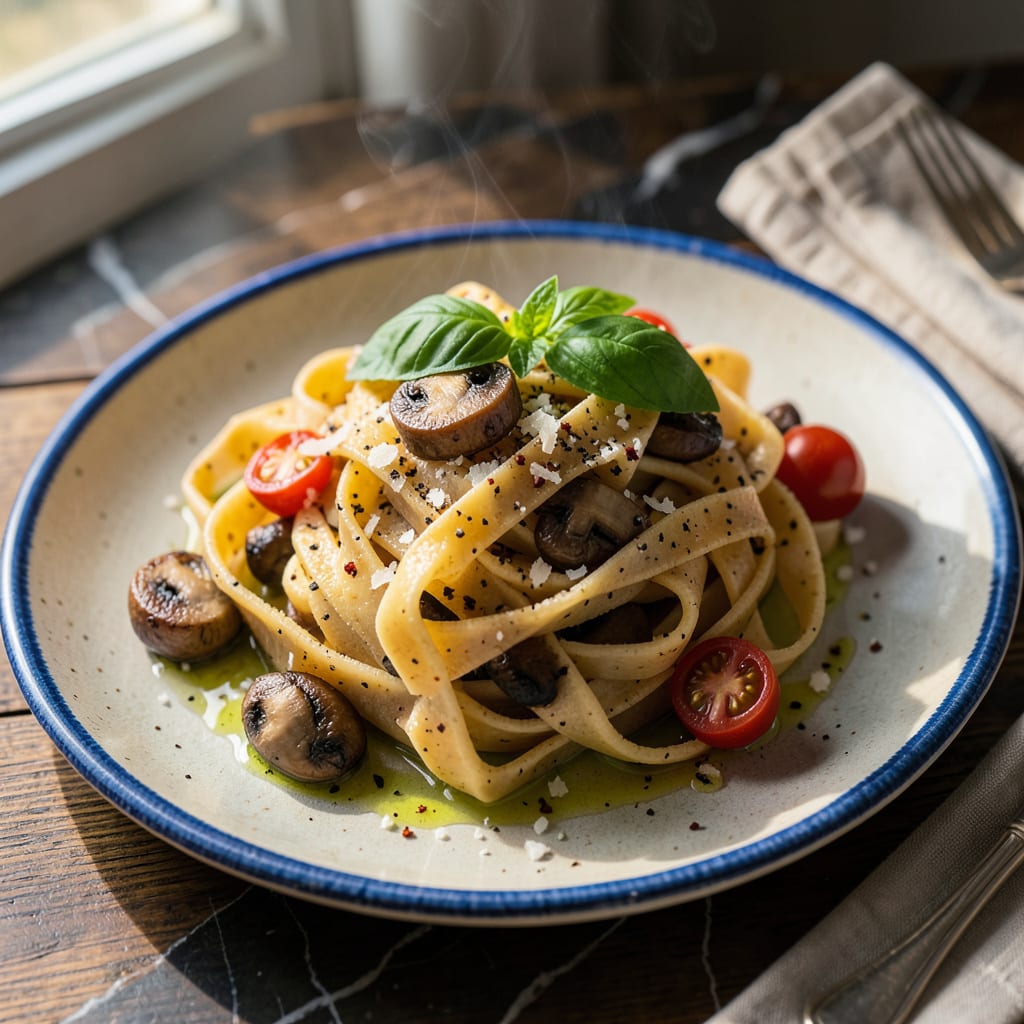
Yes, you can use bread flour for pasta, but expect a chewier, denser texture due to its higher protein content. It works best for hearty dishes like pappardelle or thick-cut noodles, though traditional pasta flour yields lighter results.
I’ve tested this swap in my own kitchen, and the results are fascinating. Bread flour’s 12-14% protein creates a more elastic dough, giving your pasta a satisfying bite that holds up beautifully to rich sauces like ragù or creamy Alfredo. The trade-off? You’ll lose some of the delicate silkiness of 00 flour pasta, which is why I reserve this technique for rustic, hearty dishes. 🔥
For best results, adjust your hydration slightly—bread flour absorbs more liquid, so you might need an extra 1-2 tablespoons of water per cup. This small tweak prevents dryness while maintaining that signature chew.
💡 In This Article
- How Bread Flour Affects Pasta Texture and Flavor
- Best Pasta Recipes for Bread Flour Success
How Bread Flour Affects Pasta Texture and Flavor
Bread flour’s 12-14% protein content creates a fundamentally different gluten structure than traditional pasta flour. When hydrated, these proteins form long, elastic strands that give pasta its signature bite. The higher protein means more gluten development, which translates to a chewier, more substantial texture—almost like al dente pasta taken one step further.
This makes bread flour ideal for shapes that need to hold their form, like thick pappardelle or extruded rigatoni.
The difference becomes obvious when comparing to 00 flour (8-9% protein), which produces a silkier, more delicate bite. Bread flour pasta has about 20-30% more gluten, creating a denser mouthfeel that stands up to hearty sauces.
I’ve found it particularly effective with ragù or cream-based sauces where you want the pasta to be a substantial component rather than a delicate vehicle. The flavor also develops differently—bread flour’s slightly nuttier profile comes through after cooking.
Hydration ratios become crucial with bread flour. The additional protein absorbs more water, typically requiring 55-60% hydration (about 1-2 extra tablespoons per cup) compared to traditional pasta dough. Without this adjustment, the dough can become stiff and difficult to roll. The extra water helps relax the gluten network, preventing toughness while maintaining that desirable chew.
🔥
Temperature control during mixing and resting becomes more important with bread flour. The gluten develops faster, so I recommend mixing at cooler temperatures (60-65°F) and resting the dough for 30-60 minutes before rolling. This resting period allows the gluten to relax, making the dough more pliable and preventing spring-back during rolling.
The result is a pasta that cooks evenly and maintains its texture throughout the cooking process.
For those who love textural contrast in their dishes, bread flour pasta offers a unique advantage. The chewier bite provides a satisfying resistance that pairs beautifully with slow-cooked meats or rich, velvety sauces.
It’s particularly effective in baked pasta dishes like lasagna or baked ziti, where the structure needs to hold up during extended cooking times without turning mushy.
One surprising benefit I’ve discovered is that bread flour pasta tends to hold its shape better when reheated. The robust gluten network prevents the pasta from breaking down as quickly as traditional pasta when exposed to multiple heat cycles. This makes it an excellent choice for meal prep or dishes that might sit before serving.
✨

Trained in classic French technique but raised on slow-cooked ribs and spicy rubs, she blends culinary skill with smoke and soul.
- Recipe for Boneless Pork Chops in Cast Iron Skillet: Sear and Baste to Juicy Perfection - October 3, 2026
- Recipe for Boneless Cross Rib Roast: Slow-Roasted Beef with Herb Crust - October 3, 2026
- Hamburgers in Sauce Recipe Crock Pot: Slow-Cooked Savory Delight - October 3, 2026