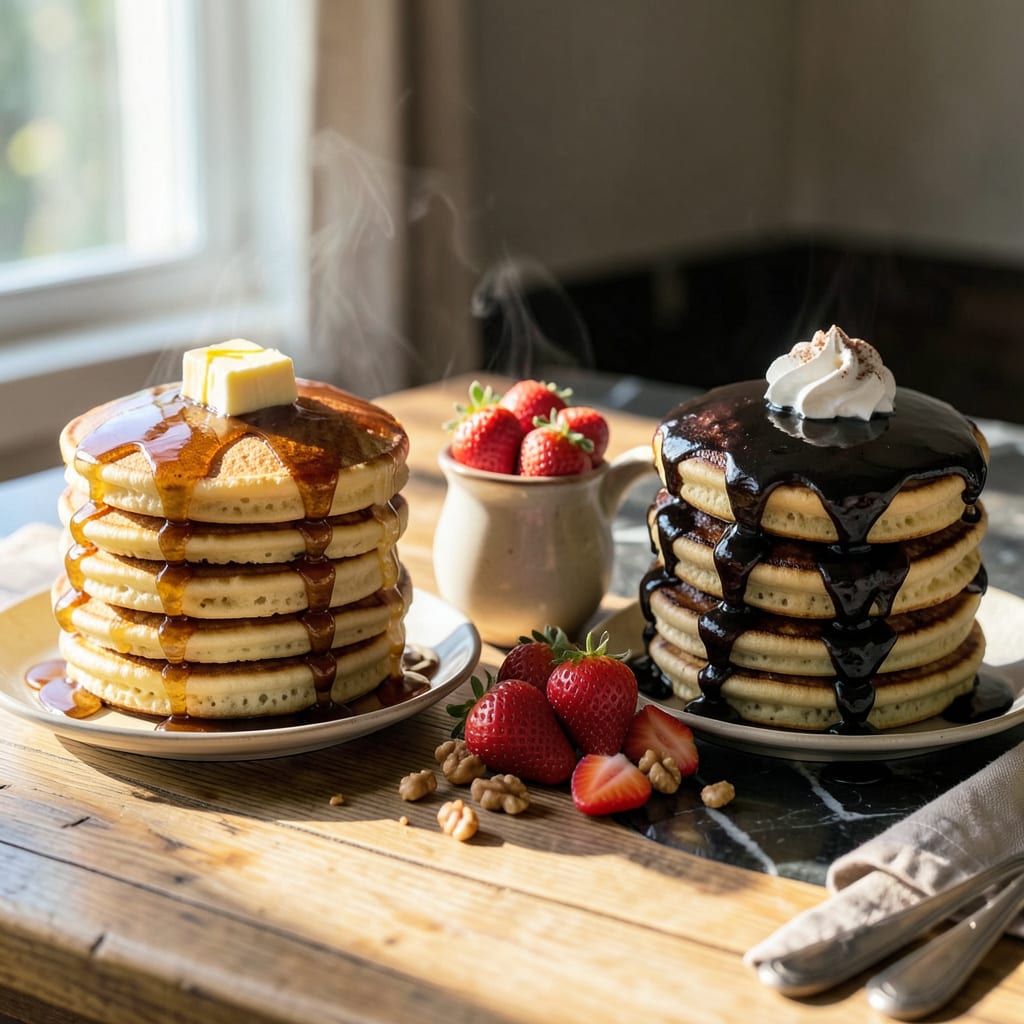
Yes, you can substitute molasses for maple syrup, but expect a stronger, bittersweet flavor with deeper caramel notes. Use ¾ cup molasses for every 1 cup maple syrup and adjust liquids in your recipe since molasses is thicker.
This swap works beautifully in recipes where bold, complex sweetness shines—think spiced cookies, marinades, or hearty baked beans. 🔥 The key lies in molasses’ unrefined sugar content, which delivers a robust, almost smoky depth that maple syrup can’t match. I often reach for it when I want to amplify warm spices like cinnamon or cloves, but I always reduce other liquids slightly to compensate for its viscous texture.
💡 In This Article
- Flavor and Texture Differences Between Molasses and Maple Syrup
- Best Recipes for Molasses-to-Maple Syrup Substitution
Flavor and Texture Differences Between Molasses and Maple Syrup
The distinct personalities of these sweeteners come from their production. Maple syrup is boiled sap from maple trees, containing about 66% sucrose with subtle caramel notes developed during evaporation. Molasses, however, is the byproduct of sugar cane processing—what remains after multiple rounds of sugar crystallization.
This gives it a 75% sugar concentration but with more complex compounds like phenolic acids that create its signature bittersweet punch. 🔥
Texture plays a huge role in substitution success. Maple syrup’s viscosity resembles honey (about 1,300 centipoise at room temperature), while molasses is nearly twice as thick (2,500+ centipoise). This means molasses clings to ingredients differently, which is why I always reduce other liquids by 1-2 tablespoons per cup when swapping.
The higher mineral content in molasses (especially calcium and magnesium) also affects mouthfeel, creating a slightly sticky, almost chewy sensation in baked goods.
Flavor intensity varies dramatically between types. Light molasses (first boil) has 60% sugar content and milder taste, while blackstrap (third boil) contains only 45% sugar but packs intense bitterness. Compare this to grade A maple syrup’s delicate sweetness versus grade B’s stronger caramel notes.
I’ve found blackstrap works wonders in savory applications like BBQ sauces, while light molasses better mimics maple in pancake syrups—though you’ll still taste the difference. ✨
The caramelization process reveals their true differences. Maple syrup’s sugars begin breaking down at 230°F, creating light golden flavors. Molasses starts caramelizing at 210°F but develops deeper, almost burnt sugar notes due to its mineral content. This is why molasses-based cookies spread less—the sugars crystallize differently during baking, creating a denser crumb structure.
Acidity levels create another layer of complexity. Maple syrup sits at pH 6.5-7.0, while molasses ranges from 5.0-5.5, making it significantly more acidic. This affects how it interacts with leavening agents—molasses can accelerate baking soda reactions, causing cookies to rise faster but potentially brown more quickly.
I always add a pinch of extra baking soda when using molasses to balance this effect. 💫
For the most accurate substitution, consider these sensory differences:
- Color: Molasses adds deep amber hues (especially blackstrap) vs. maple’s golden tones
- Aroma: Molasses offers smoky, almost coffee-like notes compared to maple’s vanilla-woodsy scent
- Aftertaste: Molasses lingers with mineral bitterness; maple fades cleanly with faint caramel

Trained in classic French technique but raised on slow-cooked ribs and spicy rubs, she blends culinary skill with smoke and soul.
- Recipe for Boneless Pork Chops in Cast Iron Skillet: Sear and Baste to Juicy Perfection - October 3, 2026
- Recipe for Boneless Cross Rib Roast: Slow-Roasted Beef with Herb Crust - October 3, 2026
- Hamburgers in Sauce Recipe Crock Pot: Slow-Cooked Savory Delight - October 3, 2026