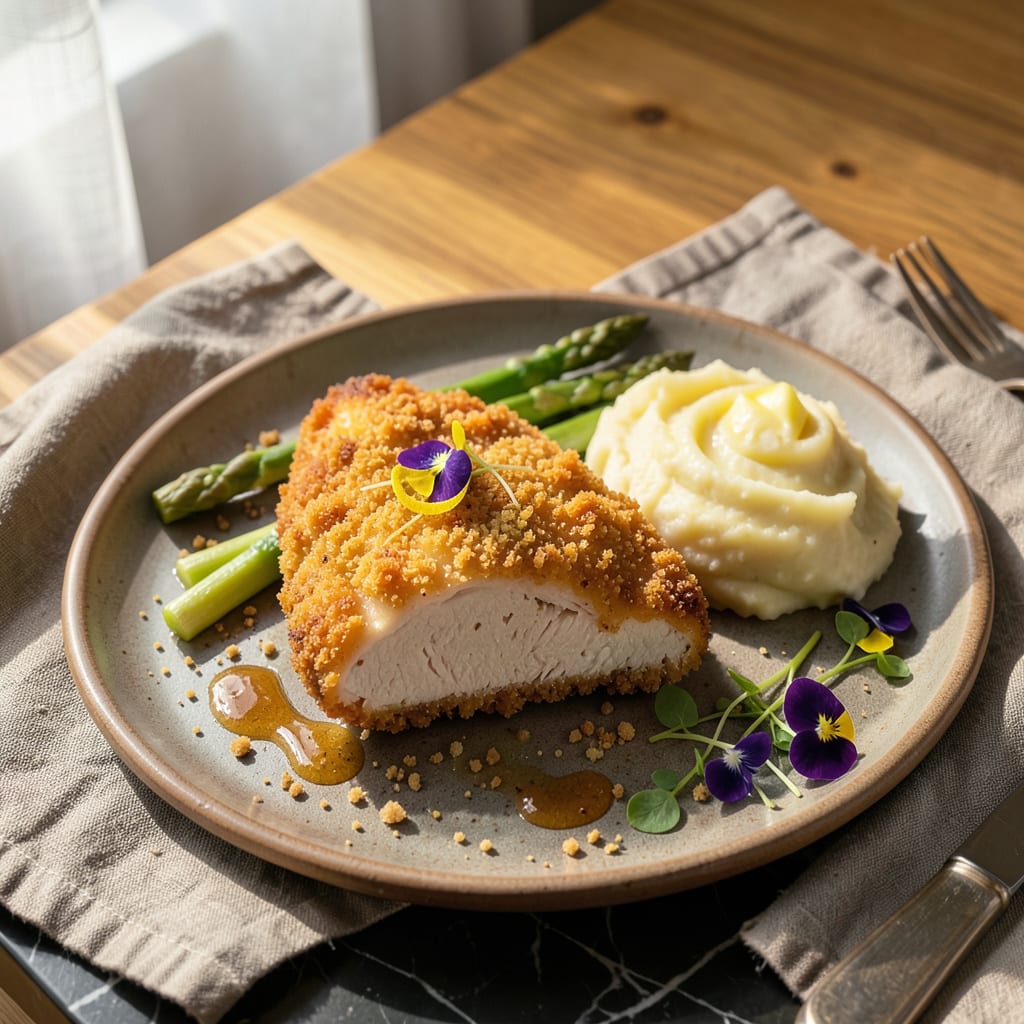
Yes, you can substitute bread crumbs for panko, but expect a softer, less crispy texture. Panko’s coarse flakes create crunch, while regular breadcrumbs absorb more moisture and yield a denser coating. Adjust quantities slightly for best results.
I’ve tested this swap countless times in my kitchen, and the real difference comes down to structure. Panko’s jagged, airy flakes create those coveted crispy pockets when fried, while traditional breadcrumbs—with their finer, more uniform texture—tend to form a tighter, breadier crust. 🔥 For dishes like meatloaf or stuffed mushrooms, this actually works to your advantage, giving a more cohesive bite. But if you’re after that signature crunch (think fried chicken or onion rings), try toasting the breadcrumbs first or mixing in a bit of cornstarch to mimic panko’s lightness.
💡 In This Article
- How Panko and Bread Crumbs Differ in Texture and Cooking
- Best Recipes for Bread Crumb vs. Panko Substitutions
How Panko and Bread Crumbs Differ in Texture and Cooking
The secret lies in how they’re made. Panko is crafted from crustless white bread processed into large, jagged flakes and air-dried, which creates tiny air pockets. These pockets expand when heated, forming a delicate, crispy lattice structure.
Regular breadcrumbs, on the other hand, are finely ground from the entire loaf—crust and all—resulting in dense, uniform particles that pack together tightly when cooked. This fundamental difference explains why panko stays crunchy while breadcrumbs soften.
Moisture absorption tells the real story. Panko’s coarse texture has about 30% less surface area than fine breadcrumbs, meaning it absorbs only 10-15% of its weight in liquid. Fine breadcrumbs can soak up 30-40% of their weight, which is why they create a heavier coating.
When fried at 350-375°F, panko’s air pockets create steam that puffs the flakes, while breadcrumbs form a solid barrier that steams the food underneath. That’s why your fried chicken might taste soggy with the wrong crumb!
Under a microscope, the difference is stunning. Panko flakes resemble tiny shards of glass with irregular edges that create friction and crunch. Breadcrumbs look like fine sand—smooth particles that slide past each other, compacting under pressure.
This is why panko-coated foods maintain their crispness even after sitting, while breadcrumb coatings can turn gummy as the starches gelatinize from trapped moisture. 🔥
Heat transfer plays a crucial role too. Panko’s open structure allows hot oil to circulate freely, creating even browning and maximum crunch. Breadcrumbs form a denser insulation layer that conducts heat more slowly, which can lead to uneven cooking.
I’ve found that increasing oil temperature by 10-15°F when using breadcrumbs helps compensate, but you’ll never quite match panko’s signature texture.
The protein content matters more than you’d think. Panko typically contains 8-10% protein from the bread’s gluten structure, which helps maintain its shape during frying. Most commercial breadcrumbs have 12-14% protein because they include the crust, which creates a chewier texture.
This is why breadcrumb coatings can feel “bready” while panko delivers that satisfying shatter with each bite. ✨
For baked applications, the differences become even more pronounced. Panko’s flakes create a network of crispy “bridges” that stay dry, while breadcrumbs form a more continuous crust that can turn leathery.
I always reduce baking temperatures by 25°F when using breadcrumbs to prevent over-browning, and I’ll often mix in 1 tablespoon of cornstarch per cup to improve crispness. The science is clear: while you can substitute, the experience won’t be identical!

Trained in classic French technique but raised on slow-cooked ribs and spicy rubs, she blends culinary skill with smoke and soul.
- Recipe for Boneless Pork Chops in Cast Iron Skillet: Sear and Baste to Juicy Perfection - October 3, 2026
- Recipe for Boneless Cross Rib Roast: Slow-Roasted Beef with Herb Crust - October 3, 2026
- Hamburgers in Sauce Recipe Crock Pot: Slow-Cooked Savory Delight - October 3, 2026