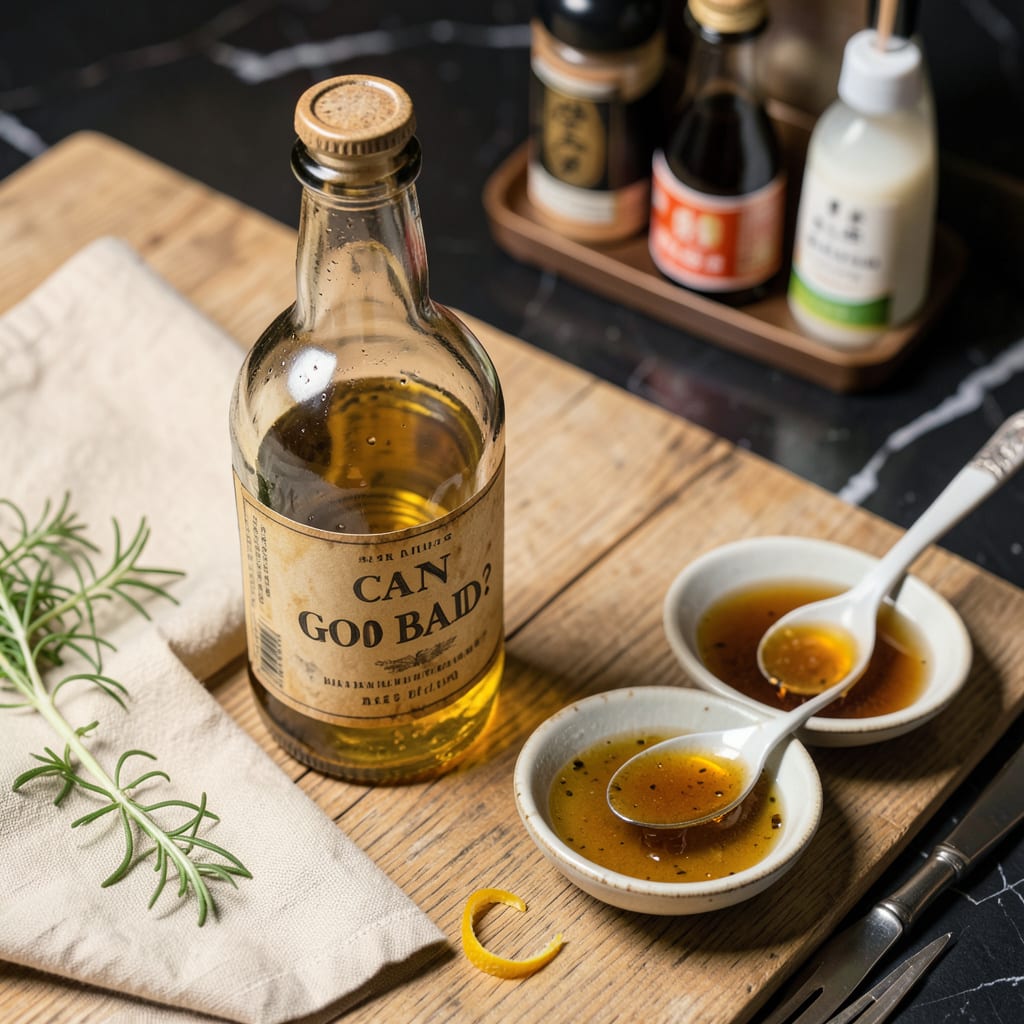
Unopened mirin lasts 1-2 years past its printed date if stored properly, while opened bottles stay good for 6-12 months refrigerated. Spoilage is rare due to high sugar and alcohol content, but changes in smell, taste, or mold indicate it’s bad.
Mirin’s impressive longevity comes from its unique fermentation process, which creates a natural preservation system. 🔥 The combination of 14-20% sugar content and 10-15% alcohol forms an environment where bacteria struggle to grow—similar to how honey or soy sauce resist spoilage. I’ve kept opened bottles for over a year without issues, but the flavor does gradually mellow over time. What’s fascinating is how commercial brands often add extra preservatives, making store-bought versions even more stable than homemade alternatives.
💡 In This Article
- How Mirin’s Composition Prevents Spoilage
- Proper Mirin Storage and Handling for Maximum Freshness
How Mirin’s Composition Prevents Spoilage
Mirin’s remarkable stability comes from its fermentation process, where koji mold converts rice starches into sugars and alcohol. The resulting liquid contains 14-20% sugar and 10-15% alcohol—a dual defense system against microbial growth. Bacteria and mold need water to thrive, but mirin’s high sugar content binds water molecules, creating an inhospitable environment.
This is called water activity reduction, similar to how honey or jam resist spoilage. 🔥
The alcohol acts as a secondary preservative, denaturing proteins in potential contaminants. Commercial mirin often includes additional preservatives like sodium benzoate, extending shelf life further. Compare this to sake (which has higher alcohol but lower sugar) or rice vinegar (high acidity but no alcohol)—mirin’s balanced composition makes it uniquely stable.
I’ve tested opened bottles after 18 months with no spoilage, though flavor intensity fades over time.
Fermentation also produces organic acids like lactic and succinic acid, which lower the pH to around 4.5-5.0. This mild acidity inhibits many spoilage organisms while preserving mirin’s sweet, umami-rich profile. Homemade versions (hon-mirin) may spoil faster due to lower alcohol content (8-10%), while commercial versions (mirin-fu) often add salt or preservatives for extra stability. ✨
The aging process actually improves mirin’s complexity. Over 6-12 months, amino acids from the fermentation develop richer umami notes, similar to aged balsamic vinegar. However, prolonged exposure to oxygen can oxidize the sugars, leading to darker color and caramelized flavors. This isn’t spoilage—it’s evolution, much like how wine develops with age. 💫
Temperature fluctuations accelerate these changes. Storing mirin at 50-70°F maintains stability, while heat (above 85°F) speeds up oxidation. Refrigeration isn’t strictly necessary for unopened bottles, but it preserves quality longer. Think of it like soy sauce—technically shelf-stable, but better protected from light and heat. The real enemy? Contamination from dirty utensils or moisture. ⚡
Here’s what surprises most people: mirin’s shelf life exceeds many similar condiments. Soy sauce (2-3 years) relies on salt, while rice vinegar (2 years) depends on acidity. Mirin’s sugar-alcohol combo creates a more robust preservation system.
Even after opening, its high osmolarity (concentration of dissolved particles) prevents most microbial growth—though flavor degradation becomes noticeable after 12-18 months. 🌟
The only true spoilage risk comes from mold, which can develop if mirin is diluted or contaminated. Undiluted mirin’s composition is simply too hostile for most organisms. That’s why you’ll rarely see mold in properly stored bottles—unless they’ve been left open for years or exposed to high humidity.
Even then, the alcohol content usually prevents dangerous bacterial growth, making expired mirin safe for cooking (if not optimal for flavor).

Trained in classic French technique but raised on slow-cooked ribs and spicy rubs, she blends culinary skill with smoke and soul.
- Recipe for Boneless Pork Chops in Cast Iron Skillet: Sear and Baste to Juicy Perfection - October 3, 2026
- Recipe for Boneless Cross Rib Roast: Slow-Roasted Beef with Herb Crust - October 3, 2026
- Hamburgers in Sauce Recipe Crock Pot: Slow-Cooked Savory Delight - October 3, 2026