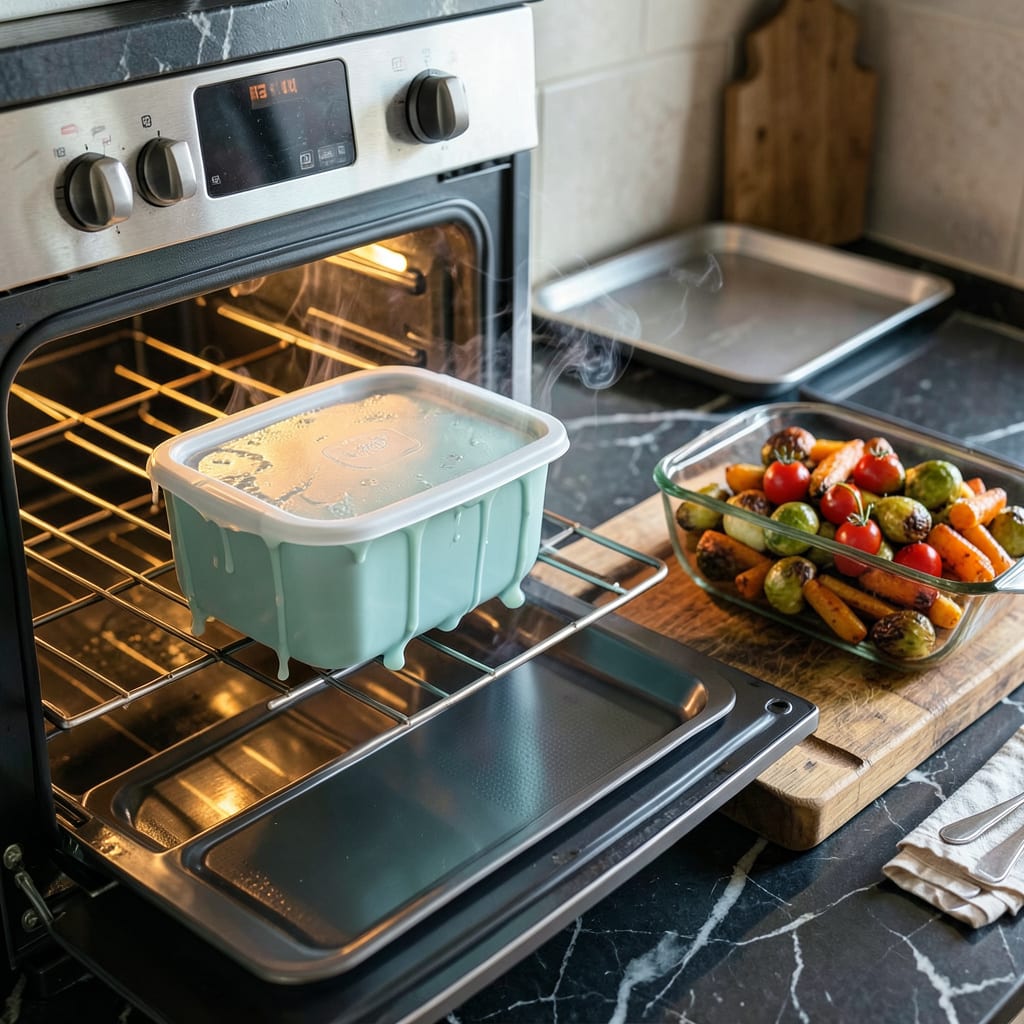
Most plastics cannot safely go in the oven as they melt, warp, or release toxic chemicals when exposed to heat. Only oven-safe plastics labeled with a microwave/oven-safe symbol or made from heat-resistant materials like CPET or certain polyimides should be used, and even then, temperatures should stay below 350°F (175°C).
I’ve seen too many kitchen disasters from plastic mishaps—what starts as convenience can quickly turn into a melted mess or worse. 🔥 The real danger isn’t just ruined food but the potential release of harmful compounds like BPA when plastics break down under heat. Even “sturdy” containers can deform at temperatures as low as 212°F, well below most baking requirements. That’s why I always recommend checking for the #1 or #5 recycling codes combined with explicit oven-safe labeling before taking any risks.
What most people overlook is how heat accelerates chemical migration from plastic into food. Think of it like a slow-motion explosion at the molecular level. ✨ The FDA sets strict limits on food-grade plastics, but home ovens often exceed these safety thresholds without warning. My rule? When in doubt, transfer to glass or ceramic—it’s not worth gambling with your health or your dinner.
💡 In This Article
- Why Most Plastics Fail in High-Oven Temperatures
- Oven-Safe Plastic Alternatives for Cooking and Storage
Why Most Plastics Fail in High-Oven Temperatures
Plastics begin breaking down at surprisingly low temperatures—far below typical baking requirements. Common food containers made from PET (#1) start deforming at just 160°F, while HDPE (#2) can handle up to 248°F before losing structural integrity.
The real trouble begins when these materials approach their glass transition temperature, where polymers shift from rigid to rubbery states. This isn’t just about melting; it’s a complete molecular reorganization that compromises food safety. 🔥
What makes oven exposure particularly dangerous is the chemical leaching that occurs. Plastics containing BPA or phthalates—even in trace amounts—release these compounds exponentially faster when heated. At 300°F, studies show migration rates increase by 55x compared to room temperature.
The FDA allows minimal leaching (0.05ppb for BPA), but home ovens often exceed these thresholds without warning. PVC (#3) is especially problematic, emitting chlorine gas when overheated, creating that acrid smell you might recognize from burnt plastic. ✨
The structural breakdown happens in stages you can actually observe. First comes the warping—those telltale waves in your container edges. By 250°F, micro-cracks form in the plastic matrix, creating pathways for chemicals to escape. At 350°F, you’ll see visible bubbling as trapped gases expand.
This isn’t just cosmetic damage; it’s the plastic’s polymer chains snapping under thermal stress, releasing volatile organic compounds into your food and oven cavity. 💫
Even “heat-resistant” plastics have limits dictated by their crystallinity. Amorphous plastics like polystyrene (#6) soften gradually, while semi-crystalline types like polypropylene (#5) maintain structure longer but eventually fail catastrophically. The USDA’s Food Safety Inspection Service notes that repeated heating cycles accelerate this degradation—what survives one 325°F baking session might crumble in the next.
That’s why commercial food service relies on single-use CPET trays rated for exactly one heat cycle. ⚡
Here’s what’s actually happening at the molecular level: Heat causes polymer chains to vibrate violently, breaking weak van der Waals bonds first, then stronger covalent bonds as temperatures climb. This creates free radicals that react with oxygen (if present) or each other, forming new, potentially toxic compounds. The smell of burning plastic?
That’s these volatile byproducts vaporizing. At 400°F, most food-grade plastics undergo thermal decomposition, releasing benzene and other carcinogens. 🌟
The thickness of the plastic matters more than you’d think. Thin takeout containers might warp at 200°F, while thick storage bins could handle 275°F briefly. But thickness also means more material to degrade—so thicker plastics often release more total chemicals when they do fail.
This is why microwave-safe (#5) plastics might survive 2 minutes in the microwave but deform in 10 minutes in a 350°F oven. The prolonged exposure gives heat time to penetrate deeper into the material. 💛
Pro tip: If you see a container labeled “microwave-safe” but not “oven-safe,” assume it’s only good up to 212°F—boiling point of water. Ovens operate in a different league entirely, with dry heat that’s far more aggressive than microwave’s moist heat.
When in doubt, remember that plastic’s primary design purpose is convenience at room temperature, not culinary performance under thermal stress. Your health—and your oven’s cleanliness—aren’t worth the gamble. 💫

Trained in classic French technique but raised on slow-cooked ribs and spicy rubs, she blends culinary skill with smoke and soul.
- Recipe for Boneless Pork Chops in Cast Iron Skillet: Sear and Baste to Juicy Perfection - October 3, 2026
- Recipe for Boneless Cross Rib Roast: Slow-Roasted Beef with Herb Crust - October 3, 2026
- Hamburgers in Sauce Recipe Crock Pot: Slow-Cooked Savory Delight - October 3, 2026