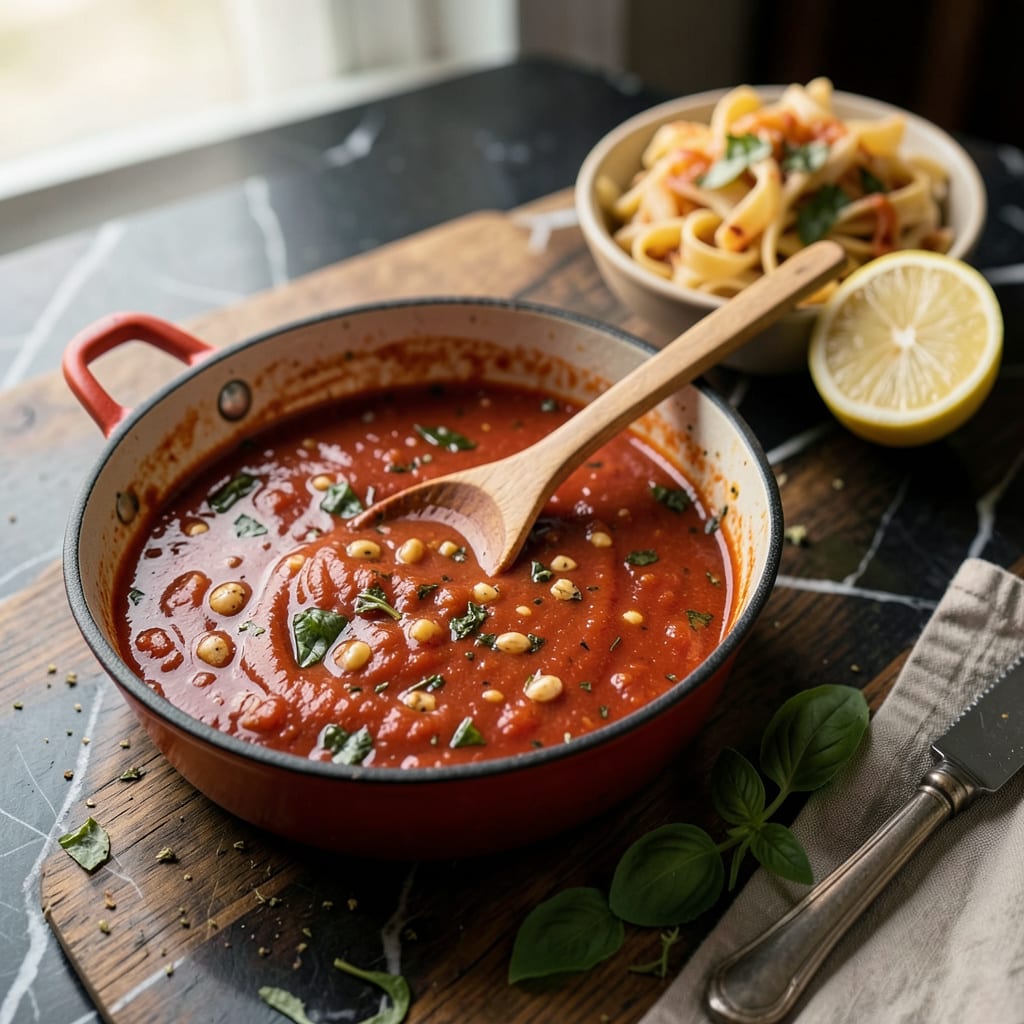
No, tomato sauce should never be left out overnight. Perishable foods left at room temperature for over two hours (or one hour above 90°F) risk bacterial growth like salmonella or E. coli, making it unsafe to eat.
I’ve seen too many home cooks assume tomato sauce’s acidity protects it—but that’s a dangerous myth. 🔥 Even acidic foods like marinara can harbor harmful bacteria when left in the danger zone (40°F–140°F), where pathogens double every 20 minutes. The moisture and nutrients in tomato sauce create an ideal breeding ground for microbes, regardless of whether it’s homemade or store-bought.
What’s tricky is that spoiled sauce might not always smell or look off. I always err on the side of caution: if it’s been out for more than 2 hours, it’s safer to toss it than risk foodborne illness. This rule applies to everything from leftover pasta sauce to pizza toppings—never worth the gamble. ✨
💡 In This Article
- Why Overnight Tomato Sauce Becomes a Food Safety Hazard
- Safe Handling and Storage Tips for Homemade Tomato Sauce
Why Overnight Tomato Sauce Becomes a Food Safety Hazard
Tomato sauce’s acidity might seem protective, but its pH (typically 4.3-4.6) isn’t low enough to prevent bacterial growth entirely. The real danger lies in its moisture content—about 85-90% water—which creates an ideal environment for pathogens.
🔥 When left in the danger zone (40°F–140°F), bacteria like Bacillus cereus and Clostridium perfringens can multiply exponentially, doubling every 20 minutes in optimal conditions.
The “two-hour rule” exists because most foodborne bacteria need just 1-2 hours at room temperature to reach dangerous levels. Tomato sauce’s nutrients (sugars, proteins) accelerate this process. Even if your kitchen feels cool, ambient temperatures often hover around 70°F, well within the danger zone.
The USDA confirms that perishable foods left out overnight should be discarded—no exceptions.
What surprises many cooks is that acidity doesn’t neutralize all threats. While it inhibits some bacteria, others (like Listeria monocytogenes) thrive in acidic environments. The sauce’s texture changes subtly as proteins break down, but these signs aren’t always visible. I’ve seen sauces that looked fine but contained enough bacteria to cause severe illness.
Temperature abuse also affects flavor compounds. The natural sugars in tomatoes begin fermenting after 4-6 hours at room temperature, creating off-flavors. Volatile aromatic compounds degrade, leaving the sauce tasting flat or sour. This chemical breakdown happens even before visible mold appears, making it impossible to judge safety by appearance alone. ✨
Consider this: A single bacterium can multiply to over 2 million in just 7 hours at room temperature. That’s why professional kitchens use time-temperature logs—because what feels like “just overnight” gives pathogens ample time to reach hazardous concentrations. The risk simply isn’t worth the small convenience of saving leftovers.
Even store-bought sauces with preservatives aren’t safe when left out. Commercial products are formulated to stay stable unopened, but once exposed to air and room temperatures, their preservative systems break down. The canning process creates a vacuum seal that inhibits growth—once opened, that protection vanishes immediately. 💫
Here’s the hard truth: No amount of reheating can guarantee safety after overnight exposure. Some bacteria produce heat-stable toxins that survive boiling. When in doubt, remember that foodborne illnesses often take 12-48 hours to manifest—long after you’ve forgotten what you ate. Your health isn’t worth the risk of saving a few dollars’ worth of sauce.

Trained in classic French technique but raised on slow-cooked ribs and spicy rubs, she blends culinary skill with smoke and soul.
- Recipe for Boneless Pork Chops in Cast Iron Skillet: Sear and Baste to Juicy Perfection - October 3, 2026
- Recipe for Boneless Cross Rib Roast: Slow-Roasted Beef with Herb Crust - October 3, 2026
- Hamburgers in Sauce Recipe Crock Pot: Slow-Cooked Savory Delight - October 3, 2026