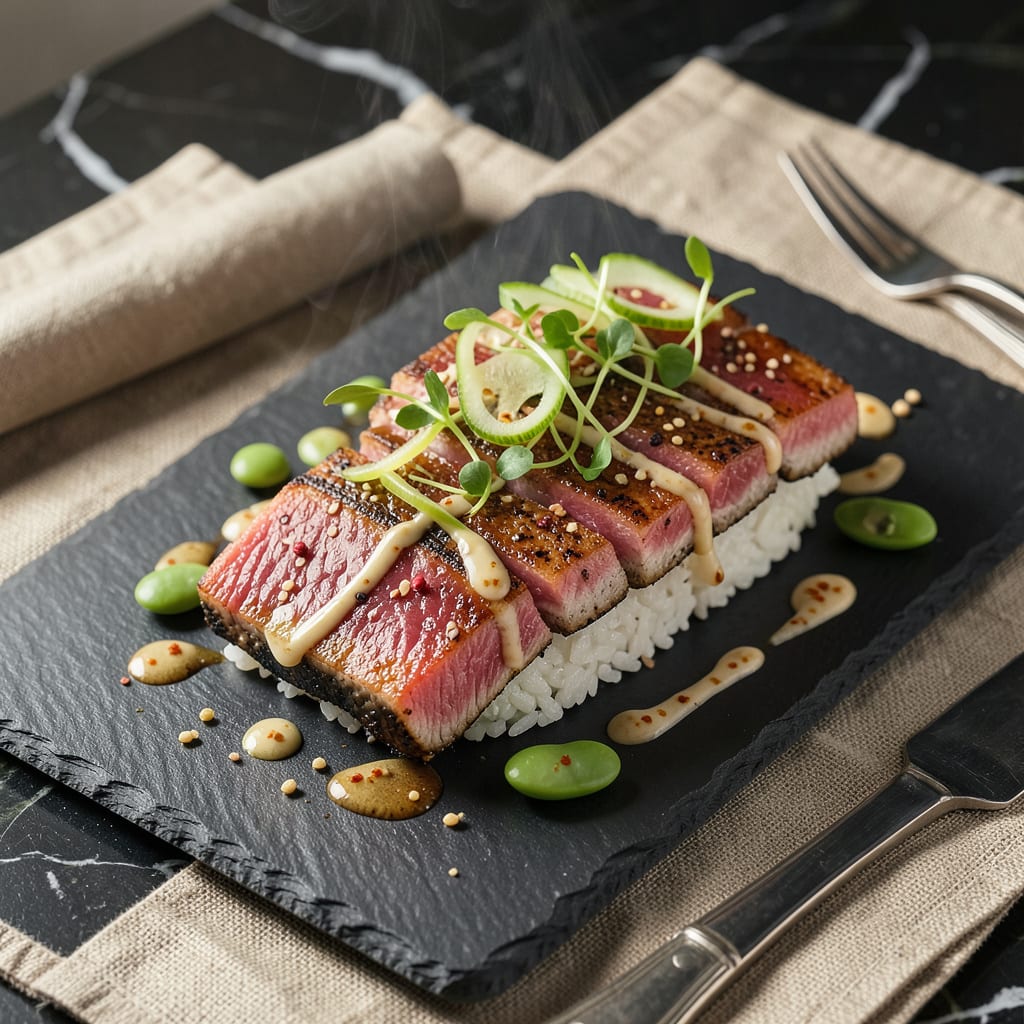
Yes, you can bake ahi tuna, but it requires careful timing to avoid overcooking. Aim for 10-12 minutes at 400°F for medium-rare, preserving its tender texture and rich flavor. Use high heat and monitor closely for best results.
Baking this premium fish unlocks a different experience than searing—it creates a gentle, even warmth that enhances its natural buttery notes. 🔥 I’ve found that the oven’s dry heat concentrates the tuna’s umami flavors while keeping the center velvety, but only if you pull it at the right moment. Unlike sturdier fish like salmon, ahi’s lean composition means it transitions from perfect to dry in under a minute, so precision is everything.
💡 In This Article
- Why Baking Ahi Tuna Requires Precision Temperature Control
- Step-by-Step Guide to Baking Ahi Tuna Without Drying It Out
Why Baking Ahi Tuna Requires Precision Temperature Control
Ahi tuna’s delicate texture comes from its lean muscle structure—unlike fatty fish like salmon (12-15% fat), ahi contains only 1-2% fat. This means there’s no protective fat layer to keep the meat moist during cooking. When exposed to heat, the proteins in ahi tuna coagulate rapidly, squeezing out moisture.
The ideal temperature window for medium-rare is 125-130°F internally, but exceeding 140°F causes irreversible dryness. 🔥
The science lies in how heat denatures the myofibrillar proteins in tuna. At 104°F, collagen begins to contract, pushing out juices. By 122°F, the muscle fibers start tightening permanently. This is why ahi goes from silky to rubbery in under a minute if left too long.
For comparison, cod can handle 145°F because its flakier structure holds moisture differently. The key is using high, dry heat (400°F) to create a quick sear effect while keeping the center rare.
What most home cooks don’t realize is that carryover cooking continues even after removing the fish from the oven. Ahi’s dense structure retains heat exceptionally well—expect the internal temperature to rise another 5-10°F during resting. This is why I always pull my ahi at 120°F and let it coast to perfect medium-rare while resting.
The difference between juicy and dry is literally 30 seconds in a hot oven. ⚡
Oven placement matters too. The top rack exposes the fish to more direct radiant heat, which can cause uneven cooking. I recommend the middle rack for even air circulation, and always use a wire rack over a baking sheet to prevent steam from making the crust soggy.
For thicker cuts (>1.5 inches), consider starting at 425°F for 5 minutes to develop a crust, then dropping to 375°F to finish gently.
Here’s what’s actually happening at the molecular level: the maillard reaction (browning) begins around 300°F, creating those complex flavors we love, but the proteins are simultaneously tightening. The balance is achieving enough browning without overcooking the interior.
This is why professional chefs often use a two-stage cooking process—high heat to sear, then lower heat to finish.
Compare this to baking salmon, which has natural oils that create a buffer against dryness. Ahi’s lack of fat means every degree matters. I’ve found that brushing the surface with a thin layer of oil (1 tsp per fillet) helps conduct heat more evenly while adding a protective barrier.
Even this small amount can buy you an extra 1-2 minutes of cooking time before dryness sets in. 💫
The takeaway? Treat your oven like a precision instrument. Use an instant-read thermometer, check multiple spots in the fish, and remember that visual cues (color change from ruby red to pale pink) happen fast. The reward is perfectly baked ahi with a warm center that melts on your tongue—worth every second of attention to detail.

Trained in classic French technique but raised on slow-cooked ribs and spicy rubs, she blends culinary skill with smoke and soul.
- Recipe for Boneless Pork Chops in Cast Iron Skillet: Sear and Baste to Juicy Perfection - October 3, 2026
- Recipe for Boneless Cross Rib Roast: Slow-Roasted Beef with Herb Crust - October 3, 2026
- Hamburgers in Sauce Recipe Crock Pot: Slow-Cooked Savory Delight - October 3, 2026