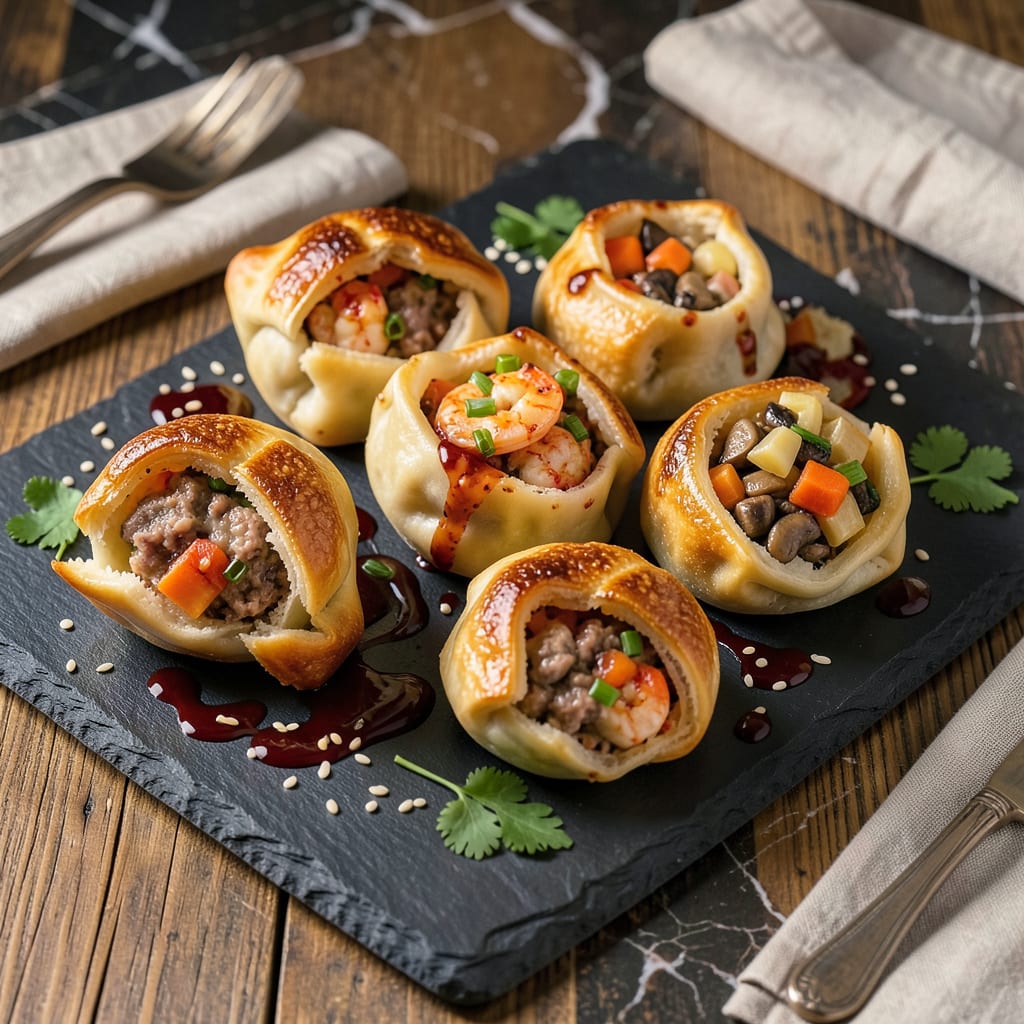
Yes, you can bake dumplings for a crispy, golden finish. Place them on a greased baking sheet at 400°F (200°C) for 15-20 minutes, flipping halfway. Brush with oil for extra crunch and serve with dipping sauce.
This method transforms traditional dumplings into a hands-off, crowd-pleasing dish with minimal effort. 🔥 The oven’s dry heat creates a uniform crispiness that’s hard to achieve with pan-frying, while locking in juicy fillings. I love using this technique for meal prep—just pop them in when guests arrive, and you’ll have perfectly golden bites without hovering over the stove.
What’s fascinating is how baking intensifies flavors through caramelization, giving the wrappers a nutty depth. The key is using high smoke-point oils like avocado or grapeseed for brushing, which prevents burning while maximizing crunch. It’s my go-to for game days or when I need to feed a hungry crowd without sacrificing texture.
💡 In This Article
- Why Baking Dumplings Changes Texture and Flavor
- Step-by-Step Guide to Perfect Baked Dumplings
Why Baking Dumplings Changes Texture and Flavor
The magic happens when dumplings meet dry heat in the oven. Unlike steaming (which keeps wrappers soft and pliable) or pan-frying (which creates uneven crispiness), baking exposes all surfaces to consistent 400°F (200°C) heat. This triggers the Maillard reaction—where amino acids and reducing sugars combine to form new flavor compounds. The result?
A deep golden crust with nutty, toasted notes you won’t get from other methods. 🔥
Moisture behavior differs dramatically in the oven. Traditional steamed dumplings retain about 80-85% moisture in their wrappers, while baked versions lose 20-30% surface moisture during cooking. This evaporation is what creates that satisfying crunch, but it also concentrates the filling flavors.
I’ve found pork fillings become more savory, while vegetable fillings develop caramelized sweetness when baked. The wrapper’s starch content (typically 60-70% in wheat-based dumplings) transforms into a delicate, flaky texture.
Compare this to pan-frying, where only the bottom gets crispy while the top stays soft. Baking gives you 360° of even browning—no flipping required beyond that halfway point. The convection currents in your oven circulate heat around each dumpling, creating uniform texture.
I like to think of it as giving every bite that perfect “first bite” quality you normally only get from the bottom of a pan-fried dumpling.
Temperature control is your secret weapon. At 400°F, the dumpling’s surface reaches the ideal range for both crisping (325-375°F) and caramelization (310-390°F) without burning. The filling stays juicy because the wrapper acts as insulation—it’s why baked dumplings can handle longer cooking times than you’d expect.
I’ve successfully baked frozen dumplings for 22-25 minutes at this temperature with perfect results. ✨
Here’s what most people miss: the oil you brush on isn’t just for crispiness—it conducts heat more efficiently than air alone. A thin layer of high-smoke-point oil (like avocado or grapeseed) raises the surface temperature by about 25°F, accelerating the Maillard reaction.
This is why brushed dumplings develop that glossy, restaurant-quality sheen and extra crunch layer that makes them irresistible.
The flavor transformation extends beyond texture. As moisture evaporates from the wrapper, soluble flavor compounds in the filling become more concentrated. A pork and cabbage filling might taste 20-30% more intense when baked versus steamed, with the cabbage developing subtle sweetness from caramelization.
Even simple chicken fillings take on deeper umami notes when exposed to dry heat. 🌟
Pro tip: For extra flavor complexity, sprinkle baked dumplings with flaky sea salt immediately after removing from the oven. The salt adheres to the crispy surface and enhances all those newly developed caramelized flavors. It’s the same principle that makes pretzels so addictive—the contrast of salty crunch with rich, concentrated filling is pure magic.

Trained in classic French technique but raised on slow-cooked ribs and spicy rubs, she blends culinary skill with smoke and soul.
- Recipe for Boneless Pork Chops in Cast Iron Skillet: Sear and Baste to Juicy Perfection - October 3, 2026
- Recipe for Boneless Cross Rib Roast: Slow-Roasted Beef with Herb Crust - October 3, 2026
- Hamburgers in Sauce Recipe Crock Pot: Slow-Cooked Savory Delight - October 3, 2026