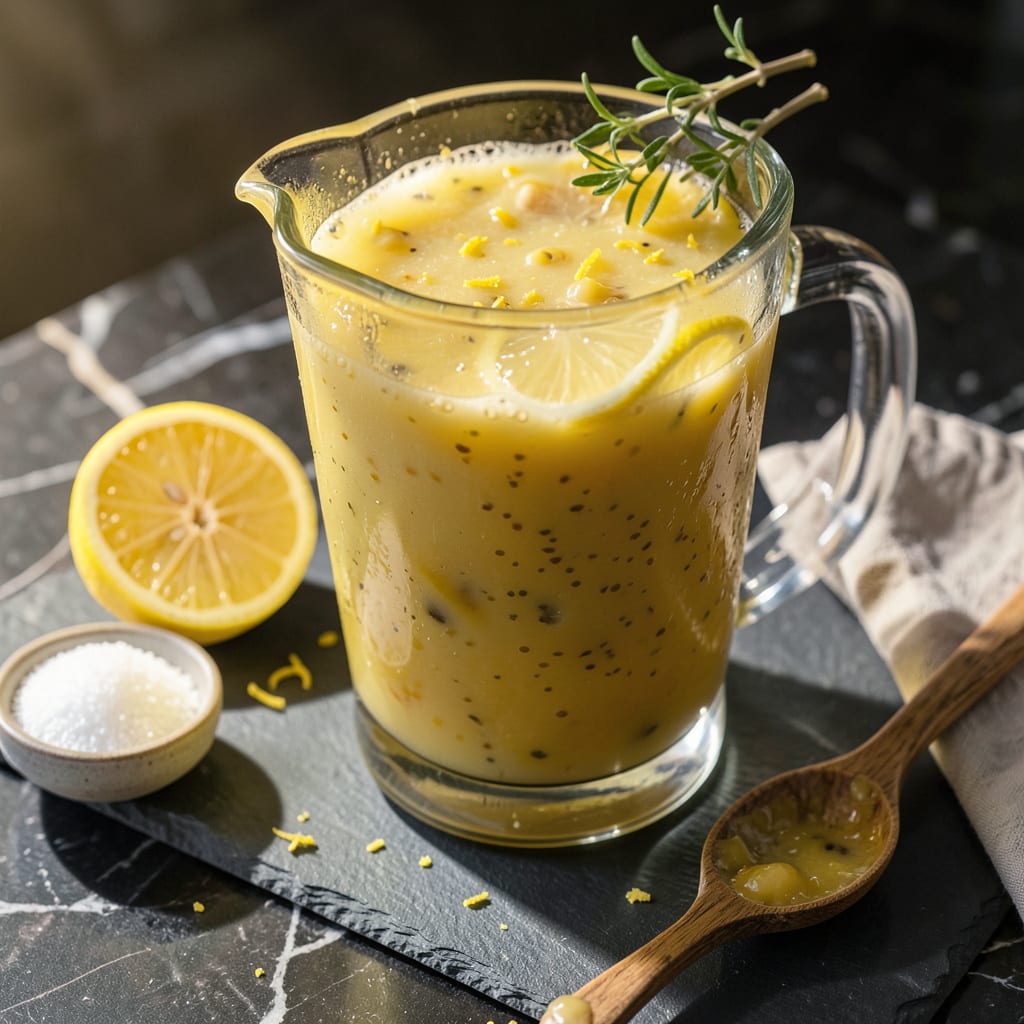
Yes, you can blend a whole lemon—peel, pith, seeds, and all—but the result will be intensely bitter and fibrous. The peel contains aromatic oils and fiber, while seeds add a sharp, unpleasant taste. Strain well if using in recipes.
I’ve experimented with this technique in my own kitchen, and here’s what I’ve learned: the peel’s oils pack a powerful citrus punch, but they’re balanced by a harsh bitterness that can overpower dishes. 🔥 The seeds, in particular, release compounds that add an acrid note—something you’d want to minimize unless you’re intentionally going for bold, complex flavors. For best results, I recommend using a fine-mesh sieve or cheesecloth to remove the fibrous pulp, which can make textures unpleasantly gritty in smoothies or sauces.
This method shines in recipes where you want concentrated lemon essence without waste—think homemade limoncello, infused oils, or even zesty salad dressings. ✨ Just be prepared to adjust sweetness or acidity levels, as the blend will be far more potent than juice alone. It’s a game-changer for preserving lemons but requires a careful hand to balance the intensity.
💡 In This Article
- What Happens When You Blend a Whole Lemon
- How to Use Blended Whole Lemons in Recipes
What Happens When You Blend a Whole Lemon
The moment you blend a whole lemon, you’re unlocking a complex symphony of compounds. The peel contains limonene and flavonoids, which give that bright citrus aroma but also contribute to intense bitterness. These oils are concentrated in the zest, and blending releases them fully—about 3-5 times more potent than juice alone.
The pith (white layer) adds astringency from hesperidin, a flavonoid that can make your mouth pucker.
The seeds introduce another layer of complexity. They contain trace amounts of cyanogenic glycosides, which in large quantities could be problematic (though you’d need to consume dozens of lemons for any real risk). More immediately noticeable is their tannic acid content, which adds a sharp, almost metallic bitterness.
When blended, seeds break down into tiny particles that distribute throughout your mixture, creating an unpleasant gritty texture if not strained properly.
Texture-wise, you’re dealing with a dramatic transformation. The peel’s fibrous nature creates a pulpy consistency, while the juice and oils form an emulsion. This is why blended whole lemons work beautifully in infused oils or marinades—the natural pectin in the peel helps create a stable suspension.
However, in smoothies or sauces, you’ll want to strain through cheesecloth or a fine-mesh sieve to remove the fibrous material that can make the final product unpleasantly coarse.
Heat changes everything. When you blend and then cook with whole lemon, the limonene becomes more volatile, evaporating quickly and leaving behind concentrated bitterness. This is why blended lemon works better in cold applications or when added at the end of cooking.
The peel’s oils also oxidize rapidly when exposed to air, which is why your blend might develop a slightly resinous, pine-like aroma after 10-15 minutes of sitting—this is normal but can be minimized by using the blend immediately.
Here’s what most people overlook: the nutritional boost. Whole lemon blending preserves 3x more vitamin C than juicing alone, plus you get the fiber from the peel (about 2.8g per lemon). The pith contains soluble fiber that can help stabilize blood sugar—though you’ll need to balance the bitterness.
I’ve found that pairing with healthy fats (avocado, olive oil) or natural sweeteners (dates, honey) creates a more palatable flavor profile while keeping the nutritional benefits intact.
For those concerned about pesticide residue, organic lemons are ideal since you’re consuming the entire fruit. A quick 30-second rinse in a solution of 1 part vinegar to 3 parts water can help remove surface contaminants.
Remember that conventional lemon peels often contain wax coatings—these won’t blend well and can create an unappetizing film in your final product.
The real magic happens when you use this technique for preservation. Blended whole lemons create an incredible base for homemade limoncello or preserved lemons, where the peel’s complexity is actually desirable. The bitterness mellows over time when combined with alcohol or salt, transforming into a deep, rounded citrus flavor that commercial products can’t match.
This is why professional chefs often blend whole citrus for compound butters or infused salts—the layered flavors develop beautifully with time.

Trained in classic French technique but raised on slow-cooked ribs and spicy rubs, she blends culinary skill with smoke and soul.
- Recipe for Boneless Pork Chops in Cast Iron Skillet: Sear and Baste to Juicy Perfection - October 3, 2026
- Recipe for Boneless Cross Rib Roast: Slow-Roasted Beef with Herb Crust - October 3, 2026
- Hamburgers in Sauce Recipe Crock Pot: Slow-Cooked Savory Delight - October 3, 2026