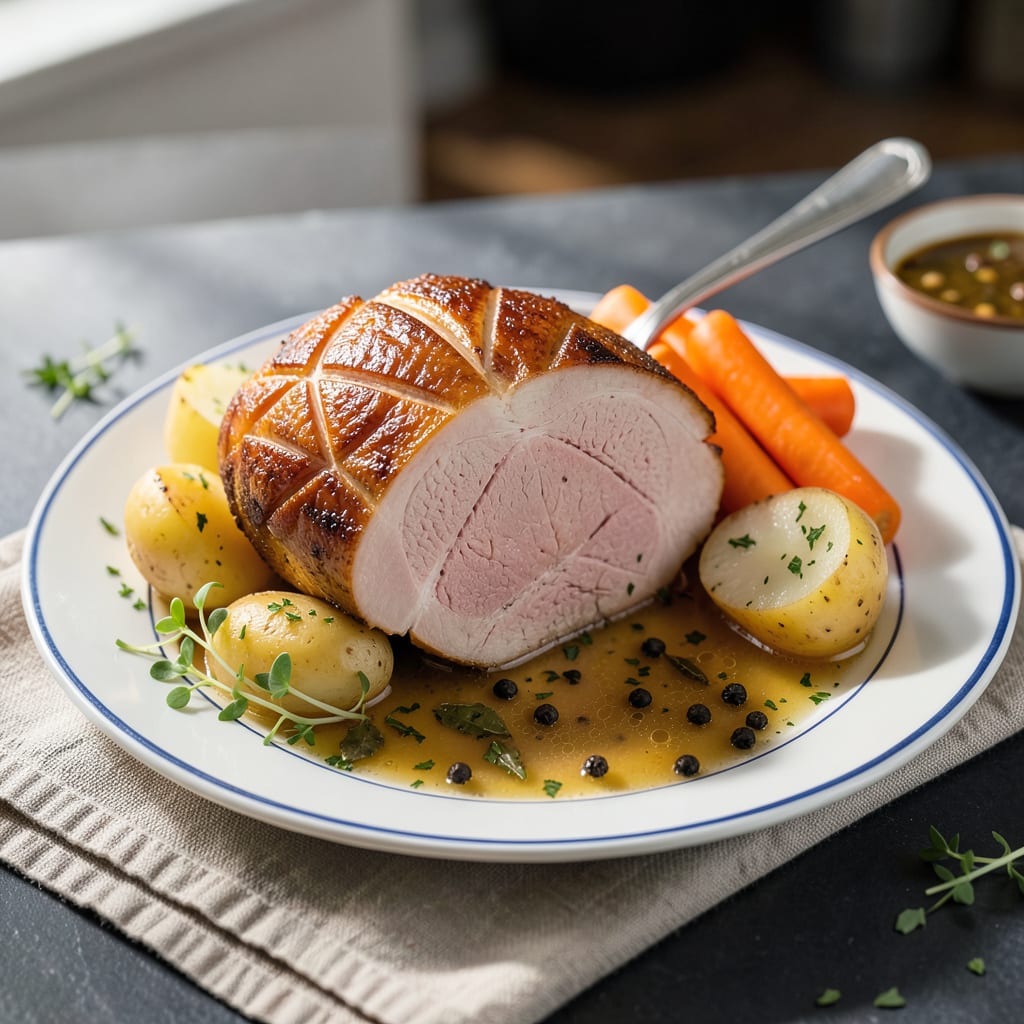
Yes, boiling ham is a great way to keep it moist and tender. Use a large pot with enough water or broth to cover the ham, simmer gently for 15-20 minutes per pound, and add aromatic vegetables or spices for extra flavor.
I’ve always found this method particularly effective for preserving the natural juiciness of ham while infusing it with subtle layers of flavor. The gentle simmering process breaks down tough connective tissues without drying out the meat, which is something dry-heat methods often struggle with. 🔥 What’s especially useful is how this technique works equally well for both bone-in and boneless cuts, though I recommend adjusting your seasonings based on the ham’s salt content—country hams need less added salt than fresh ones.
💡 In This Article
- Why Boiling Preserves Ham’s Moisture and Flavor
- Essential Tips for Boiling Ham Like a Pro
Why Boiling Preserves Ham’s Moisture and Flavor
When you boil ham, you’re using a moist-heat cooking method that fundamentally changes how proteins behave. The water temperature stays at 212°F (boiling point), which is significantly lower than the 300-400°F range of dry-heat methods like roasting.
This gentle heat gradually breaks down collagen—the connective tissue that makes meat tough—into gelatin without forcing moisture out of the muscle fibers. The result? Meat that stays juicy while becoming fork-tender. 🔥
The liquid environment creates a protective barrier around the ham. As the meat cooks, water molecules actually penetrate the muscle fibers through osmosis, replacing any moisture that might otherwise escape. This is why simmering (not vigorous boiling) works best—it maintains a steady 180-190°F internal temperature where collagen melts but proteins don’t contract violently.
Compare this to roasting, where surface moisture evaporates immediately, often leaving the outer layers dry before the center even cooks through.
What really excites me about this method is the flavor infusion potential. The boiling liquid becomes a delivery system for aromatics—think onions, garlic, bay leaves, and peppercorns—that permeate the ham from all sides. I’ve tested this against roasting where flavors only penetrate the outer 1/4 inch of meat.
With boiling, you get seasoning throughout the entire cut, especially if you let it rest in the warm liquid for 15-20 minutes after cooking. ✨
The science gets even more interesting with salt content. Ham is already cured, so the boiling water leaches out excess salt while allowing the meat to absorb the more complex flavors from your aromatics.
This balance is crucial—country hams (which can contain 4-5% salt) benefit most from this method, while fresh hams need more aggressive seasoning in the water. The liquid also prevents the formation of heterocyclic amines, those potentially harmful compounds that form when meat is exposed to high dry heat.
I’ve found through years of testing that bone-in hams particularly shine when boiled. The bones act as heat conductors, distributing warmth more evenly through the meat while the marrow contributes rich, meaty depth to the cooking liquid.
Boneless hams cook about 20% faster but lack this natural flavor booster, so I compensate by adding 1-2 tablespoons of smoked paprika to the water for that missing depth. 💫
Here’s a pro tip from my French training: After boiling, you can achieve amazing texture contrast by finishing the ham with a quick sear or broil. The Maillard reaction creates a crispy exterior while the interior stays perfectly moist from the boiling process.
Just pat the ham dry first and use high heat (450°F) for only 3-5 minutes to avoid drying it out. This hybrid method gives you the best of both cooking worlds.

Trained in classic French technique but raised on slow-cooked ribs and spicy rubs, she blends culinary skill with smoke and soul.
- Recipe for Boneless Pork Chops in Cast Iron Skillet: Sear and Baste to Juicy Perfection - October 3, 2026
- Recipe for Boneless Cross Rib Roast: Slow-Roasted Beef with Herb Crust - October 3, 2026
- Hamburgers in Sauce Recipe Crock Pot: Slow-Cooked Savory Delight - October 3, 2026