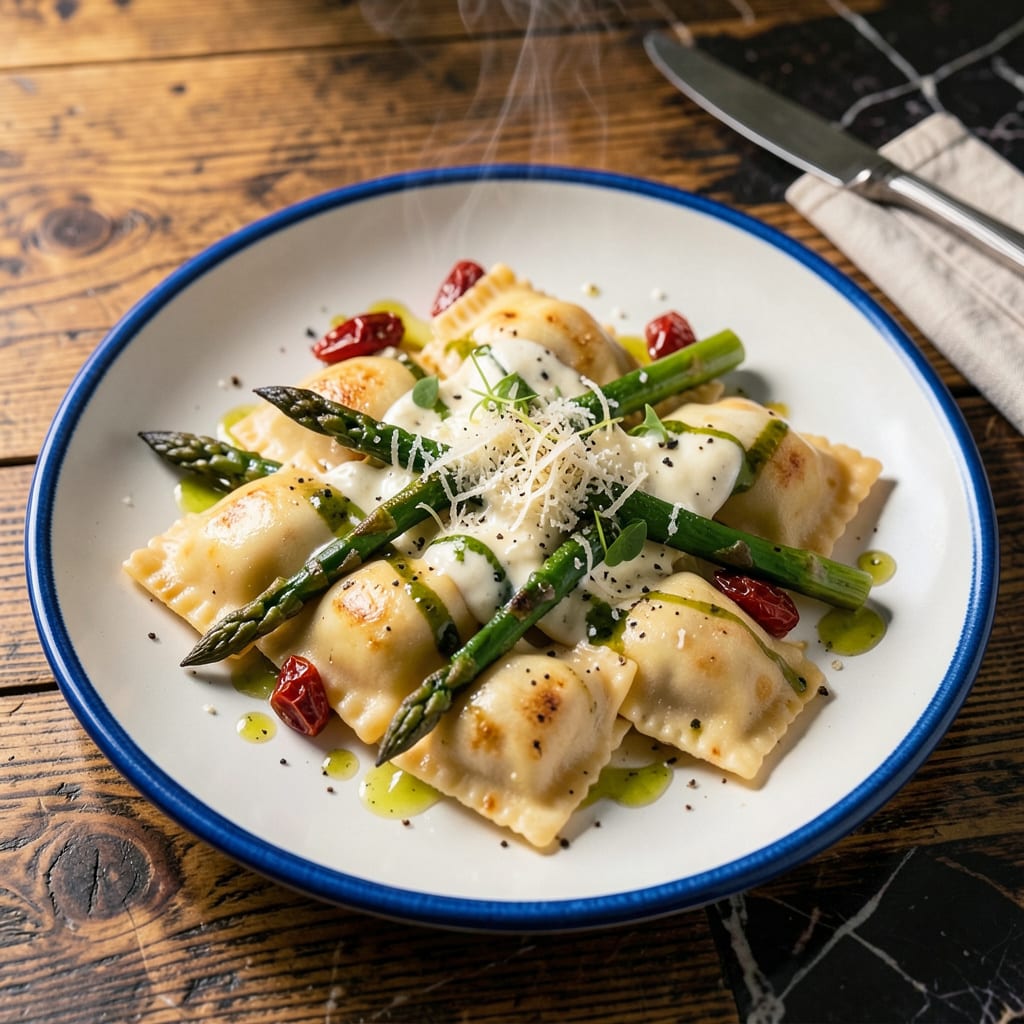
Boil Costco ravioli in salted water for 3-5 minutes until they float, then drain gently. Avoid overcrowding the pot and test one piece for doneness before serving with your favorite sauce.
I’ve found that Costco’s ravioli cooks faster than store-bought dried pasta because it’s typically fresh or flash-frozen, which means the dough hydrates quickly. 🔥 The floating test is your best indicator—the moment they rise to the surface, you’re about 60 seconds away from perfect doneness. What most people overlook is the salt concentration: aim for water that tastes like the sea to enhance the filling’s flavors without overpowering them.
Pro tip from my kitchen: Use a slotted spoon instead of a colander to prevent delicate ravioli from tearing. ✨ This method gives you more control, especially when dealing with cheese-filled varieties that can burst if drained too aggressively. I always reserve a cup of pasta water to adjust sauce consistency later—it’s the secret to restaurant-quality results at home.
💡 In This Article
- Why Boiling Time Matters for Costco Ravioli
- Best Sauces and Toppings for Costco Ravioli
Why Boiling Time Matters for Costco Ravioli
The magic happens when Costco’s fresh or frozen ravioli hit hot water. Unlike dried pasta that needs 10-12 minutes to rehydrate, these cook in 3-5 minutes because the dough contains eggs and higher moisture content.
The moment they float, the gluten network has relaxed enough to trap air bubbles—but you’ve got exactly 60 seconds before the filling becomes overcooked. This is why testing one piece is non-negotiable.
Here’s what’s actually happening in your pot: The outer dough absorbs water rapidly, while the filling (whether cheese or meat) heats through more slowly. Fresh ravioli contain about 30% moisture compared to dried pasta’s 12%, which means they soften almost instantly.
The floating test works because the expanding air pockets inside create buoyancy—just like a perfect soufflé rising in the oven. 🔥
Temperature control is everything. Water should maintain a gentle rolling boil at 212°F—not a violent churn. Too aggressive and the delicate edges may rupture; too weak and the dough turns gummy. I use a ratio of 4 quarts water per pound of ravioli to prevent temperature drops when adding the pasta.
This mimics restaurant conditions where consistency is key.
What most people don’t realize is that salt concentration affects texture. The ideal salinity (about 1 tablespoon per quart) strengthens the gluten just enough to prevent mushiness while enhancing flavor. Costco’s ravioli often have thinner dough than homemade versions, so they require 20% less cooking time than you might expect.
Always taste-test—the center should be creamy but the wrapper still slightly resistant.
Consider the filling type: Cheese-filled varieties cook faster than meat-filled because proteins in meat require 185°F internal temperature to be safe, while cheese melts at 160°F. This is why I recommend removing cheese ravioli at the first float, but giving meat-filled an extra 30-45 seconds.
The difference is subtle but makes all the difference in texture.
Pro tip from my test kitchen: Add a splash of olive oil to the water. While it won’t prevent sticking (that’s a myth), it creates a thin protective layer on the ravioli surface that helps maintain their shape during draining.
✨ This is especially useful with Costco’s larger ravioli that can stick together if crowded in the pot.

Trained in classic French technique but raised on slow-cooked ribs and spicy rubs, she blends culinary skill with smoke and soul.
- Recipe for Boneless Pork Chops in Cast Iron Skillet: Sear and Baste to Juicy Perfection - October 3, 2026
- Recipe for Boneless Cross Rib Roast: Slow-Roasted Beef with Herb Crust - October 3, 2026
- Hamburgers in Sauce Recipe Crock Pot: Slow-Cooked Savory Delight - October 3, 2026