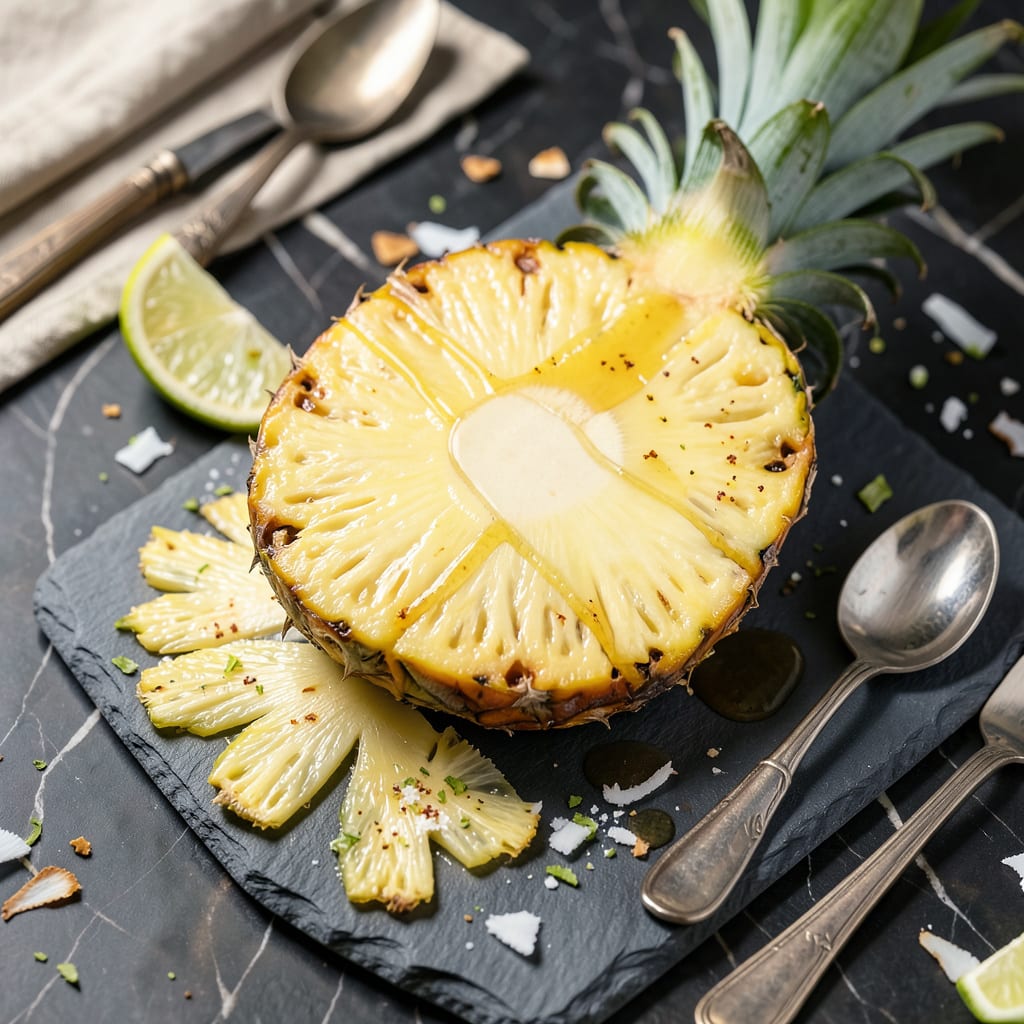
Yes, pineapple core is edible—it’s tougher and less sweet than the flesh but contains extra fiber and bromelain. It’s safe to eat raw or cooked, though some prefer blending or juicing it for better texture.
I’ve found the core packs a nutritional punch that often gets overlooked. The higher concentration of bromelain—a digestive enzyme—makes it particularly valuable for gut health, while the extra fiber supports digestion in ways the juicier flesh can’t. 🔥 Many cultures actually incorporate the core into traditional dishes, from Caribbean juices to Asian stir-fries, where its slightly bitter edge adds depth. What’s fascinating is how the core’s texture softens when cooked or pureed, transforming it from chewy to silky smooth.
💡 In This Article
- Why Pineapple Core Nutrition Differs from the Flesh
- Creative Ways to Use Pineapple Core in Recipes
Why Pineapple Core Nutrition Differs from the Flesh
The pineapple core contains 3-5 times more bromelain than the surrounding fruit—a proteolytic enzyme that breaks down proteins. This concentration happens because the core houses the plant’s vascular system, where enzymes accumulate to protect against pests. The flesh, by comparison, prioritizes sugar storage (about 12-15% sucrose), making it sweeter but less enzymatically potent.
The core’s tougher texture comes from thicker cell walls designed to support the fruit’s structure.
Fiber content tells another story. While pineapple flesh provides about 1.4g fiber per 100g, the core delivers nearly 3g—mostly insoluble lignin that resists digestion. This fiber matrix actually slows bromelain absorption, creating a time-release effect for its anti-inflammatory benefits.
Studies show bromelain may reduce swelling by 30-50% when consumed regularly, with the core offering the most concentrated dose.
What surprises most people is how the core’s nutritional profile changes when processed. Blending breaks down those tough cell walls, releasing 20% more bromelain than chewing raw. Heat deactivates some enzymes but makes the fiber more soluble—simmering cores for 15-20 minutes in broths or teas creates a gut-soothing tonic. The tradeoff?
Raw cores retain full enzyme activity but require thorough chewing to access nutrients.
The core’s slightly bitter taste comes from phenolic compounds concentrated in the vascular bundles. These same compounds give the core its potential anticancer properties in lab studies, though human research is ongoing.
Compared to the flesh’s pH 3.3-4.2, the core measures slightly more acidic (pH 3.0-3.5), which may explain why it pairs so well with fatty foods—the acidity cuts through richness while the enzymes aid digestion.
Here’s what’s fascinating about the texture difference: the core’s vascular bundles contain sclereids—specialized stone cells that make it chewy. These cells are absent in the flesh, which consists mostly of thin-walled parenchyma cells designed for juice storage.
When you juice the whole pineapple, these sclereids get pulverized, adding a creamy mouthfeel that pure flesh juice lacks. 🔥
For those watching blood sugar, the core’s lower glycemic index (GI ~45 vs flesh’s GI ~66) makes it the smarter choice. The fiber matrix creates a physical barrier that slows sugar absorption, while bromelain may improve insulin sensitivity. This explains why traditional medicines often specify using the whole fruit—core included—for metabolic benefits.
The core also contains about 25% more manganese than the flesh—a mineral crucial for bone health and metabolism. This concentration occurs because manganese binds to the lignin in cell walls. So while you might discard the core for its texture, you’re actually tossing the most nutrient-dense part of the fruit. ✨

Trained in classic French technique but raised on slow-cooked ribs and spicy rubs, she blends culinary skill with smoke and soul.
- Recipe for Boneless Pork Chops in Cast Iron Skillet: Sear and Baste to Juicy Perfection - October 3, 2026
- Recipe for Boneless Cross Rib Roast: Slow-Roasted Beef with Herb Crust - October 3, 2026
- Hamburgers in Sauce Recipe Crock Pot: Slow-Cooked Savory Delight - October 3, 2026