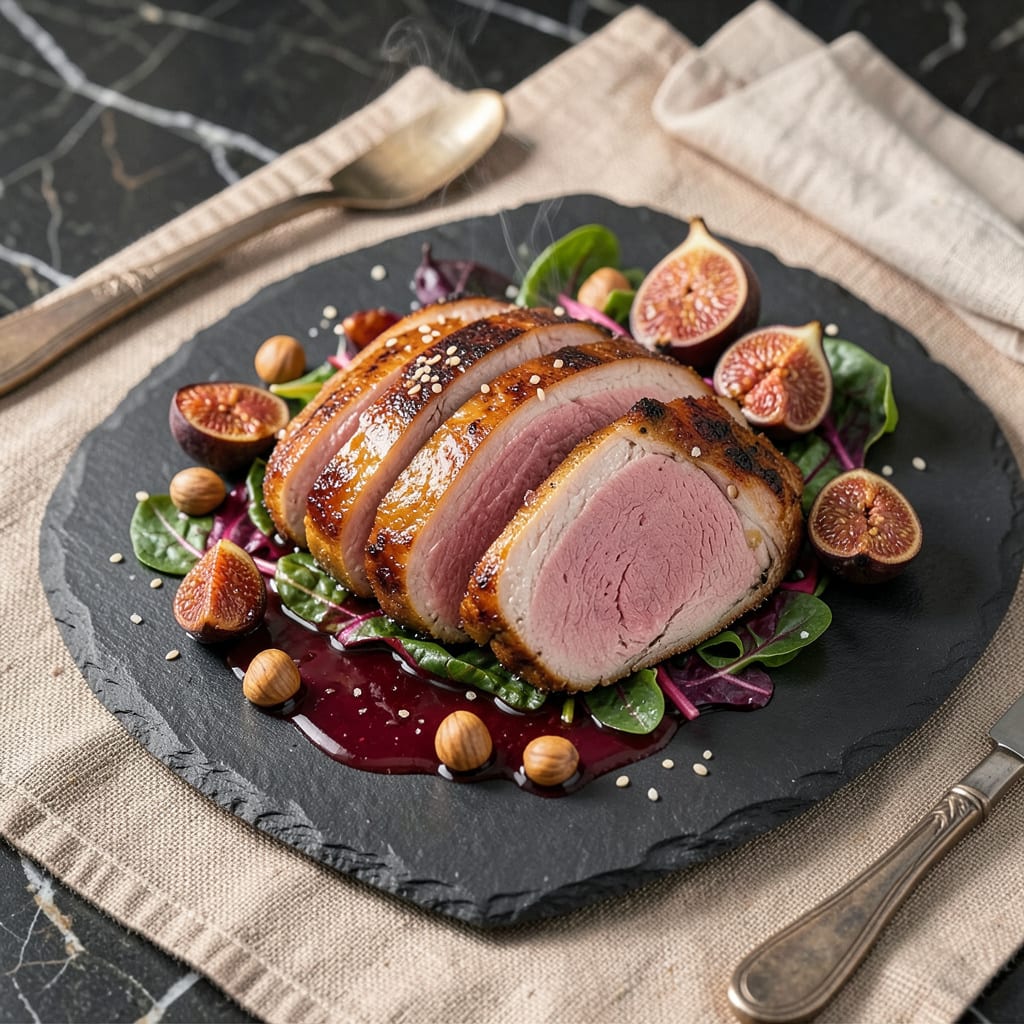
Duck can be eaten rare, but unlike beef, it requires careful handling due to higher risk of pathogens like salmonella. USDA recommends cooking whole duck to 165°F, though some chefs serve breast rare (130-135°F) with proper sourcing and preparation.
As a chef who’s worked with both beef and poultry, I’ve learned that duck’s fat distribution and waterfowl biology create unique challenges. 🔥 The subcutaneous fat layer insulates the meat, making even heat penetration difficult—this is why professional kitchens use precise techniques like sous vide or controlled searing when serving duck at lower temperatures. What many don’t realize is that farm-raised ducks (the kind most home cooks use) have different bacterial profiles than wild game, which significantly changes the risk equation.
In my experience, the key difference from beef lies in the muscle structure and natural bacteria load. While a rare steak’s exterior gets sterilized during searing, duck’s dense fat layer can shield pathogens. That’s why I always emphasize sourcing from reputable farms that follow strict processing standards—it’s the foundation for safely exploring rarer preparations. ✨
💡 In This Article
- Food Safety Risks of Undercooked Duck Meat
- Restaurant Techniques for Serving Rare Duck Safely
Food Safety Risks of Undercooked Duck Meat
Duck’s unique biology makes it riskier than beef when served rare. Unlike cattle, ducks naturally carry salmonella and campylobacter in their digestive tracts, with contamination rates up to 60% in some studies. The fat layer just beneath duck skin acts like insulation, preventing heat from penetrating evenly during cooking.
This means even if the exterior reaches safe temperatures, the interior might remain in the danger zone where bacteria thrive.
What complicates matters is duck’s muscle structure. Waterfowl have more connective tissue than mammals, requiring longer cooking times to break down properly. Farm-raised ducks (like Pekin) are particularly vulnerable because they’re raised in controlled environments where bacteria can spread easily. Wild ducks, while leaner, carry their own risks from environmental contaminants.
The USDA’s 165°F recommendation accounts for these factors, though professional kitchens sometimes use alternative methods.
The fat distribution also affects safety. Duck fat has a lower melting point (76°F) than beef fat (115°F), meaning it renders quickly but can shield bacteria. When I worked in French kitchens, we’d often remove the fat cap before cooking to improve heat penetration.
This technique, combined with precise temperature monitoring, allowed us to serve duck at lower temperatures while maintaining safety standards. 🔥
Another critical factor is the bird’s age and diet. Younger ducks (under 16 weeks) have more tender meat but higher moisture content, creating ideal conditions for bacterial growth. Grain-fed ducks develop more subcutaneous fat than forage-raised, further complicating heat distribution.
These variables explain why professional chefs insist on knowing their duck’s provenance before attempting rare preparations.
Food safety organizations emphasize that the risk isn’t just about temperature—it’s about time and distribution. Pathogens need to be destroyed throughout the meat, not just on the surface. This is why sous vide methods have become popular in high-end restaurants, allowing precise temperature control over extended periods to pasteurize the meat without overcooking. ✨
For home cooks, the safest approach is using a meat thermometer to verify internal temperatures in multiple spots, especially near bones where heat penetration is slowest. I always recommend erring on the side of caution with poultry, as the consequences of undercooking can be severe.
The difference between a perfectly rare duck breast and a dangerous one can be just 5°F in the wrong spot.
Remember that visual cues are unreliable with duck. The meat can appear cooked at the surface while remaining undercooked internally due to that insulating fat layer. This is why professional kitchens use multiple verification methods, including probe thermometers and timed cooking processes, to ensure safety when serving duck at lower temperatures. 🌟

Trained in classic French technique but raised on slow-cooked ribs and spicy rubs, she blends culinary skill with smoke and soul.
- Recipe for Boneless Pork Chops in Cast Iron Skillet: Sear and Baste to Juicy Perfection - October 3, 2026
- Recipe for Boneless Cross Rib Roast: Slow-Roasted Beef with Herb Crust - October 3, 2026
- Hamburgers in Sauce Recipe Crock Pot: Slow-Cooked Savory Delight - October 3, 2026