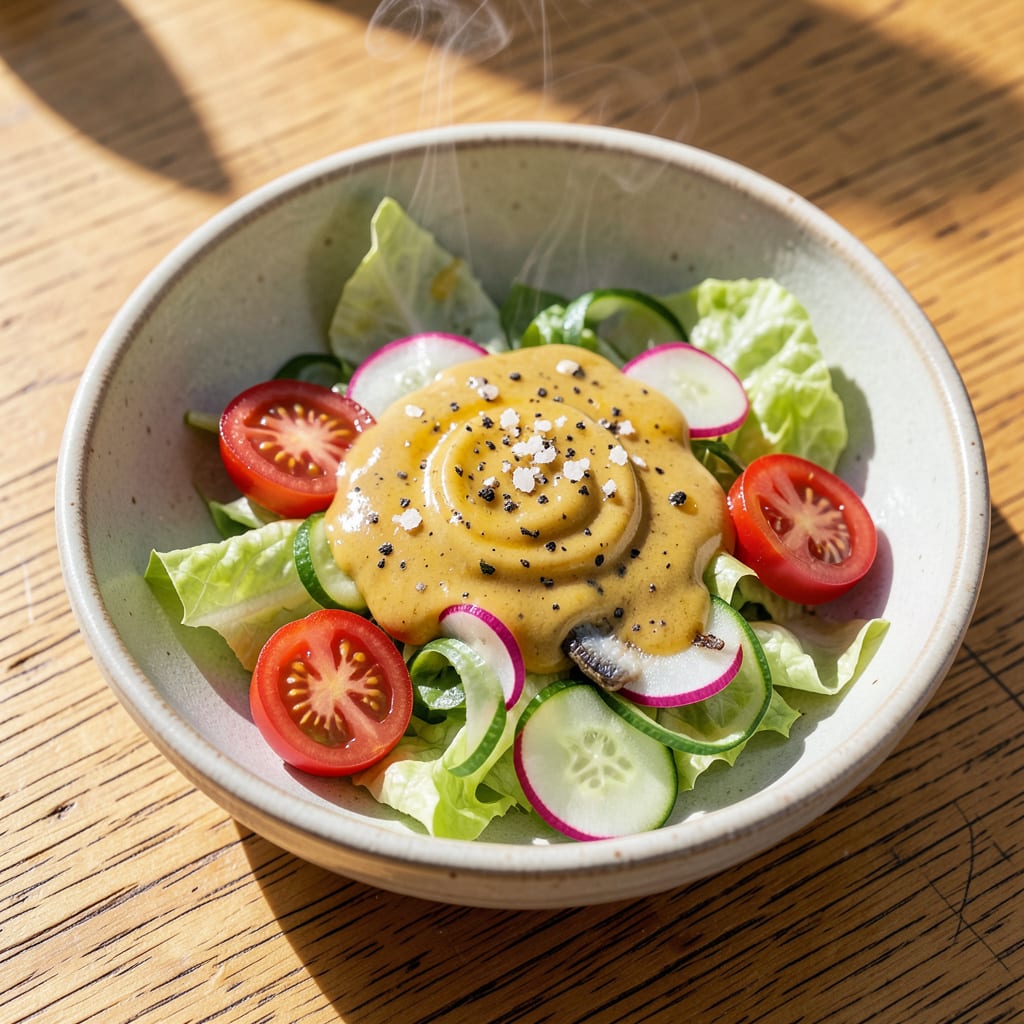
Vinaigrette delivers a bright, tangy flavor with a balanced mix of acidity from vinegar or citrus, richness from oil, and often subtle sweetness or herbal notes. The texture is light and slightly emulsified, coating ingredients without heaviness.
What I love about vinaigrette is how it transforms simple ingredients into something extraordinary. The secret lies in its ability to dance between sharpness and smoothness—imagine the zing of lemon juice mellowed by extra virgin olive oil, or the depth of aged balsamic balanced with a touch of Dijon mustard. 🔥 This isn’t just about taste; it’s about creating harmony on your plate. The light, silky texture clings just enough to elevate every bite, whether you’re dressing delicate greens or marinating hearty proteins.
💡 In This Article
- Breaking Down Vinaigrette’s Core Flavor Components
- Perfect Pairings: How to Use Vinaigrette Beyond Salads
Breaking Down Vinaigrette’s Core Flavor Components
The magic of vinaigrette starts with its foundational ratio: typically 3 parts oil to 1 part acid. This balance creates that signature bright tanginess while the oil smooths out the sharp edges.
The acid component—whether it’s red wine vinegar (bold and fruity), apple cider vinegar (mildly sweet), or fresh lemon juice (clean and citrusy)—determines the dominant flavor profile. Each acid brings its own personality to the party. 🔥
Emulsifiers like Dijon mustard or honey play a crucial role in both texture and taste. Mustard contains lecithin, which helps bind oil and vinegar into a temporary emulsion, creating that silky mouthfeel. Meanwhile, sweeteners like maple syrup or agave (typically 1/2 to 1 teaspoon per 1/4 cup vinegar) round out the acidity.
I’ve found that even a small amount of sweetener can transform a harsh vinaigrette into something beautifully balanced. ✨
The oil selection dramatically impacts the final flavor. Extra virgin olive oil adds peppery, fruity notes, while neutral oils like avocado oil let the acid and seasonings shine. Infused oils (think chili oil or garlic oil) can add depth without extra ingredients.
The key is choosing an oil that complements your acid—like pairing delicate white balsamic with fruity walnut oil for an elegant touch. 💫
Fresh herbs and aromatics take vinaigrette to the next level. A tablespoon of finely chopped tarragon or dill adds complexity, while minced shallots or garlic (about 1/2 teaspoon) introduce subtle sharpness. The difference between a basic vinaigrette and a restaurant-quality one often comes down to these small but mighty additions.
I always recommend letting the dressing sit for 10-15 minutes before using to allow flavors to meld. ⚡
Temperature matters more than most realize. Serving vinaigrette at room temperature (65-70°F) ensures the oil remains fluid and the flavors express fully. Cold straight from the fridge can make the oil congeal slightly, muting the bright acidity.
This is why I always pull my vinaigrette out 30 minutes before dressing a salad—it makes all the difference in how the flavors coat your ingredients. 🌟
For those who love to experiment, consider these flavor boosters:
- Umami depth: Add 1/2 teaspoon soy sauce or Worcestershire
- Spicy kick: Include 1/4 teaspoon red pepper flakes or hot sauce
- Creamy texture: Whisk in 1 teaspoon tahini or Greek yogurt
The beauty of vinaigrette lies in its adaptability. Whether you’re dressing bitter greens that need sweetness or rich meats that can handle bold acidity, adjusting these core components lets you create the perfect flavor balance for any dish. That’s why I consider it the ultimate culinary chameleon in my kitchen arsenal. 💛

Trained in classic French technique but raised on slow-cooked ribs and spicy rubs, she blends culinary skill with smoke and soul.
- Recipe for Boneless Pork Chops in Cast Iron Skillet: Sear and Baste to Juicy Perfection - October 3, 2026
- Recipe for Boneless Cross Rib Roast: Slow-Roasted Beef with Herb Crust - October 3, 2026
- Hamburgers in Sauce Recipe Crock Pot: Slow-Cooked Savory Delight - October 3, 2026