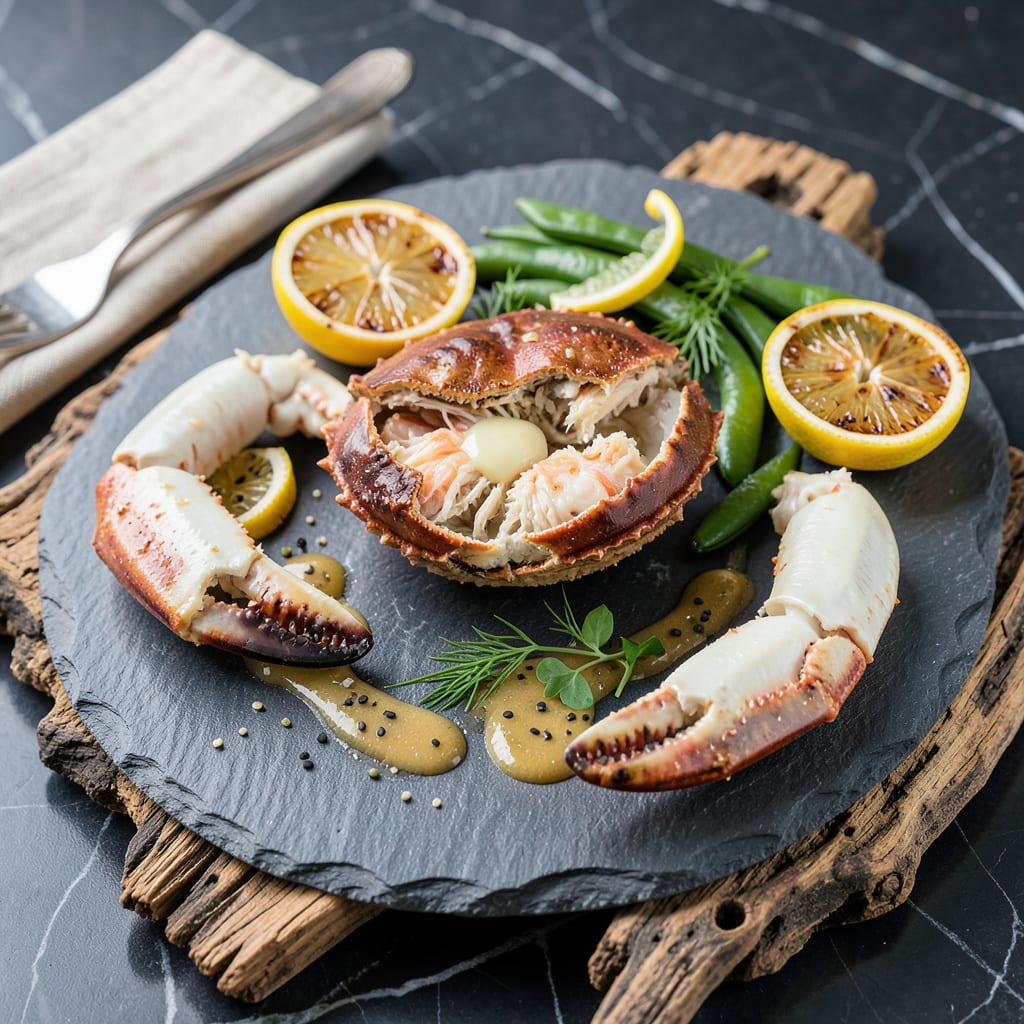
Yes, you can eat parts of the king crab body, particularly the meat inside the main shell and smaller pockets in the legs and claws. However, avoid the gills, stomach sac, and intestinal tract, as these are inedible and may contain harmful bacteria.
I love working with king crab because its body holds hidden pockets of sweet, delicate meat that many people overlook. The main shell cavity contains tomalley (the liver-like substance) and body meat that’s perfect for soups or dips. 🔥 What surprises most home cooks is how much edible meat exists in the leg joints and claw hinges—these areas often yield tender morsels that rival the famous leg meat. The key is knowing where to look and how to extract it safely without damaging the texture.
💡 In This Article
- Identifying Edible vs Inedible Parts of King Crab
- How to Safely Extract Meat from King Crab Body
Identifying Edible vs Inedible Parts of King Crab
The king crab’s body is a treasure trove of meat if you know where to look. The tomalley (that greenish paste in the main shell) is actually the crab’s liver and pancreas—rich, buttery, and prized in many cuisines.
You’ll also find sweet, flaky meat tucked in the body cavity and smaller pockets near the leg joints. These areas contain about 20-30% of the crab’s total edible meat, though most people focus only on the legs and claws. 🔥
What makes some parts unsafe are the gills (those feathery structures on the sides) and the stomach sac (a small pouch near the mouth). These act as natural filters, accumulating sand, bacteria, and potential toxins. The gills alone can contain up to 10x more bacteria than the edible meat.
Even the shell’s inner lining should be avoided—it’s not toxic but has a papery texture that’s unpleasant to eat.
Here’s how to spot the good stuff: The edible body meat appears as opaque white or pinkish flakes that separate easily when cooked. In contrast, inedible parts like the intestinal tract (a thin dark line running through the body) will look fibrous and discolored.
A good rule of thumb—if it doesn’t flake or smells overly fishy, it’s not meant for eating. ✨
The leg joints and claw hinges often surprise people with their hidden meat. These areas contain tender, sweet morsels that are denser than the leg meat but just as flavorful. I’ve found that gently twisting the legs often reveals these pockets—each joint can yield about 1-2 teaspoons of meat.
The texture here is almost lobster-like, with a slight snap when you bite into it. 💫
Temperature matters when assessing edibility. Properly cooked crab meat should reach 145°F internally, turning from translucent to solid white. Undercooked meat appears grayish and jelly-like, while overcooked becomes rubbery. The tomalley, when safe to eat (from healthy crabs), should have a creamy consistency similar to foie gras but with a briny finish.
For those foraging wild king crab, pay extra attention to the hepatopancreas color. In healthy specimens, it ranges from mustard yellow to olive green. Any reddish or black tinges indicate potential contamination.
Commercial crabs are typically pre-cleaned, but I always recommend rinsing the body cavity under cold water before cooking to remove any residual sand or debris. ⚡
Remember that female king crabs often have less body meat than males, as their shells are designed to protect developing eggs. The meat-to-shell ratio can vary by 15-20% between genders. This is why many processors prefer males for commercial harvest—they yield more edible portion per pound of whole crab. 🌟

Trained in classic French technique but raised on slow-cooked ribs and spicy rubs, she blends culinary skill with smoke and soul.
- Recipe for Boneless Pork Chops in Cast Iron Skillet: Sear and Baste to Juicy Perfection - October 3, 2026
- Recipe for Boneless Cross Rib Roast: Slow-Roasted Beef with Herb Crust - October 3, 2026
- Hamburgers in Sauce Recipe Crock Pot: Slow-Cooked Savory Delight - October 3, 2026